The room smells of strong black coffee and old paper. Your case is currently a disaster. You think the police report is enough. It is not. I have seen hundreds of these cases fall apart because of a single missing link in the chain of custody. You come to me looking for justice but justice is a commodity bought with high-quality evidence and procedural perfection. If you want to win, you need to stop thinking like a victim and start thinking like a forensic investigator. Most people think a breathalyzer result is a magic wand. In reality, it is a piece of data that a skilled defense attorney will tear apart if the calibration logs are even one day out of sync. I tell my clients the truth before they even sit down. Your case is failing because you are relying on the state’s work. We do our own work.
The deposition failure that ends claims
Winning a deposition requires discipline, brevity, and absolute silence once a question is answered. Attorneys look for inconsistencies in your timeline to impeach your credibility later. If you volunteer information beyond the direct question, you provide the defense with free discovery and potential grounds for dismissal of your claims. I watched a client lose their entire claim in the first ten minutes of a deposition because they ignored one simple rule about silence. They felt the need to fill the void. They started speculating about the speed of the other vehicle. The defense lawyer pounced. That speculation became an admission that they were not sure of the facts. Once you lose the factual high ground, the jury loses interest. You do not talk to the defense to be helpful. You talk to them to provide the minimum required testimony. Every word you speak is a potential weapon used against your future recovery. Silence is the only safe harbor in a deposition. If you cannot master your own tongue, you have no business in a courtroom. Litigation is not a therapy session. It is a calculated exchange of verified data points.
Toxicology reports and the science of the blood draw
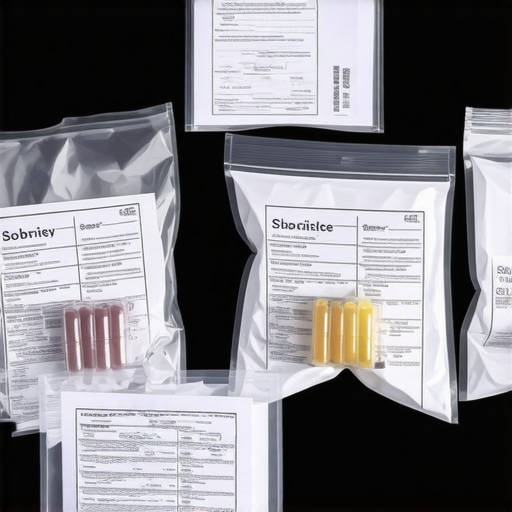
Toxicology reports prove blood alcohol concentration, presence of controlled substances, and metabolic rate at the time of the crash. These documents are the bedrock of drunk driving litigation. They must be supported by a certified scientist who can explain the margin of error and the testing equipment calibration. We do not just look at the number. We look at the Gas Chromatography-Mass Spectrometry results. We look at the enzymatic assay methods used by the hospital versus the forensic methods used by the state lab. There is a massive difference. Clinical blood draws are meant for treatment, not for court. They often test blood serum rather than whole blood, which can result in an artificially high reading. A sharp attorney knows how to convert serum levels to whole blood levels to maintain the integrity of the evidence. If the defense proves the blood was not refrigerated properly or that the antiseptic wipe used was alcohol based, your evidence is trash. We zoom into the microscopic reality of the laboratory. We subpoena the maintenance records of the machine. We check the lot numbers of the vials. If there is a crack in the foundation, we find it before the defense does.
“Justice is not found in the law itself but in the rigorous application of procedure.” – Common Law Maxim
Digital forensics and the electronic trail
Modern vehicles store data regarding speed, braking patterns, and steering input within the Electronic Control Module or ECM. This data is objective and does not lie. It provides a digital recreation of the seconds leading up to the impact, which often contradicts the self-serving statements of the impaired driver. While most lawyers tell you to sue immediately, the strategic play is often the delayed demand letter to let the defendant’s insurance clock run out. This forces the carrier to evaluate the risk without the pressure of an active court calendar. We also look at the cell phone records. We do not just look for texts. We look for data packets. Was the driver streaming video? Were they on a social media app two seconds before the impact? This is the digital footprint of negligence. We use cell tower triangulation to prove their path of travel and their speed. When you combine toxicology with telematics, the defense has nowhere to hide. They are boxed in by the math. In the world of litigation, math is the ultimate judge. We use every bit of telemetry available to paint a picture of a driver who was not just impaired, but actively distracted and reckless.
The burden of proof in civil litigation
The burden of proof in a civil case is a preponderance of the evidence, which means it is more likely than not that the defendant caused the harm. This is a lower threshold than the criminal standard of beyond a reasonable doubt. Litigation success hinges on connecting the driver’s intoxication directly to the accident. You need more than a DUI conviction. You need to show that the intoxication was the proximate cause of your specific injuries. This requires an accident reconstruction expert. They will take the skid marks, the crush patterns of the metal, and the final resting positions of the vehicles to prove that the drunk driver failed to react. They will show that a sober person would have had three seconds to brake, but the defendant did not even touch the pedal. That is how you win. You do not win on sympathy. You win on the physics of the crash. You win by showing that the defendant’s brain was too slowed by toxins to perform basic human functions. We bring in toxicologists to explain the “retrograde extrapolation” of alcohol levels. We prove where they were at the time of the crash, not just when the police arrived an hour later.
“The lawyer’s role is to provide a voice for those who cannot speak for themselves within the confines of the rules of evidence.” – American Bar Association Journal
Family law implications of civil liability
Civil judgments against a drunk driver can impact asset distribution, spousal support, and custody arrangements if the driver was a parent. When family law intersects with personal injury litigation, the financial repercussions of a verdict can drain a marital estate quickly. An attorney must understand these overlapping legal domains. If the defendant is going through a divorce, their liability in a personal injury case becomes a massive factor in their net worth. We look for these points of leverage. We investigate whether the driver was using a company car or if they were on the clock, which brings in vicarious liability. This expands the pool of recovery. We do not just stop at the driver. We look at the bar that over-served them. We look at the social host who gave them the keys. This is the search for the deep pocket. Litigation is an exercise in resource allocation. We find every available dollar to compensate for the wreckage the defendant left behind. We use the discovery process to peel back the layers of the defendant’s life. We find the evidence of previous