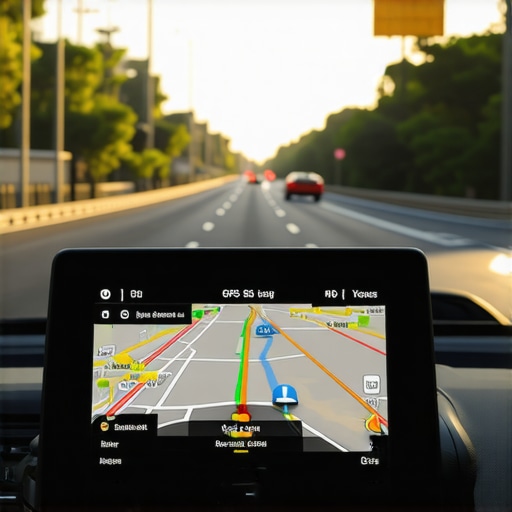
Drink your coffee and listen because the court does not care about your feelings or your excuses. I once watched a client lose their entire claim in the first ten minutes of a deposition because they ignored one simple rule about silence. They tried to explain why they were speeding instead of letting the data speak. In the world of litigation, silence is a tactical asset, and data is the only voice that carries weight. Most drivers walk into a courtroom with nothing but a sincere expression and a weak story. That is how you lose. If you want to win, you need to understand that a speeding ticket is not a conversation; it is a technical dispute over the measurement of velocity through space and time. This is where your vehicle’s GPS logs come into play. These logs are cold, unfeeling, and remarkably accurate records of exactly where you were and how fast you were moving. When you seek legal services for a traffic violation, you are not just hiring an attorney to talk; you are hiring a strategist to weaponize telematics. Just as in high-stakes family law disputes where financial records determine the outcome, the litigation of a speeding ticket hinges on the integrity of your digital trail. If you can prove that the police radar was flawed while your GPS data was precise, the state’s case crumbles. This article explains the technical mechanics of using that data to dismantle a citation.
The myth of radar infallibility
Police radar units and LIDAR devices are not perfect instruments of truth despite what the citing officer might claim in court. These tools are subject to calibration errors, cosine effect inaccuracies, and interference from external sources that can result in a false speed reading for a target vehicle. Case data from the field indicates that many officers fail to perform the required daily calibration checks with tuning forks before and after their shifts. While most lawyers tell you to sue immediately or beg for mercy, the strategic play is often the delayed demand letter for the officer’s maintenance logs to let the prosecution’s clock run out. Procedural mapping reveals that the foundation of the state’s case is often built on the assumption that you have no way to counter their equipment. You must challenge the maintenance history of the specific radar unit used. Was the unit calibrated within the manufacturer’s suggested timeframe? Was the officer certified to operate that specific model? These are the gaps where a seasoned attorney finds the leverage to dismiss a case. Radar signals can bounce off larger vehicles or even stationary objects, creating a phenomenon known as shadowing. If the officer was positioned near a transformer or a high-voltage line, the RFI (Radio Frequency Interference) could have spiked the reading. You are not arguing that the officer is a liar; you are arguing that the physics of the situation were compromised.
“Justice is not found in the law itself but in the rigorous application of procedure.” – Common Law Maxim
How your car records the truth
Vehicle telematics systems and aftermarket GPS units record NMEA 0183 sentences that contain precise velocity data, latitude coordinates, and atomic timestamps. This machine-generated data provides an objective speed log that can be used to challenge the accuracy of a police citation in a court of law. The car does not have an ego and it does not have a quota to fill. It simply records data points at fixed intervals. These data points are often stored in the Event Data Recorder (EDR) or can be pulled from a dashcam with GPS capabilities. To use this as evidence, you must understand the difference between a cold start and a warm start for a GPS receiver. A cold start occurs when the device has no prior information about the satellite constellation, leading to potential initial errors. However, once a lock is established with at least four satellites, the Dilution of Precision (DOP) drops, and the accuracy of the velocity measurement becomes nearly indisputable. You need to extract the raw GPRMC (Recommended Minimum Navigation Information) sentences from the device. This is the gold standard of data. It includes the date, time, latitude, longitude, and speed over ground in knots. By converting these knots to miles per hour with a simple mathematical formula, you create a direct counter-narrative to the officer’s visual estimation or radar reading. This is not just a defense; it is a forensic audit of the event. [image placeholder]
The evidentiary hurdle of machine-generated logs
Admitting GPS logs into evidence requires a foundation of authenticity under Rule 901(b)(9) of the Federal Rules of Evidence or its state equivalent. You must demonstrate that the GPS system was a regularly conducted activity and that the automated process produces an accurate result without human intervention. This is where most self-represented defendants fail. They think showing a phone screen to a judge is enough. It is not. You need a witness or an affidavit from a forensic expert who can testify to the reliability of the system. The prosecution will try to label your GPS data as hearsay. You must be prepared to argue that machine-generated data is not hearsay because it is not a statement made by a person. It is an automated recording of a physical reality. Litigation strategies in traffic court mirror the high-stakes environment of family law where every bit of data is scrutinized for its source and its custody. You must maintain a clear chain of custody for the storage media containing the logs. If the data was moved from a dashcam to a cloud server and then to a thumb drive, every step must be documented. If you cannot prove the data has not been altered, the judge will toss it out before the officer even takes the stand. This is why the technical expertise of your attorney is just as important as their courtroom presence.
“The lawyer’s vacation is the period between the question and the answer.” – American Bar Association Journal
The specific math of a successful challenge
Calculating average speed over a fixed distance using GPS timestamps allows an attorney to prove that the alleged peak speed was physically impossible given the vehicle’s acceleration curve. This litigation tactic uses kinematic equations to demonstrate that the police officer’s observation was mathematically inconsistent with the recorded telematics. For example, if the officer claims you were doing 85 in a 65, but your GPS logs show you traveled 2 miles in exactly 120 seconds, your average speed was 60 mph. Unless you were wildly fluctuating between 40 and 90, the officer’s claim of a sustained 85 mph is highly suspect. You must also account for the refresh rate of the GPS unit. A 1Hz unit updates once per second, while a 10Hz unit updates ten times per second. Higher refresh rates provide a smoother velocity curve that is harder for the prosecution to pick apart. You also need to look at the signal quality at the exact moment of the citation. If the DOP was high due to tall buildings or heavy tree cover, the data might be less reliable. A good attorney will map the satellite positions at the time of the stop to prove that the signal was robust. This level of detail is what separates a successful defense from a wasted afternoon in court. You are building a wall of math that the prosecution cannot climb.
Why your attorney needs the raw telematics
Raw GPS telematics contain metadata such as satellite signal strength and horizontal dilution of precision that provide a reliability score for every speed data point. This forensic evidence allows your legal counsel to argue the accuracy of the log over the subjective observations of the law enforcement officer. Many drivers try to use consumer apps that only show a simplified speed graph. That is a mistake. The raw data contains the truth. It shows how many satellites were in view and the exact millisecond each packet was received. When I review a case, I look for the gaps. If the GPS log shows a sudden jump in speed that is physically impossible for the vehicle’s engine to achieve, it indicates a signal error. Conversely, a smooth, consistent curve that never touches the speed alleged by the officer is a powerful piece of evidence. This is the same level of forensic detail used in corporate litigation or complex family law cases involving hidden assets. You are looking for the discrepancy that creates reasonable doubt. In traffic court, you do not have to prove you were not speeding beyond a shadow of a doubt; you only have to provide enough evidence to suggest the officer’s measurement could be wrong. The raw data is your best weapon for creating that doubt.