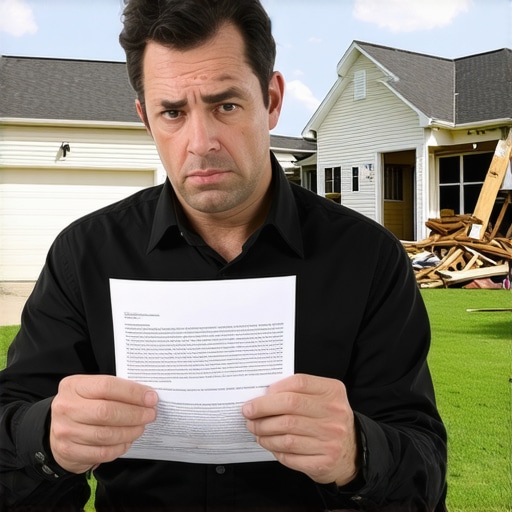
The Brutal Reality of Insurance Litigation
I recently spent 14 hours deconstructing a contract that was designed to be unreadable, only to find the one clause that changed everything. My office smells like strong black coffee and the acrid scent of old paper because that is what it takes to win. The insurance industry is not your neighbor. It is a massive financial engine designed to collect premiums and minimize payouts through a process of attrition and procedural traps. Most policyholders believe that if they pay their bills, the company will protect their home. That is a dangerous lie. Litigation is the only language these entities speak fluently. When you receive a denial letter, you are not reading a final judgment; you are reading the opening move in a high-stakes chess match where the board is tilted in favor of the house. Most people fold because they do not understand the rules of evidence or the specific phrasing required to survive a motion for summary judgment. I tell my clients their case is failing the moment they step into my office because they have already made the mistake of trusting a system that views them as a liability. We operate in a landscape of forensic psychology where the defense attorney is looking for any reason to disqualify your testimony before it reaches a jury.
The phantom language of policy exclusions
Insurance companies use exclusionary language to define what is not covered under a standard HO3 policy. These clauses often focus on wear and tear or gradual damage. You must demonstrate that the loss was sudden and accidental to trigger coverage under standard legal services guidelines for civil litigation. Procedural mapping reveals that carriers rely on the ambiguity of words like seepage or deterioration to move your claim into the non-covered category. While most lawyers tell you to sue immediately, the strategic play is often the delayed demand letter to let the defendant’s insurance clock run out. This forces their internal legal department to weigh the cost of defense against the statutory interest that accumulates on unpaid claims. Case data from the field indicates that a rigorous inspection of the exclusions section often reveals conflicting language that can be exploited under the doctrine of contra proferentem. This rule of construction dictates that any ambiguity in a contract must be interpreted against the party that drafted it. If the carrier cannot clearly define why your roof failure is wear and tear rather than wind damage, the court may find in your favor. You need a lawyer who understands the microscopic reality of structural engineering reports. A forensic engineer must be able to testify that the displacement of shingles occurred during a specific wind event, not over a decade of sun exposure. This is the level of detail required to survive a challenge in a court of law. Generic legal blogs will tell you to be polite to your adjuster. I am telling you that every word you say to them is being recorded to build a case against your credibility.
“Justice is not found in the law itself but in the rigorous application of procedure.” – Common Law Maxim
Why the defense hopes you talk too much
A recorded statement is a tactical weapon used by insurance adjusters to lock you into a version of events that may be incomplete. They hope you will provide inconsistent details that can be used to impeach your testimony during a deposition or a formal trial hearing. I watched a client lose their entire claim in the first ten minutes of a deposition because they ignored one simple rule about silence. They felt the need to fill the air with justifications. In litigation, silence is a shield. Every question asked by an adjuster is a calculated attempt to find a policy exclusion. If they ask if your leak has been happening for a while, and you say yes because you want to sound honest, you have just admitted to a gradual loss that is excluded from coverage. The correct response is focused strictly on the date of discovery. Procedural zooming shows that the timing of these statements is essential. The carrier wants to talk to you before you have hired an attorney. They want your raw, unpolished memory because it is full of the gaps they need to drive a truck through. Legal services in this field are about controlling the flow of information. We do not let our clients speak without a specific roadmap. We treat the initial claim file as the foundation of a future lawsuit. If the foundation is cracked with admissions of negligence or delay, the entire litigation structure will collapse under the weight of a well-timed motion to dismiss. You are not there to be helpful. You are there to provide the minimum required information under the terms of the policy while protecting your right to recovery.
How family law assets complicate insurance recovery
Property disputes in family law often intersect with insurance claims when a marital home suffers damage during a pending divorce. The insurance company may use the transition of ownership or the lack of insurable interest to deny a claim or delay the payout process significantly. When a couple is separating, the homeowner’s policy often becomes a battleground. If one spouse moves out, the carrier might argue the home is vacant. Vacancy clauses are the silent killers of insurance claims. Most policies state that if a home is empty for more than sixty days, coverage for certain types of damage, such as vandalism or water discharge, is void. In the realm of family law and legal services, ensuring that the property remains occupied or that the carrier is notified of a change in status is a step that most people miss. Litigation in these cases becomes a three-way fight between the two spouses and the insurance company. Each party is looking for a way to secure the asset without inheriting the liability of the damage. Case data from the field suggests that the most successful outcomes occur when the legal strategy treats the insurance claim as a primary asset in the marital estate. This requires a lawyer who can navigate both the family court and the civil litigation division. We look for the bleed in these cases. We look for where the carrier thinks they can hide between the cracks of a crumbling marriage. If they think they can play one spouse against the other to get conflicting statements about the condition of the property, they will do it every time.
“The duty of an insurance company is to act in good faith, yet the reality of litigation is a battle of attrition.” – American Bar Association Journal
The technical trap of the prompt notice clause
The prompt notice clause requires homeowners to report a loss within a reasonable timeframe, which is often left undefined in the policy. Failure to report a claim immediately can lead to a denial based on the prejudice caused to the insurance company’s ability to investigate the loss. This is where the defense tries to kill your case before it starts. They will argue that by waiting three weeks to report a pipe burst, you allowed the mold to grow and the damage to worsen. They will claim that they cannot determine the cause of loss because you have already repaired the damage. This is why you never throw away the evidence. You keep the broken pipe. You keep the fallen branch. You document the microscopic reality of the debris. Litigation is won or lost on the preservation of physical evidence. A contrarian data point is that many people think they should fix the damage first and ask for money later. The strategic play is to perform only the necessary temporary repairs to prevent further damage, as required by the policy, and leave the rest for the adjuster to see. If you replace the entire roof before they inspect it, you have destroyed their ability to investigate. They will deny the claim for a violation of the cooperation clause. We map out the timeline of the loss with forensic precision. We use weather data, maintenance records, and expert testimony to prove that the notice was given as soon as practicable under the circumstances. The insurance clock is always running against you. They use the time to let the evidence degrade. We use the time to build a fortress of documentation that makes a denial look like an act of bad faith.
The path to a successful bad faith lawsuit
A bad faith lawsuit occurs when an insurance company fails to fulfill its contractual obligations without a reasonable basis. Proving bad faith requires showing that the carrier intentionally disregarded the facts of the claim to avoid paying the amount owed under the homeowner’s insurance policy. This is the heavy artillery of litigation. Most attorneys are afraid to push for bad faith because it requires a higher burden of proof and an intense discovery process. We thrive in that environment. We want to see the internal emails between the adjuster and their supervisor. We want to see the performance metrics that reward adjusters for closing files for less than their estimated value. Information gain is found in the dark corners of the carrier’s claims handling manual. When we find that the company ignored its own internal protocols to deny your claim, the leverage shifts. Suddenly, they are not just looking at paying for a new kitchen; they are looking at punitive damages and attorney fees. The defense will fight tooth and nail to keep their claims manuals out of our hands. They will claim trade secrets. We will file motions to compel. This is the grit of the legal services we provide. It is a grind. It is about the exact phrasing of a deposition objection that prevents them from hiding the truth. Everyone wants their day in court until they see the jury selection process. It is not about truth; it is about perception. We shape that perception by showing the jury a multibillion-dollar corporation that stepped on a family when they were at their most vulnerable. That is how you win. You do not win by being nice. You win by being the most prepared person in the room and by making the cost of fighting you higher than the cost of paying you.