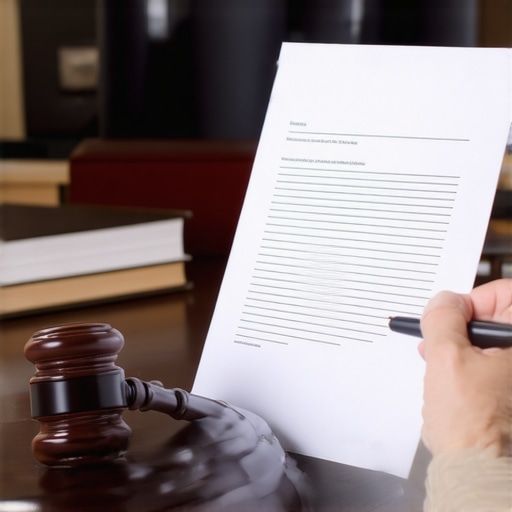
The air in the deposition suite was cold, smelling of ozone and the sharp, clinical scent of mint from my morning tea. I watched a client lose their entire claim in the first ten minutes of a deposition because they ignored one simple rule about silence. They viewed the subpoena as a suggestion, an invitation to a conversation they could decline or defer. It was not. It was a command from the state, a tether to the judicial machine that cannot be cut without consequences. In the realm of family law and general litigation, a subpoena is the fundamental tool for discovery. When an attorney sends a process server to your door, they are not merely asking for your time. They are initiating a procedural sequence that, if ignored, leads to a loss of leverage that no amount of legal services can easily recover. The legal process is a series of gates; once you fail to pass through one at the appointed time, the gate behind you locks. I have seen witnesses and parties alike treat a summons for a minor issue with the same indifference they might show a jury duty notice, only to find themselves facing a motion to compel before they have even hired counsel.
The contempt trap waiting in your mailbox
Contempt of court represents a judicial finding that an individual has willfully disobeyed a lawful order. In family law litigation, a subpoena issued by a licensed attorney carries the full weight of the state. Ignoring this document allows the court to issue a bench warrant or sanctions immediately. The reality of the subpoena process is far more mechanical than most laypeople understand. When a subpoena ad testificandum or a subpoena duces tecum is served, the clock begins a relentless countdown. This is not about whether you feel the information you possess is relevant. Relevance is a determination for the judge, not the witness. I recently dealt with a case where a non-party witness ignored a request for financial records in a divorce proceeding, assuming their private business had nothing to do with the marital estate. By the time they called me, a motion for civil contempt had already been filed. The court does not care about your busy schedule or your personal opinion on the privacy of your documents. It cares about the integrity of the evidentiary chain. The procedural zooming required here reveals that the exact phrasing of the proof of service is often more important than the testimony itself. If the process server can swear to the court that the papers touched your hand, the trap is set. You are now within the jurisdiction of the court, and any failure to appear is viewed as an affront to the bench.
“The public has a right to every man’s evidence, a principle which is the cornerstone of any functioning justice system.” – Wigmore on Evidence
The mechanics of a judicial order
Legal services rely on the predictability of court orders to build a case strategy. When you receive a subpoena, you are technically under the control of the judicial branch. This power allows attorneys to freeze assets, compel testimony, and force the production of private digital communications. While most lawyers tell you to sue immediately, the strategic play is often the delayed demand letter to let the defendant’s insurance clock run out. However, once a subpoena is in play, the luxury of delay is gone. The physical reality of a subpoena is often a stack of twenty to thirty pages, detailing exactly what documents must be produced. In high-stakes litigation, the defense often looks for the smallest crack in compliance. If you are ordered to produce three years of bank statements and you only produce two, you have provided the opposition with a hammer. They will use that missing year to suggest you are hiding assets or covering for a spouse in a family law dispute. The sound of the court reporter’s steno machine is the soundtrack to your potential undoing. Every ‘I don’t remember’ that follows a documented paper trail is a step toward a perjury charge or a negative inference. The strategic move is never to ignore, but to move to quash or seek a protective order. This requires a proactive stance that utilizes the rules of civil procedure to your advantage rather than letting the rules crush you.
Why silence costs more than testimony
Witness testimony forms the backbone of the litigation process, especially in complex family law cases where intent and credibility are paramount. A subpoena forces you to participate in a system where silence is rarely golden. Failure to testify can lead to daily fines that escalate rapidly. The litigation architect understands that every piece of evidence is a brick in a wall. If you refuse to provide your brick, the court will simply take it from you through more invasive means. I have seen the police arrive at a witness’s place of employment because they thought a minor deposition regarding a neighbor’s custody battle was optional. The embarrassment of being escorted from a professional environment is a price far higher than the few hours spent in a conference room. Procedural mapping reveals that the court’s patience for non-compliance has thinned in the modern era. With digital filing and instant communication, there is no longer a valid excuse for ‘not receiving’ notice. The metadata of your life is already in the cloud; the subpoena is just the key the court uses to unlock it. If you believe a subpoena is overbroad or harassing, the law provides a path for relief, but that path must be walked before the return date on the document. Waiting until the hearing has passed to complain about the scope of the request is a fatal tactical error.
“Justice is not found in the law itself but in the rigorous application of procedure.” – Common Law Maxim
The legal reality of the non-party witness
Non-party witnesses often feel they are immune to the drama of litigation because they have no financial stake in the outcome. This is a dangerous misconception that can lead to personal liability. A subpoena makes you a participant regardless of your desire or interest in the case. In the world of family law, witnesses are often friends, family members, or business partners. They feel a sense of loyalty that prevents them from wanting to testify against one side. However, the law does not recognize loyalty as a privilege. Unless you are protected by attorney-client privilege or a specific statutory shield, you must answer. The skeletal remains of many failed defense strategies are littered with the names of witnesses who thought they could stay neutral by staying home. When the court issues an order to show cause, the burden shifts to you to prove why you should not be thrown in jail. This is the moment where the power of the state becomes tangible. The judge’s robe is not just a costume; it is the symbol of the authority to deprive you of your liberty for the sake of the process. The tactical timing of a motion to dismiss often hinges on whether a key witness was successfully subpoenaed. By ignoring the paper, you are not staying neutral; you are actively sabotaging the process and inviting the court to focus its ire on you.
The strategic value of the motion to quash
A motion to quash is the formal legal mechanism used to challenge the validity or scope of a subpoena. This filing must be made promptly and based on specific legal grounds such as undue burden or privilege. It is the only safe way to resist a summons. Instead of ignoring the paper, the sophisticated litigant uses the law to narrow the field of battle. If the subpoena asks for ten years of records when only two are relevant, your attorney files a motion to quash. This pauses the obligation to comply and forces the other side to justify their overreach in front of a judge. This is where the chess game is played. You are using the very system that is trying to compel you to set boundaries. The meticulous detail of a well-drafted protective order can shield your most sensitive data while still technically complying with the court’s demands. The smell of the courtroom, that mix of old wood and nervous sweat, is avoided entirely if the procedural heavy lifting is done in the motions phase. Never mistake the informal tone of a process server for the formal power of the document they carry. Every subpoena is a potential landmine. You either defuse it with a motion or you step on it by doing nothing. The final judgment in any case is only as good as the evidence it is based on, and the court will ensure that evidence is produced, one way or another.