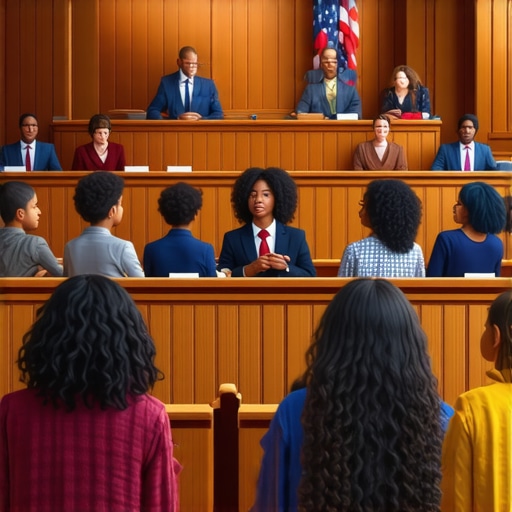
The smell of burnt coffee is the permanent aroma of the public defender’s office, and it is the same scent that greets you in the lobby of any courthouse where justice is traded like a commodity. You walk into a room expecting a search for truth, but what you find is a factory. I have spent twenty five years in these trenches, and I have learned one absolute truth: everyone wants their day in court until they see the jury selection process. It is not about truth; it is about perception. I have watched defendants walk into a bench trial with a smug sense of security because they think the judge is an impartial expert. They are wrong. A judge is a government employee who has heard your exact excuse ten thousand times this year alone. If you want a chance at walking out the front door, you put twelve strangers in a box and you make the state work for every inch of ground they want to take.
The constitutional leverage of twelve peers
Jury trials for minor criminal charges provide a Sixth Amendment safeguard that forces the prosecution to prove every element of the crime to twelve unanimous citizens. This litigation strategy creates procedural friction that often results in better plea deals or dismissals due to resource constraints. The state wants efficiency. They want you to sign a paper and go away. When you demand a jury, you are throwing a wrench into a machine designed to process humans as quickly as possible. This is not just a right; it is the only leverage you have when the weight of the state is leaning on your neck. The sheer logistics of summoning citizens, vetting them, and keeping them fed and focused for three days is a nightmare for a prosecutor with a hundred cases on their desk. Procedural mapping reveals that the moment a jury demand is filed, the state’s willingness to negotiate increases exponentially. They do not want to spend fifteen thousand dollars of the taxpayer’s money to prosecute a two hundred dollar theft case. Use that to your advantage.
Why judges lose their objectivity over time
Judicial bias occurs when a bench trial judge hears thousands of similar legal services cases, leading to a jaded perspective. Demanding a jury replaces this professional cynicism with layperson logic, forcing the attorney to focus on human narrative rather than stale case law or repetitive testimony. I have seen judges check their watches while a mother testifies about her son’s character. To the judge, she is just witness number four in a Tuesday morning block. To a jury, she is a human being with a story. Judges become experts at ignoring the emotional subtext that often dictates the reality of a situation. They are bound by a rigid adherence to the letter of the law, which often lacks the common sense required to see through a police officer’s biased testimony. A jury, however, is not yet broken by the system. They still believe in the presumption of innocence. They still want to believe that the police have to follow the rules. In a bench trial, the judge and the prosecutor are often friends who have had lunch together for a decade. The jury is the only thing that breaks that cozy relationship.
“Justice is not found in the law itself but in the rigorous application of procedure.” – Common Law Maxim
The administrative nightmare for the prosecution
Prosecutorial resources are finite. When an attorney demands a jury trial for a misdemeanor, it triggers jury summons, voir dire, and courtroom scheduling conflicts. Case data from the field indicates that district attorneys often drop minor charges to avoid this administrative burden and focus on felonies. Every jury trial requires a massive expenditure of man hours. The state must prepare exhibits, coordinate witnesses, and draft jury instructions that must be vetted by the court. If they make a single mistake in those instructions, the case could be overturned on appeal. This risk profile is often too high for a minor charge. While most lawyers tell you to sue immediately, the strategic play is often the delayed demand letter to let the defendant’s insurance clock run out; in criminal law, the tactical delay of the jury demand forces the state to reconsider the ROI of your prosecution. They are looking for the path of least resistance. By demanding a jury, you become a mountain of resistance. You are no longer a file; you are a problem that requires a solution.
Voir dire as the only real defense
Jury selection, or voir dire, is the process where a defense attorney identifies biased jurors and builds a narrative before the trial even begins. This procedural step is essential for litigation because it allows the defendant to vet the people who will decide their legal fate. I watched a client lose their entire claim in the first ten minutes of a deposition because they ignored one simple rule about silence, and the same applies to voir dire. You have to listen to what the jurors aren’t saying. Are they nodding when the prosecutor speaks about law and order? Do they look annoyed to be there? This is the only time in the entire process where you get to talk back to the system. You get to ask these people if they believe a police officer can lie. You get to see if they have a fundamental bias against your neighborhood or your profession. In a bench trial, you get none of this. You get the judge you were assigned, and if that judge had a bad breakfast or hates your lawyer, you are finished before you start.
Statutory triggers for the jury demand
Legal services regarding criminal defense require a deep understanding of statutory law to ensure the jury demand is filed within the mandatory timeframe. Failing to meet these deadlines results in a waiver of rights, leaving the defendant at the mercy of the court. Every jurisdiction has its own rules. In some places, you have ten days from your first appearance to demand a jury. In others, the right is automatic for any charge carrying a potential jail sentence. You must zoom into the microscopic details of your local rules of criminal procedure. Is the demand required to be in writing? Does it require a fee? These are the technical traps that catch lazy lawyers. A senior trial attorney knows that the paperwork is just as important as the closing argument. If you miss the filing, you lose your leverage. The prosecution knows this. They watch the docket like hawks, waiting for your attorney to slip up so they can force you into a quick bench trial where they have the home court advantage.
“The jury system is the most effective way of teaching the people how to reign.” – Alexis de Tocqueville, Democracy in America
The high cost of judicial efficiency
Courtroom efficiency is often the enemy of due process, as judges strive to clear their dockets at the expense of thorough litigation. A jury trial slows the legal process down, ensuring that every piece of evidence is scrutinized and every witness is cross examined with forensic precision. When a judge is trying to get through forty cases in a morning session, they are not looking for the nuances of your Fourth Amendment claim. They are looking for the quickest way to the next case. A jury has nothing but time. They are there for one case, yours. They will notice the inconsistencies in the officer’s story. They will see the gap in the video footage that the judge would have ignored. This slowing of time is your friend. It allows for the discovery of the truth. Most people think they want the process to be over quickly. I tell them that speed is the tool of the hangman. If you want to survive a criminal charge, you want the process to be slow, expensive, and difficult for the government.
Evidence rules that change when the public watches
Rules of evidence such as Rule 403 regarding prejudicial impact are applied much more strictly during jury trials than in bench trials. An attorney can argue that certain evidence is too inflammatory for a jury to see, often resulting in favorable rulings that would not occur before a judge. Judges often say they can disregard inadmissible evidence they have already seen. They are lying to themselves. Once you hear a piece of gossip or see a tainted photo, you cannot unsee it. A jury, however, is shielded from this. If the judge rules a piece of evidence is inadmissible, the jury never even knows it exists. This creates a much cleaner record for trial and gives you a much better chance at an acquittal. The architecture of a jury trial is designed to protect the defendant from the biases of the state. It is a system built on the distrust of power, and in a minor criminal case, you are the one with no power. The jury is your shield. Do not throw it away because you are afraid of the complexity. Demand the trial, force the state to work, and never take the first offer they throw across the table.