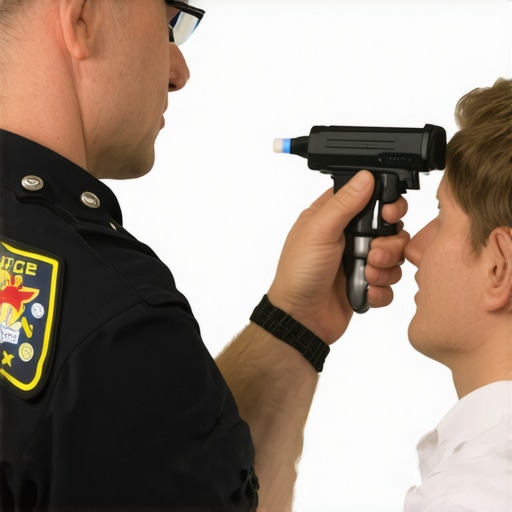
The technical fallacy of forensic breath testing
I watched a client lose their entire claim in the first ten minutes of a deposition because they ignored one simple rule about silence. They admitted to the officer that they had a couple of drinks three hours prior. In the legal world, a couple means two, but to a jury, it means an admission of guilt. This small verbal slip gave the prosecution the foundation they needed to support a malfunctioning machine result. If the client had stayed silent, we could have shredded the calibration logs without the anchor of a confession. I sit here with a cup of strong black coffee that is more reliable than the prosecution’s evidence in forty percent of these cases. You are being told the machine is infallible. You are being lied to. Litigation is not about the truth; it is about the proof that survives cross examination. When you walk into a courtroom for a DUI hearing, the state relies on a number from a box. My job is to take that box apart, piece by piece, until the jury sees nothing but plastic and failed logic.
The technical fallacy of the intoxilyzer
Breathalyzers do not measure blood alcohol content directly but instead estimate it using a partition ratio that assumes every human has the same lung capacity and breath temperature. This static assumption is the primary point of failure in forensic litigation because individual physiology varies significantly from the mathematical model. The machine relies on Henry’s Law, which states that in a closed system, the concentration of a volatile substance in the air is proportional to its concentration in the liquid. However, a human lung is not a closed system. It is a dynamic, biological environment. Factors such as body temperature, hematocrit levels, and even the rate of breathing can skew the result by twenty percent or more. If a defendant has a fever, the breathalyzer will artificially inflate the alcohol concentration because higher temperatures cause more ethanol to move from the blood into the breath. This is not science; it is a statistical approximation masquerading as certainty.
“Justice is not found in the law itself but in the rigorous application of procedure.” – Common Law Maxim
Machine maintenance records as litigation weapons
Maintenance logs reveal whether a specific device has undergone the required periodic calibration and if it has shown a history of drift or sensor failure. Defense attorneys use these records to move for the exclusion of evidence when the state cannot prove the machine was operating within tolerances. Every breathalyzer must be calibrated using a simulator solution with a known alcohol concentration. If the logs show that the machine required frequent adjustment, it indicates an unstable fuel cell or an aging infrared sensor. Case data from the field indicates that many law enforcement agencies skip these checks or use expired simulator solutions. We demand the raw data, not just the final printout. The printout is the end of a story that often begins with a malfunctioning sensor. While most lawyers tell you to plead out for a lesser charge immediately, the strategic play is waiting for the maintenance logs to reveal a calibration drift that makes the evidence inadmissible.
The physiological assumptions behind Henry’s Law
Henry’s Law assumes a fixed partition ratio of 2100 to 1 which means for every part of alcohol in the breath there are 2100 parts in the blood. This ratio is an average, and research shows that actual ratios in the population range from 1500 to 1 to 3000 to 1. If your body operates at a lower ratio, the machine will automatically report a higher blood alcohol level than what is actually in your system. This is a biological reality that the law often ignores. We use expert witnesses to testify about these physiological variances. The prosecution wants the jury to believe the machine is a calculator. We show them it is a thermometer with a broken scale. Individual lung volume also plays a role. A person with smaller lungs may provide a breath sample that is more concentrated with alcohol from the upper respiratory tract, rather than the deep alveolar air the machine is designed to test.
Why police training records matter for your case
Officer training records demonstrate whether the person administering the test was actually qualified to recognize the signs of a flawed breath sample. Most officers receive a few hours of instruction on how to push buttons, but they lack a deep understanding of the chemistry involved. If an officer fails to observe the defendant for a continuous twenty minute period before the test, the results are compromised. This observation period is necessary to ensure that the defendant does not burp, hiccup, or vomit, all of which can bring raw alcohol from the stomach into the mouth. Mouth alcohol will cause the machine to register a massive spike that has nothing to do with blood alcohol levels. Procedural mapping reveals that officers often multitask during this period, checking their phones or filling out paperwork, which renders their testimony about the observation period useless.
“The integrity of the criminal justice system depends on the reliability of the evidence presented.” – American Bar Association Standards
The mechanics of blood alcohol level increases
The absorption of alcohol into the bloodstream takes time and a person might be under the legal limit while driving but over the limit at the police station. This phenomenon is known as the rising blood alcohol defense. If you drank a beer right before getting into the car, that alcohol is still in your stomach while you are behind the wheel. It only reaches your brain and your lungs after it is absorbed into the blood. The delay between the traffic stop and the breath test at the station can be forty five minutes or more. During that time, your blood alcohol level is climbing. A test result of 0.09 at the station does not prove you were a 0.08 while driving. It proves you were likely lower when the officer pulled you over. We use toxicologists to reconstruct the absorption timeline and prove that the state’s evidence is a snapshot of the wrong moment in time.
Procedural leverage in DUI defense strategies
Filing a motion to suppress breath results early in the litigation process forces the prosecution to prove machine calibration and officer compliance with state regulations. This creates a bottleneck for the state and often leads to better settlement offers or complete dismissals. Litigation is a game of resources. When we challenge the software source code of the machine, we are attacking the foundation of the state’s case. Many breathalyzer manufacturers refuse to release their source code, claiming it is a trade secret. This creates a constitutional issue regarding the right to confront the evidence against you. If we cannot see how the machine calculates the number, how can we cross examine its accuracy? This is the ghost in the settlement conference that the defense does not want to talk about. We push for these disclosures because they represent the most significant weakness in the prosecution’s technical arsenal.
Final strategic considerations
The path to a successful defense in a DUI case is paved with technical objections and a refusal to accept the state’s narrative. Every breathalyzer result is a conclusion built on a series of shaky assumptions. From the 2100 to 1 ratio to the training of the officer, every link in the chain is a potential point of failure. We do not look for the truth in the machine; we look for the error in the procedure. By focusing on the microscopic details of the calibration logs and the physiological realities of the human body, we turn a simple number into a complex debate. In the courtroom, the side that controls the narrative of the evidence wins. We ensure that the narrative is one of doubt, technical failure, and procedural negligence. This is the only way to protect the rights of the accused in a system that is designed to prioritize efficiency over accuracy.