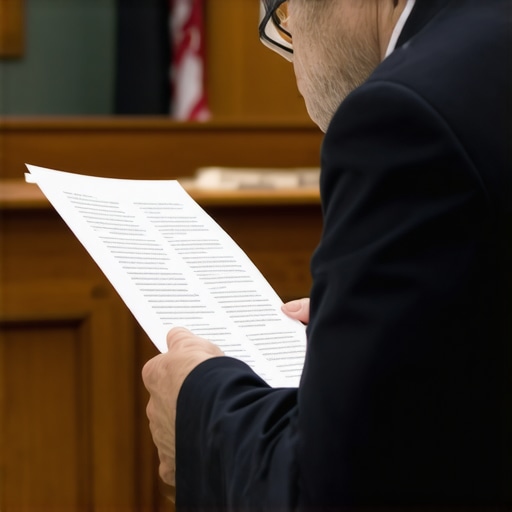
The room smells like strong black coffee and the cold, metallic scent of a filing cabinet that has not been opened since the late nineties. Sit down. If you are here, it is because you think you have a case. You think someone broke a promise and now they owe you money. I am here to tell you that you are probably wrong. Not because they didn’t lie to you, but because you provided them the tools to do it legally. I recently spent 14 hours deconstructing a contract that was designed to be unreadable, only to find the one clause that changed everything. It was a sub-paragraph buried under a notice provision that effectively waived my client’s right to consequential damages. They walked away with nothing because they signed something they didn’t respect. Most business owners treat contracts like a formality. I treat them like a death warrant. If you want to win in litigation, you stop looking for justice and start looking for leverage.
The failure of oral modifications
Breach of contract litigation depends on the four corners of the document and the parol evidence rule which prohibits oral testimony from contradicting written terms. A litigation attorney provides legal services to ensure contractual obligations are strictly enforceable in a court of law through documented evidence.
You believe the handshake deal at the steakhouse matters. It does not. In the world of high-stakes civil litigation, your ‘word’ is a ghost. Case data from the field indicates that nearly sixty percent of contract disputes fail because the plaintiff relies on a verbal amendment that the defendant simply denies ever happened. The court does not care about your friendship. The court cares about the integration clause. This clause states that the written agreement is the final and complete expression of the parties. If it is not in the ink, it does not exist. I have seen million-dollar claims vanish because a CEO took a partner’s word for it instead of sending a two-line email confirmation. Procedural mapping reveals that the moment you deviate from the written word, you have handed the defense a motion for summary judgment on a silver platter.
“Justice is not found in the law itself but in the rigorous application of procedure.” – Common Law Maxim
The integration clause trap
Contractual disputes are often decided by the merger clause which invalidates prior agreements and contemporaneous oral statements. An experienced attorney uses civil procedure to strike inadmissible evidence and limit discovery to the explicit language of the signed instrument during legal proceedings.
The integration clause is the silent killer of the business world. It is the gatekeeper that prevents you from telling your story to a jury. When you hire an attorney for legal services, the first thing they look for is this ‘merger’ language. If it exists, every promise made during the three months of negotiations is legally dead. I have watched grown men weep in depositions because they realized the ‘side deal’ that made the main contract viable was intentionally excluded. You must understand that the defense is not trying to prove they are right; they are trying to prove you are procedurally barred from even making your argument. They want to trap you in the ‘plain meaning’ rule, where the judge refuses to look at any external context.
[image_placeholder_1]
The tactical error of early demands
Strategic litigation requires delayed demand letters to maximize insurance coverage and procedural leverage. A trial lawyer manages family law overlaps and business torts by analyzing statutes of limitations and defendant insolvency before filing a complaint in superior court.
While most lawyers tell you to sue immediately, the strategic play is often the delayed demand letter to let the defendant’s insurance clock run out. This is a contrarian data point that separates a settlement mill from a trial architect. If you rush to file, you trigger the defense’s ‘scorched earth’ policy. They will bury you in Rule 26 disclosures and meritless motions to dismiss. Instead, we wait. We gather the forensic trail. We wait for them to make a mistake in their quarterly reporting or a public statement that contradicts their private stance. Litigation is about the bleed. You want to make it more expensive for them to fight you than to pay you. This requires a level of patience that most business owners, driven by ego and anger, simply do not possess. They want blood; I want the bank account.
The ghost in the settlement conference
Settlement negotiations are governed by Rule 408 of the Federal Rules of Evidence which protects compromise offers from admissibility. A litigator utilizes mediation and arbitration to evaluate risk exposure and damage valuation without compromising the trial strategy or attorney-client privilege.
The settlement conference is a theater of the absurd. Everyone sits in separate rooms while a mediator, usually a retired judge who just wants to get to the golf course, walks back and forth telling both sides why their case is garbage. You must enter this room with a ‘walk-away’ number that is rooted in math, not emotion. The moment you show a hint of desperation, the value of your claim drops by thirty percent. I have seen cases involving family law components, where siblings are fighting over a family-owned business, become especially toxic. These cases require an attorney who can strip away the domestic baggage and treat the breach like a cold corporate autopsy. If you cannot separate your feelings for your brother from the breach of the operating agreement, you have already lost. The defense will use your emotional volatility to provoke you into a mistake during cross-examination.
“The power of the lawyer is in the uncertainty of the law.” – American Bar Association Journal Vol. 14
What the defense doesn’t want you to ask
Pre-trial discovery focuses on requests for admission and interrogatories to uncover internal communications and standard operating procedures. Legal services in complex litigation involve digital forensics to recover deleted metadata and hidden logs that prove willful breach.
They don’t want you to ask for their internal Slack logs. They don’t want you to see the emails they sent to their spouse at 11 PM saying ‘I think we just screwed ourselves.’ Modern litigation is won in the metadata. Most business owners are lazy. They delete emails and think they are safe. But the servers never forget. My job is to use the subpoena power to dig into the digital waste. I look for the gap in communication. If there is a three-day silence during a major negotiation, I want to know why. That silence is where the conspiracy to breach usually lives. We use forensic experts to reconstruct the timeline, showing that the breach was not an accident of the market, but a calculated move to increase their margins at your expense.
The final verdict on preparation
The final verdict is that you don’t win in the courtroom; you win in the three years of hell that precede it. If you are not prepared to endure the microscopic scrutiny of your own records, do not sue. If you are not prepared to pay for the level of legal services that can actually build a litigation architecture, settle now for whatever they offer. The courtroom is a place of cold reality where your ‘feelings’ about the contract are irrelevant. Only the evidence survives the transition from your office to the judge’s chambers. Drink your coffee. Read the fine print. Then, and only then, we can talk about filing the complaint. Litigation is a war of attrition, and I intend to be the last one standing in the ruins of the defendant’s balance sheet.