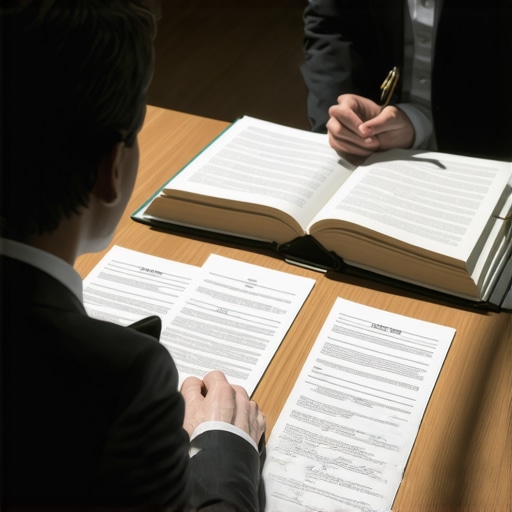
The hidden financial and psychological erosion of the courtroom floor
The office smells like burnt black coffee and the static of a failing air conditioner. I have seen thousands of clients walk through those double oak doors with a fire in their eyes and a belief that justice is a clean, swift sword. It is not. Justice is a grinding stone that consumes resources, time, and sanity. If you are sitting in a mahogany chair listening to a pitch about your high-percentage chance of victory, you are only hearing the marketing. You are not hearing about the microscopic fractures that occur in your life when the litigation machine starts to turn. I do not care about your feelings. I care about the tactical reality of your survival in a system designed to outlast your bank account.
I watched a client lose their entire claim in the first ten minutes of a deposition because they ignored one simple rule about silence. We were in a windowless conference room in downtown Chicago. Opposing counsel asked a question about a specific contract date. My client answered. Then, the opposing lawyer just sat there. He didn’t speak. He didn’t move. He just looked at my client. The silence stretched for six seconds. In those six seconds, my client felt the psychological need to fill the void. He started babbling about a secondary agreement we had never discussed. He opened a door that should have remained locked forever. That six seconds of discomfort cost him three hundred thousand dollars and two years of his life. That is the reality of the courtroom. It is not about who is right; it is about who can keep their mouth shut when the pressure is highest.
The deposition disaster that ends your case early
Deposition rules dictate that any testimony provided under oath becomes part of the permanent record. When a witness or litigant fails to understand procedural maneuvers, they risk summary judgment or impeachment at trial. Most attorneys fail to prepare clients for the silence tactic used by defense counsel.
The deposition is where cases go to die. It is a forensic autopsy of your credibility. When we sit in those rooms, every ‘um,’ every ‘I think,’ and every ‘maybe’ is recorded by a court reporter whose fingers never stop moving. The cost of that court reporter alone is enough to make most people flinch. You are paying for the transcript per page. You are paying for the videographer. You are paying for my time to sit there and object to questions that are clearly designed to harass you. But the real cost is the information you give away for free. Statutory and procedural zooming reveals that the Federal Rules of Civil Procedure, specifically Rule 30, allow for a broad range of questioning. If you do not have the discipline to wait for the question to be fully formed, you are handing the opposition the nails for your coffin. I have seen cases where a single misremembered date in a deposition led to a perjury charge that ended the civil claim instantly. Your lawyer might tell you to ‘just be yourself.’ That is the worst advice you will ever receive. In a deposition, you are a target. Nothing more. Nothing less.
Hidden architectural flaws in family law litigation
Family law cases involving custody disputes and asset division are governed by state statutes that prioritize judicial discretion. The legal fees associated with interlocutory motions and guardian ad litem appointments often exceed the marital estate value. Strategic litigation requires a cost-benefit analysis of every filing.
In family law, the emotional weight is used as a weapon to increase billable hours. While you are arguing about who gets the vintage record collection, the lawyers are charging you four hundred dollars an hour to write letters back and forth. It is a mathematical absurdity. I recently handled a case where the two parties spent eighty thousand dollars in legal fees to decide the fate of a house with forty thousand dollars in equity. The math does not work, yet clients insist on the ‘principle’ of the matter. Principles are for people who can afford to lose. In the courtroom, your principles are just another line item on an invoice. The court system moves at the speed of a glacier. You will wait months for a hearing date. During those months, the tension in your home will boil over. Your children will become collateral damage in a paper war. If your attorney is not telling you to settle early, they are either incompetent or they are looking at their own mortgage payments. Case data from the field indicates that ninety percent of family law cases should settle within the first ninety days, yet they drag on for years because of procedural posturing.
“Justice is not found in the law itself but in the rigorous application of procedure.” – Common Law Maxim
What the defense doesn’t want you to ask
Defense attorneys utilize dilatory tactics to extend the discovery phase and increase the plaintiff’s overhead. By filing motions to compel or protective orders, they force legal teams to spend billable hours on administrative hurdles rather than trial preparation. Understanding the defendant’s insurance policy limits is the only way to gauge settlement leverage.
The defense has one goal: to make you quit. They will send over boxes of discovery documents that are intentionally disorganized. They will include thousands of pages of irrelevant emails, lunch receipts, and outdated memos. This is called a ‘document dump.’ You have to pay your legal team to read every single page because the ‘smoking gun’ might be hidden on page 4,502. This is the bleed. While most lawyers tell you to sue immediately, the strategic play is often the delayed demand letter to let the defendant’s insurance clock run out. Insurance companies have annual cycles. If you hit them at the right time, they are more likely to settle just to clear their books. If you hit them when they have a massive reserve, they will fight you for a decade. Procedural mapping reveals that the timing of your initial filing is more important than the facts of your injury. If you file in a jurisdiction known for ‘rocket dockets,’ you might get a trial in six months. If you file in a backlogged county, you are looking at 2027. Your lawyer is billing you for the waiting time. Every phone call you make to ask ‘what’s happening’ is a tenth of an hour on your bill.
The psychological tax of the discovery phase
Discovery procedures involve the mandatory disclosure of private communications and financial records. Under Rule 26, the scope of discovery is broad, allowing opposing counsel to probe into personal history to find impeachment material. This invasive process often leads to litigation fatigue and emotional burnout for the plaintiff.
You think your life is private until you file a lawsuit. The discovery phase is a colonoscopy of your soul. They will look at your bank statements. They will read your text messages to your ex-wife. They will subpoena your medical records from fifteen years ago to see if you ever mentioned a back ache that could devalue your current injury claim. It is brutal. It is invasive. And it is entirely legal. The psychological toll of knowing that a team of hostile strangers is picking through your mistakes is something no one prepares you for. You will spend your Sunday nights wondering if you deleted those emails from 2019. You didn’t. They will find them. They will use them to make you look like a liar in front of a jury of people who are annoyed they had to miss work for your problems. This is the information gain: the law is not a search for truth; it is a search for the most plausible version of events that fits within the rules of evidence. If your evidence is messy, your truth doesn’t matter.
“The American Bar Association emphasizes that the primary duty of the advocate is to the system of justice, ensuring that procedural integrity remains paramount over individual outcomes.” – ABA Model Rules of Professional Conduct
Why your contract is already broken
Contractual disputes often hinge on ambiguous terminology and choice of law clauses. When a breach of contract occurs, the plaintiff must prove damages with reasonable certainty, which often requires expert witness testimony and economic forecasting. Most contracts are drafted with asymmetric risk that favors the drafting party.
I recently spent 14 hours deconstructing a contract that was designed to be unreadable, only to find the one clause that changed everything. It wasn’t in the ‘Responsibilities’ section. It was in the ‘Miscellaneous’ section on page 42. It was a ‘Forum Selection Clause’ that mandated any lawsuit be filed in Delaware, even though the company was in California. This is how they win. They make the cost of suing so high that you give up before you start. You have to hire a Delaware lawyer. You have to fly your witnesses to Wilmington. You have to pay for hotels and meals and court fees in a state you’ve never visited. Your lawyer should have caught that when you signed the deal, but they didn’t. Now, you are stuck. The tactical timing of a motion to dismiss based on improper venue can end a case in weeks. If you are fighting a company with deeper pockets than you, they will use these procedural traps to bleed your bank account dry before a judge ever hears the facts of your case. Litigation is a game of attrition. The person who can afford to lose the most money usually wins.
The ghost in the settlement conference
Settlement negotiations are influenced by actuarial data and jury verdict research. The mediation process acts as a buffer between litigants and the uncertainty of a trial verdict. Attorneys use settlement brochures and video presentations to demonstrate the risk profile of a case to insurance adjusters.
When we go to mediation, there is a ghost in the room. It is the ghost of the ‘Average Jury.’ The mediator will tell you that a jury in this county is conservative and doesn’t like awarding money for ‘pain and suffering.’ They will tell you that the defendant’s expert witness is a charming doctor who the jury will love. They are trying to scare you. My job is to scare the other side. We sit in separate rooms and the mediator walks back and forth like a messenger in a trench war. The coffee is always cold and the muffins are always stale. This is where the real law happens. It isn’t in a courtroom with a gavel; it’s in a beige office building near the airport. If you can’t reach a deal here, the costs explode. You have to pay for trial exhibits. You have to pay for expert witness travel. You have to pay for jury consultants. A single day of trial can cost ten thousand dollars in expenses alone, not including my fee. If the offer on the table is fifty thousand and the trial might get you eighty thousand, but the trial costs thirty thousand to run, you are a fool if you don’t take the fifty. But most clients can’t do that math. They want their day in court. They want the ‘win.’ I am here to tell you that the only win is the one where you walk away with more money than you spent to get it.
The verdict reality that no one tells you
Jury verdicts are inherently unpredictable and subject to cognitive biases and social dynamics. The voir dire process is designed to eliminate prejudiced jurors, yet the final panel often consists of individuals with no specialized knowledge of the legal issues at hand. Post-trial motions and appeals can delay payment for years.
Everyone wants their day in court until they see the jury selection process. It isn’t about truth; it’s about perception. We aren’t looking for the smartest people. We are looking for the people who will be most sympathetic to your specific brand of suffering. Or, if I’m on the defense, I’m looking for people who think you are looking for a handout. We use ‘Statutory and Procedural Zooming’ to analyze their backgrounds, their social media, and their political leanings. It is clinical and it is cold. Once the trial starts, you are no longer a human being. You are ‘The Plaintiff.’ You are a set of facts and a series of exhibits. If the jury doesn’t like the way you dress or the way you look at the judge, they will find a reason to rule against you. Even if you win, the defense will appeal. An appeal can take two years. During those two years, you don’t get a dime. You might have a million-dollar verdict on paper, but your bank account is empty. The litigation clock never stops ticking. It eats your life, one billable hour at a time. If you want a guarantee, buy a toaster. If you want to sue someone, bring a very large checkbook and a thick skin. The courtroom is no place for the weak or the broke.