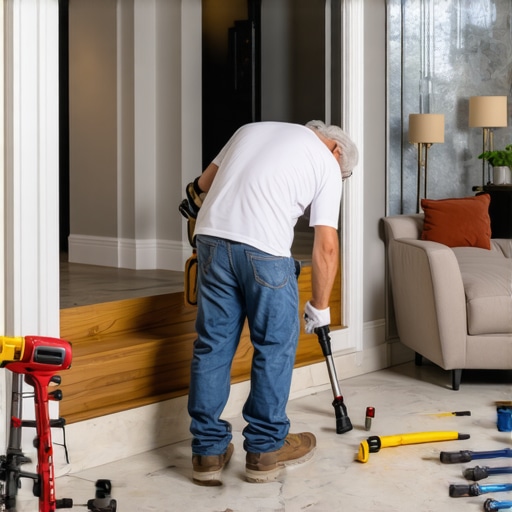
The air in my office always smells like ozone and mint before a major deposition. It is the scent of impending friction. You are here because a contractor turned your primary asset into a liability. You likely feel betrayed. You want justice. But in this room, we do not hunt for justice; we hunt for procedural leverage. I recently spent 14 hours deconstructing a contract that was designed to be unreadable, only to find the one clause that changed everything. It was a sub-paragraph hidden in the mobilization section that invalidated the entire arbitration requirement. That is how we win. Most legal blogs will tell you to take photos and be patient. I am telling you that you are already in a war of attrition. Your contractor is likely already speaking with their insurance carrier to frame the damage as a pre-existing condition or an act of God. If you do not move now, you are essentially gifting them your equity.
The architecture of a construction disaster
Property damage litigation requires immediate legal services to identify contractor liability. When a home renovation fails, your attorney must secure the site evidence before the defendant attempts to cover up structural flaws. Fast action prevents statute of limitations issues and preserves your indemnity rights. Case data from the field indicates that the first seventy-two hours after discovering structural damage are the most significant for your claim. If you allow the contractor back on the property to fix the mistake without a third party expert present, you have likely destroyed the chain of custody for your best evidence. You must treat your home like a crime scene. Do not touch the wires. Do not mop the water. Do not let them patch the drywall. Procedural mapping reveals that the moment a contractor realizes they have made a catastrophic error, their priority shifts from construction to mitigation of legal exposure. They are not your friend. They are a future deponent.
Where the fine print hides the bodies
Contract law often contains arbitration clauses that strip away your jury trial rights. Your legal counsel must examine the indemnification language and liquidated damages sections. If the contractor used a boilerplate agreement, there are often procedural loopholes that allow an attorney to invalidate unfair liability waivers. I have seen contracts that look like they were written by a high schooler but contain venomous clauses that waive your right to consequential damages. This means if they break a pipe and ruin your antique rugs, they only owe you for the pipe. It is cold. It is calculated. It is also often unenforceable if the lawyer on the other side is lazy. We look for the lack of mutual assent. We look for the failure of consideration. While most lawyers tell you to sue immediately, the strategic play is often the delayed demand letter to let the defendant’s insurance clock run out while we gather forensic engineering reports. [image_placeholder]
“Justice is not found in the law itself but in the rigorous application of procedure.” – Common Law Maxim
The forensics of property destruction
Forensic engineering reports serve as the backbone of civil litigation involving property damage. These legal services provide the scientific evidence needed to prove contractor negligence in a court of law. Without a certified expert witness, your testimony is merely an opinion that holds little weight against defense experts. You need to understand the difference between a cosmetic flaw and a structural failure. One is a nuisance; the other is a six figure settlement. I have watched clients lose their entire claim in the first ten minutes of a deposition because they ignored one simple rule about silence. They felt the need to explain. They felt the need to be liked. In a deposition, if the defense attorney stops talking, you must stop talking. Every word you speak after the answer is a gift to the insurance company. We use staccato answers. Yes. No. I do not recall. This is how we protect the record. We do not provide the defense with a roadmap to defeat us.
Why your homeowner insurance is not an ally
Insurance adjusters represent the financial interests of the carrier rather than the homeowner. In litigation, these third party agents often attempt to undervalue claims by citing wear and tear exclusions. Your attorney must aggressively challenge these denials to ensure maximum recovery for construction defects. The insurance company is a business. Their profit margin is the gap between the premiums they collect and the claims they pay out. They are incentivized to find a reason to say no. They will look at your 1980s plumbing and claim the contractor merely finished what time started. It is a cynical game. We counter this by filing bad faith notices the moment they deviate from the policy language. We do not wait for them to be fair. They will never be fair. They will only be compliant when the cost of non-compliance exceeds the cost of the settlement.
The tactical timing of your legal demand
Demand letters constitute the formal legal notice required before initiating a civil lawsuit. A litigation attorney uses this document to outline the breach of contract and the monetary damages sought. Proper procedural timing can force a settlement before discovery costs escalate and deplete the available insurance limits. Most people think the demand letter is just a letter. It is not. It is a psychological trigger. It is designed to end up on the desk of a risk manager who sees a number and a deadline. If the letter is too aggressive, they dig in. If it is too soft, they ignore it. It must be a surgical strike. We include the expert reports. We include the high resolution photos. We make it clear that the cost of trial will be three times the cost of the settlement we are offering today. We give them a way out that feels like a win for them, even as they write the check.
“The integrity of the judicial process depends on the transparency of evidence and the ethical conduct of all parties.” – ABA Model Rules of Professional Conduct
The myth of the amicable settlement
Settlement negotiations in construction law are rarely about mutual agreement or fairness. Instead, they are calculated risks based on the probability of a verdict. Your legal representation must be prepared for trial to secure a favorable outcome in mediation or arbitration proceedings. Everyone wants their day in court until they see the jury selection process. It is not about truth; it is about perception. I have seen juries award millions because they disliked the contractor’s tie, and I have seen them award nothing because the homeowner looked too wealthy to need the money. It is a coin flip with your life’s savings. This is why we build the case so strongly that the other side is terrified of the jury. We want them to feel the heat of the courtroom before they ever step inside. We use their own internal emails against them. We find the text messages where the foreman joked about the shortcuts they were taking. That is the leverage that buys a new kitchen.
How to pick a trial lawyer who actually fights
Selecting an attorney for property damage requires vetting their courtroom experience and verdict history. While family law or general practice firms offer legal services, a litigator specializing in construction defects understands the technical nuances of building codes. You need someone who knows the difference between a load bearing wall and a partition. You need someone who can read a blueprint better than the contractor. Do not be fooled by a fancy website. Ask for their last three trial dates. Ask how many times they have taken a case to a jury in the last twenty four months. Most lawyers are paper tigers. They write letters but they never pull the trigger. You need a gunfighter. The defense knows who the real trial lawyers are. They pay more to the clients of lawyers they fear. It is the oldest rule in the book. If you want peace, prepare for war. We are prepared. We have the forensic experts on speed dial and the case law memorized. Your home is your sanctuary, but to us, it is a battlefield where we intend to win.