I smell like strong black coffee and the cold reality of a courtroom at 8 AM. I am the lawyer who tells you that your case is likely a disaster before I even look at the file. Most people walk into my office thinking they can explain their way out of a drunk driving charge. They cannot. I watched a client lose their entire claim in the first ten minutes of a deposition because they ignored one simple rule about silence and tried to be helpful to the officer. The state is not your friend. The machine is not your friend. If you want to survive the litigation process, you have to stop talking and start looking at the data logs. Legal services in this field are not about hand-holding; they are about forensic destruction of the state’s narrative. You are here because the system thinks it has you trapped in a mathematical certainty. My job is to prove the math is a lie.
The mathematical fiction of breathalyzer test results
Breathalyzer results are not absolute truths but estimations based on Henry’s Law which assumes a partition ratio of 2100 to 1. Many factors like body temperature, hematocrit levels, and recent GERD episodes can inflate these numbers, making the legal services of an attorney specializing in litigation essential for discovery. The machine does not measure the alcohol in your blood. It measures the infrared light absorption in a chamber filled with your breath. If you have a fever, the ratio changes. If you have a high red blood cell count, the ratio changes. If you have acid reflux, the machine picks up raw alcohol from your stomach rather than deep lung air. This is not science; it is a high-speed guess disguised as a digital readout. We demand the COBRA logs. We look for the internal calibration checks that failed three days before your arrest. If the machine was not maintained to the exact standards of the state’s administrative code, the number is legally worthless. We do not accept the number. We attack the source code that generated it.
“Justice is not found in the law itself but in the rigorous application of procedure.” – Common Law Maxim
The subjective failure of standardized field sobriety tests
Standardized field sobriety tests are designed for failure because they rely on subjective officer observation rather than objective biological metrics. The walk and turn or one leg stand tests are often administered on uneven pavement or under environmental stress, providing a skilled attorney with grounds to challenge the probable cause. The officer is looking for clues. They are trained to find them even if they are not there. Did you use your arms for balance? That is a clue. Did you start too early? That is a clue. They do not account for your age, your weight, or the fact that a police cruiser’s strobe lights are flashing in your eyes at two in the morning. This is theater, not forensics. In litigation, we use the dashcam footage to show that the officer’s written report contradicts the physical reality of your performance. If the officer failed to give the instructions exactly as mandated by the NHTSA manual, the entire test can be suppressed. We move to strike the testimony because the foundation is cracked.
The chemical reality of fermented blood samples
Blood samples are not handled with the sterile precision of a hospital lab but are evidence subjected to temperature fluctuations and improper anticoagulant mixing. If the vial was not inverted exactly ten times or stored in a cool environment, the ethanol concentration can increase through fermentation. When the state takes your blood, they put it in a grey-top tube containing sodium fluoride and potassium oxalate. If the lab technician was lazy and did not mix the chemicals properly, microbes in the blood can start to produce their own alcohol. This is called neo-formation of ethanol. By the time the lab runs the gas chromatography test, your BAC has climbed purely because the sample sat in a warm police locker for two days. We subpoena the chain of custody logs. We look for the refrigeration gaps. An attorney who understands the molecular biology of blood fermentation can turn a guilty verdict into an acquittal by showing the jury that the evidence literally grew its own alcohol after it left your body.
“A lawyer’s duty is to the system of justice, and that system demands that every piece of evidence be tested by the fires of adversarial challenge.” – American Bar Association Principles
Why family law principles collide with criminal proceedings
While a DUI is a criminal matter, a conviction often triggers severe consequences in family law cases such as custody modifications or supervised visitation requirements. An attorney must look at the holistic impact of the litigation to ensure a temporary arrest does not lead to a permanent loss of parental rights. This is the brutal truth most criminal lawyers ignore. If you have a pending divorce or a custody agreement, a DUI conviction is a weapon the other side will use to prove you are an unfit parent. The legal services you hire must bridge the gap between the criminal court and the family court. We coordinate the defense to ensure that any plea deal or finding of fact does not automatically trigger a violation of a standing family court order. The stakes are not just your license; they are your relationship with your children. Litigation is a multi-front war, and if you are not protecting your domestic interests while fighting the criminal charge, you are losing half the battle before it starts.
The ghost in the maintenance records
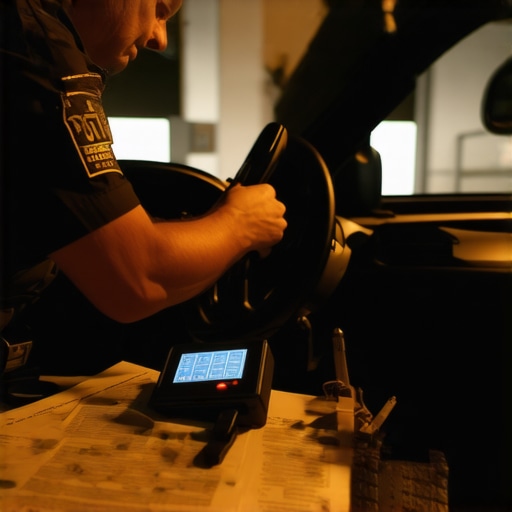
Every breath testing device has a history of errors and malfunctions that the prosecution will never voluntarily disclose during the discovery process. Accessing the full maintenance history through specific litigation motions reveals software glitches and sensor drift that invalidate the specific test results used against you. These machines are not infallible gods of the courtroom. They are aging pieces of hardware maintained by overworked technicians. We look for the repair tickets. We look for the times the machine was taken out of service for RFI interference. If the police department moved a microwave or a new radio base station near the machine, the electromagnetic interference can cause the sensors to spike. We find the ghost in the machine. We find the reason why the instrument was unreliable on the night of your arrest. If the state cannot prove the machine was in perfect working order, they cannot use the number. Without the number, they have no case. This is how we win.