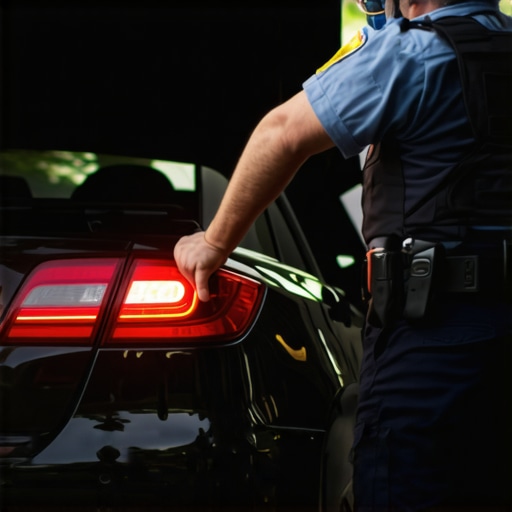
The legal barrier between a police officer and your vehicle trunk
I watched a client lose their entire claim in the first ten minutes of a deposition because they ignored one simple rule about silence. It was a cold Tuesday morning, the air in the conference room smelled like stale coffee and ozone, and my client was nervous. Instead of answering the question asked, they volunteered a detail about where they kept their spare key. That one slip of the tongue gave the opposing counsel enough probable cause to dig into areas we had spent months protecting. This is the exact same way you lose your rights on the side of a highway. You talk because you are scared. You open the trunk because you think it makes you look innocent. In reality, you are just handing the state a win on a silver platter. Litigation is not about being a good citizen; it is about the rigorous application of procedure and the protection of your constitutional territory. If you do not understand the mechanics of the Fourth Amendment, you have already lost the case before the handcuffs even click shut.
The phantom of probable cause in roadside stops
Probable cause requires objective evidence of a crime or contraband within the specific area of the vehicle. Police cannot enter your trunk without a warrant unless they have a nexus between the observed illegal activity and the locked compartment of the automobile. This is the legal standard that protects your privacy.
Most people believe that if a police officer pulls them over for a broken taillight, the officer has the right to look anywhere. That is a lie. The law is a series of boxes, and the trunk is one of the most difficult boxes for the state to open. To get inside without your consent, an officer needs more than a hunch. They need facts that would lead a reasonable person to believe a crime is occurring. If they smell marijuana in the cabin, that might give them the right to search the cabin, but under many state statutes, that smell alone does not automatically grant access to a locked trunk. The search must be tailored to the evidence they expect to find. You do not look for a stolen television in a glove box, and you do not look for an open beer can in a locked trunk unless there is a specific reason to believe it is there. Data from the field indicates that officers often use intimidation to bypass this requirement. They ask, Do you have anything in the trunk I should know about? That is a trap. The moment you answer, you have potentially created the very probable cause they lacked.
“Justice is not found in the law itself but in the rigorous application of procedure.” – Common Law Maxim
The hidden limit of the roadside stop
Vehicle searches are governed by the Fourth Amendment, which protects against unreasonable searches and seizures. A roadside stop is a seizure of the person, and its scope is strictly limited to the original purpose of the traffic stop or investigation. Officers cannot extend the duration without reasonable suspicion.
Procedural mapping reveals that the most common mistake made by motorists is staying in the car and waiting. While you wait for the ticket, the officer is performing a visual sweep. They are looking for seeds on the floorboards, torn plastic baggies, or the smell of masking agents like heavy perfume or air fresheners. These are tactical triggers. While most lawyers tell you to sue immediately after a search, the strategic play is often the delayed demand letter or the immediate request for a supervisor while the stop is still active. By asking for a supervisor, you create a logistical friction point. You force the officer to justify their logic to a superior on a recorded channel before they have time to polish their story for a police report. This is a flank attack on their credibility. If the officer claims they smelled something but the supervisor arrives and disagrees, the probable cause evaporates on the record. This is how you win in the discovery phase months later. You must treat the shoulder of the road like a courtroom. Every word is a deposition.
Why the Carroll Doctrine is your worst enemy
The Carroll Doctrine, also known as the automobile exception, allows warrantless searches if there is probable cause to believe the vehicle contains evidence. This legal rule exists because cars are mobile and could flee before a judge issues a formal warrant. It is a high-stakes exception to privacy.
The Supreme Court established in 1925 that vehicles are different from houses. If a house is under investigation, the police have to wait. If a car is under investigation, it can be in the next county in twenty minutes. This mobility creates a loophole that the state exploits. However, the Carroll Doctrine is not a blank check. The officer must still possess a level of evidence that would satisfy a magistrate. In litigation, we look for the break in the logic chain. If the officer stopped you for speeding and then jumped straight to a trunk search without any intervening facts, that is a Fourth Amendment violation. We use the exclusionary rule to toss out everything they found. It does not matter if there was a kilo of cocaine in the trunk; if the procedure was broken, the evidence is poison. The state hates this. They want you to believe that the discovery of a crime justifies the search. It does not. The search must be legal at the moment it begins, not justified by what it reveals. This is the difference between a settlement mill lawyer and a trial attorney who knows how to gut a prosecution’s case.
The anatomy of a valid vehicle search warrant
A valid search warrant for a trunk must be signed by a neutral magistrate and based on affidavits establishing probable cause. It must specifically describe the vehicle and the items to be seized. A general warrant is unconstitutional and can be challenged in court during litigation.
When an officer actually takes the time to call a judge for a warrant, they are often on solid ground, or they are desperate. You have the right to see that warrant. You have the right to read the scope. If the warrant specifies the passenger compartment and they open the trunk, they have exceeded their authority. In the world of high stakes litigation, these margins are where cases are won. We analyze the time stamps. We check the GPS data of the patrol car. We look at the exact phrasing the officer used when speaking to the judge. Often, officers will exaggerate their observations to get a signature. If we can prove a material misrepresentation, the warrant is void. This is forensic legal work. It requires a cold, clinical look at the facts. Many people think they can talk their way out of a search. You cannot. You only talk your way into a conviction. The only thing that stops a badge is a piece of paper or a procedural firewall.
“The right of the people to be secure in their persons, houses, papers, and effects, against unreasonable searches and seizures, shall not be violated.” – United States Constitution, Fourth Amendment
Tactics for the motion to suppress evidence
A motion to suppress is a legal filing used to exclude evidence obtained through illegal police conduct. It relies on case law and constitutional protections to invalidate the prosecution’s case. If the motion is granted, the illegal evidence cannot be used at trial.
This is where the real fight happens. In a motion to suppress, we put the officer on the stand. We question them about the lighting, the weather, their line of sight, and their training. We use their own body camera footage against them. If the officer says they saw a bulge in your pocket that looked like a weapon, but the footage shows they were standing behind you, the credibility of the entire search collapses. Most lawyers are afraid to be aggressive in these hearings. They want to maintain a good relationship with the prosecutor. I do not care about the prosecutor’s feelings. I care about the ROI of your defense. If the police violated the protocol for a trunk search, I am going to make sure the judge knows it. The goal is to make the evidence disappear. Without the contents of the trunk, the state usually has no case. They are forced to dismiss. This is the brutal truth of the legal system: it is a game of rules, and if the police do not follow them, they do not get to play.
What the defense does not want you to ask about inventory procedures
Inventory searches are administrative procedures used when a vehicle is impounded. Police claim these searches are to protect your property and officer safety. However, they are often used as a pretext to search a trunk without probable cause or a warrant.
This is the biggest loophole in the book. If the police arrest you for something minor and decide to tow your car, they can perform an inventory search. They will tell you it is to make sure your belongings do not go missing. In reality, it is a free pass to look everywhere, including the trunk. To fight this, we look at the department’s written policy. Every police department must have a standardized, written procedure for inventory searches. If the officer deviated from that policy by even a fraction, the search is illegal. If the policy says they must list every item and they only list the drugs they found, the search is a sham. We use the department’s own paperwork to bury them. While the average person thinks they are being helpful by consenting to a search to avoid a tow, the strategic play is to refuse and then challenge the inventory process later. Never make it easy for them. The legal system is built on friction; use it. Each step of the process is an opportunity for the state to fail, and when they fail, you win. This is not about being lucky; it is about being better prepared than the person with the badge. “