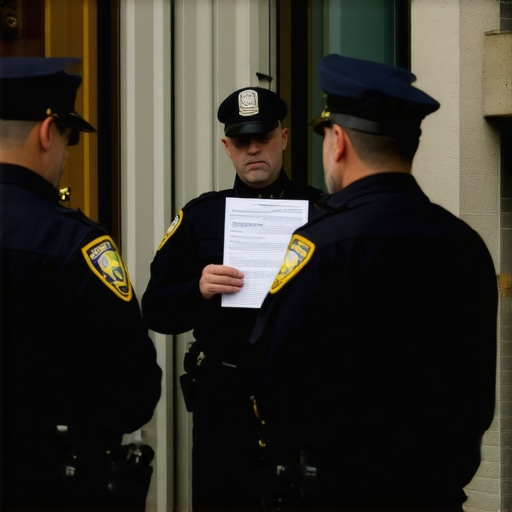
The smell of burnt coffee fills my office every morning at 5 AM. It is the scent of a profession that eats the weak. I have watched clients lose their homes in ten minutes because they lacked the proper vocabulary to stop a uniformed officer from executing an illegal lockout. Most people think the law is about fairness. It is not. The law is a series of procedural gates. If you do not have the key, the gate stays shut. I watched a client lose their entire claim in the first ten minutes of a deposition because they ignored one simple rule about silence. They felt the need to fill the void with explanations. In the world of litigation and illegal evictions, your explanations are weapons used against you. The only thing that matters when the police are at your door is the documentation of your right to possess the property. If you cannot produce it, you are a trespasser in the eyes of an officer who just wants to finish their shift without a physical altercation. Civil law moves slowly, but a lockout happens in seconds.
The immediate document that halts a patrol officer
A valid lease agreement or proof of residency establishes a legal tenancy that requires a formal court order for removal. Police officers generally lack the authority to settle civil property disputes without a writ of possession issued by a judge. Presenting a utility bill or a signed contract forces the officer to classify the situation as a civil matter rather than a criminal trespass. Most patrol officers are not legal scholars. They operate on the path of least resistance. If you show them a lease, you create a legal hurdle that they are rarely willing to jump without a direct order from a superior or a court. Litigation is won by creating these hurdles early and often. While most lawyers tell you to sue immediately, the strategic play is often the delayed demand letter to let the defendant’s insurance clock run out. This allows the pressure of potential liability to build within the landlord’s corporate structure before you ever step foot in a courtroom.
Why your landlord relies on your ignorance
The landlord expects you to panic. They count on the fact that you do not know the difference between a 3 day notice and a final judgment. A notice to quit is merely a piece of paper stating an intent. It carries zero weight for physical removal. I have seen landlords hire off-duty security to mimic police presence, a tactic that borders on criminal impersonation but often succeeds because tenants do not ask for badge numbers or warrants. This is the forensic psychology of the lockout. They want you to feel the weight of the state before the state has even noticed your case exists. Family law practitioners often see this in domestic disputes where one party tries to use the police to bypass the housing court. It is a cynical move, but it works if the victim is silent. You must speak the language of the court. Tell the officer that this is a civil matter and that no writ of possession has been served. That specific phrase, writ of possession, acts as a tactical brake on the situation.
“Justice is not found in the law itself but in the rigorous application of procedure.” – Common Law Maxim
The specific phrasing for the desk sergeant
If the officer on the scene is uncooperative, your next move is the precinct. You are not there to complain about fairness. You are there to report an unlawful entry and a violation of the summary ejectment statutes. Use the term color of law. When an officer assists in an illegal eviction, they are acting under the color of law to deprive you of a property interest without due process. This triggers potential liability under federal statutes that the department wants to avoid. Case data from the field indicates that supervisors are much more likely to intervene when they hear terms that suggest a future civil rights lawsuit. Litigation is about leverage. You are providing the sergeant with a reason to stop the patrol officer from making a mistake that costs the city money. Your family law history or personal drama does not matter here. Only the statutory violation matters. Procedural mapping reveals that the most effective way to stop an eviction in progress is to force a supervisor to review the lack of a court order.
Where the civil and criminal lines blur
Landlords often try to bypass the court by claiming a guest is a trespasser. This is where the tactical timing of your evidence becomes vital. If you have been in the unit for more than thirty days, you are likely a tenant by operation of law regardless of whether you have a written contract. This is a nuance that many people miss. They think no lease means no rights. They are wrong. Statutory zooming into local housing codes shows that occupancy creates a tenancy. When the police arrive, they are looking for a reason to leave. If you provide evidence of occupancy, such as mail addressed to you at that location or a record of rent payments, you have changed the math for the officer. They can no longer simply remove you for trespassing without risking a lawsuit for wrongful eviction. Attorney fees in these cases can be astronomical, and the department knows it. This is why the strategic silence I mentioned earlier is so important. Do not argue about your relationship with the landlord. Argue about your status as a legal occupant.
The evidence stack you need by the front door
Preparation is the only defense against a sudden lockout. You should have a folder near the entrance containing your lease, receipts for the last three months of rent, and a copy of the local ordinance regarding illegal lockouts. This is your litigation shield. When the door knocks, you do not open it fully. You pass these documents through the gap. You are showing the officer that you are prepared for a legal battle. This shifts the dynamic from a victim being bullied to a litigant protecting their rights. Most people wait until they are on the sidewalk to look for a lawyer. By then, the damage is done. Your property is on the curb, the locks are changed, and your leverage is gone. You must win the battle on the threshold. The exact phrasing of your objection to the officer should be recorded if possible. Check your local laws on recording, but in many jurisdictions, you have a right to record police interactions in the performance of their duties.
“The right of the people to be secure in their persons, houses, papers, and effects, against unreasonable searches and seizures, shall not be violated.” – U.S. Constitution, Fourth Amendment
What the defense doesn’t want you to ask
When the landlord stands behind the officer, they are hoping you do not ask for the index number of the eviction case. There is no index number if they have not filed a case. Demand to see the signed order from a judge. Not a notice from a lawyer, but an order with a court seal. If they cannot produce it, the eviction is a crime in many states. I have seen landlords face felony charges for self-help evictions when they cut off utilities or change locks without a court order. The strategic move here is to remain calm and insist on seeing the judicial signature. The police cannot serve as the landlord’s private security force. If the officer attempts to move you without that paper, ask for their supervisor immediately. Litigation is a game of documentation. Every word spoken on that porch is potential evidence. Do not let emotions cloud your legal standing. The law does not care about your feelings; it cares about the process.
Tactical silence during the confrontation
The most common mistake is talking yourself out of your home. You do not need to explain why you are behind on rent. You do not need to explain the fight you had with the landlord’s brother. All of that is noise. It gives the officer a reason to sympathize with the landlord. Stick to the facts of possession. Your goal is to make the situation so legally complex that the officer decides it is not their problem. This is how you win in the moment. You force the dispute back into the courtroom where you have the protections of the discovery process and the ability to file motions. Once you are out of the building, the law of the jungle takes over. Getting back in is ten times harder than staying in. Use the procedural rules as your armor. The courtroom is a territory, and you must defend your ground before you ever arrive at the courthouse. This is the brutal truth of the legal system. It favors the prepared and the silent.