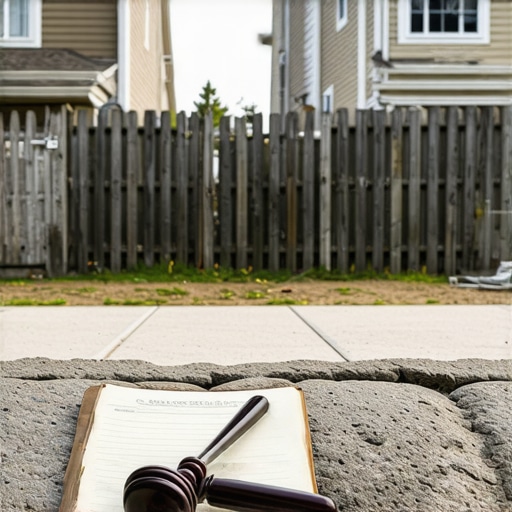
The aggressive litigation path to forcing a neighbor to fix their collapsing fence
I recently spent 14 hours deconstructing a contract that was designed to be unreadable, only to find the one clause that changed everything. That experience is why I do not trust the friendly neighbor handshake or the casual request over the driveway. When a fence is leaning into your yard, or the wood is rotting onto your grass, your neighbor is not just being messy. They are infringing upon your property rights. Most people approach this with a soft touch, hoping for common sense to prevail. I am here to tell you that common sense died the moment the first nail rusted through. You do not need a friend. You need a strategy that uses the full weight of the civil code. If you expect your neighbor to act out of the goodness of their heart, you have already lost. The legal system is built for the persistent, not the polite. We are going to look at the cold, hard mechanics of property disputes and how you can use litigation to secure the results you deserve.
The hard reality of property line disputes
To force a neighbor to fix a fence, you must establish legal standing through a certified property survey and a formal demand notice based on local fencing statutes. You must prove the structural failure and the boundary location while documenting the shared maintenance obligations under state law or HOA covenants. I have seen too many homeowners walk into my office with photos of a broken fence but no proof of where their property actually ends. Without a survey, you are shouting into the wind. The law does not care about your feelings or your aesthetic preferences. It cares about boundaries and duty. In many jurisdictions, the Common Fence Doctrine or similar statutes dictate that neighbors share the cost of a boundary fence equally. If one party refuses to pay, they are in violation of a statutory duty. Like high conflict family law cases, these disputes are often about more than just wood and wire. They are about power. Professional legal services exist to shift that power back to the party who follows the rules. Do not assume the fence is on the line. Find out. Then act.
The evidence you need before filing suit
Evidence in a property dispute is not just about a few iPhone photos. It is about forensic documentation of neglect and the economic impact on your land. You need a timeline. You need receipts. You need a professional inspection report from a contractor who can testify to the structural instability of the barrier. Case data from the field indicates that judges are far more likely to grant a mandatory injunction when the plaintiff can show a clear safety hazard or a quantifiable loss in property value. This is where most people fail. They wait until the fence is flat on the ground. The strategic play is to document the progressive failure of the structure over months. This establishes a pattern of negligence that is difficult for a defendant to argue against in a deposition. You are building a case for private nuisance. A collapsing fence is a nuisance because it interferes with the quiet enjoyment of your land. It creates a liability risk. It may even harbor pests or create an attractive nuisance for children. Every one of these points is a weapon in your arsenal. Use them.
“The integrity of property lines is the bedrock of civil society and the primary source of neighborly friction.” – American Bar Association Property Law Journal
The failure of the standard demand letter
While most lawyers tell you to sue immediately, the strategic play is often the delayed demand letter to let the defendant’s insurance clock run out. This is a contrarian take. A standard demand letter is often ignored because it has no teeth. It looks like a template from the internet. Your attorney should craft a letter that reads like a pre-trial brief. It should cite the exact municipal codes and state statutes that the neighbor is violating. It should include the survey and the inspection report. It should give a hard deadline with no room for negotiation. The goal is to make the neighbor realize that the cost of litigation will far exceed the cost of the fence. You are not asking for a favor. You are informing them of an impending legal liability. I have seen cases where a well-drafted letter settled a dispute in forty eight hours. I have also seen cases where a weak letter emboldened a neighbor to stay stubborn. The tone must be clinical and absolute. You are the architect of their upcoming legal headache. Make sure they know it.
The discovery process for boundary maintenance
Discovery is the phase where the truth is squeezed out of the opposition through interrogatories and requests for production. In a fence case, this means forcing the neighbor to produce property deeds, insurance policies, and any previous survey records they may have. You want to know if they have ever filed a claim for storm damage and pocketed the money instead of fixing the fence. That is a fraud angle that changes the entire nature of the case. Procedural mapping reveals that most defendants fold during discovery because they do not want to hand over their personal records. They do not want to sit for a deposition where an aggressive lawyer will grill them on their maintenance habits for three hours. This is where statutory and procedural zooming becomes your best friend. We look at the exact dates. We look at the wood grade. We look at the depth of the post holes. We find the building code violations that the city inspector missed. Every small detail is a brick in the wall of your victory. [image placeholder: A professional legal team reviewing property surveys and structural engineering reports for a fence litigation case]
The cost of a neighbor’s negligence
Litigation is an investment, and you must calculate the return on investment before you pull the trigger. A fence may cost five thousand dollars to fix, but the legal fees to force the fix could be double that. This is the brutal truth that other lawyers will not tell you. However, you must also factor in the diminution of value to your property. A collapsing fence makes a home unsellable. It invites trespass. It creates a tort liability if someone gets hurt on your property because of the neighbor’s failure. In many states, the prevailing party in a property dispute can recover their attorney fees if there is a specific statute or contract in place. This is the ultimate leverage. If you can show that the neighbor acted in bad faith, you may be able to make them pay for your lawyer. This is not a guarantee, but it is a powerful threat. You are playing for keeps. You are not just fixing a fence; you are protecting your largest financial asset. The legal system is a tool. It is sharp, and it is heavy. Use it correctly, or do not use it at all.
“Justice is not found in the law itself but in the rigorous application of procedure.” – Common Law Maxim
The way to secure a final judgment
The final stage of this process is the judgment. If the neighbor still refuses to budge, you go to trial. This is where you present your expert witnesses and your forensic evidence. You show the jury, or the judge, the path of the encroachment. You show the statutory violations. A court order to repair a fence is a powerful document. If they ignore the court, they are in contempt. At that point, the sheriff can get involved. You can even get a judgment lien against their property. This means they cannot sell their house or refinance their mortgage without paying you back for the fence and the legal costs. This is the