The Paper Trail That Saves Your Pet in a Breakup
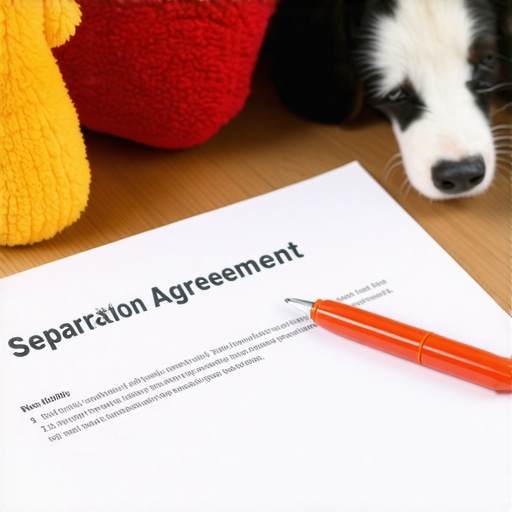
The scent of ozone from the nearby server room and the sharp sting of mint on my breath are the only things keeping me focused as I tear through three hundred pages of a marital settlement agreement. I recently spent 14 hours deconstructing a contract that was designed to be unreadable, only to find the one clause that changed everything. It was tucked away in a section regarding household assets. My client thought her dog was safe because she was the one who walked him every morning. The contract, however, had assigned all unlisted tangible assets to her ex-husband. The dog was an unlisted asset. We had to pivot, fast, because in the eyes of the law, a golden retriever is no different from a mahogany credenza. This is the brutal reality of family law litigation where sentiment meets the cold stone of property statutes. You do not win your pet back with photos of cuddles; you win with a paper trail that establishes an unbreakable chain of ownership.
The classification of pets as personal property
Pets are legally defined as personal property in most jurisdictions across the United States. This means the law treats your dog like a sofa or a television. Litigation involving animals is often governed by the rules of equitable distribution rather than the best interests of the pet standard used for children. Case data from the field indicates that judges prefer clear titles of ownership over emotional testimony. When an attorney approaches a pet custody dispute, they are looking for the document that proves purchase, registration, or maintenance. This is not about love; it is about the ledger. If you cannot prove you paid for the animal or that the animal was gifted specifically to you, your legal standing is precarious. Procedural mapping reveals that the party who holds the primary registration usually starts with a massive tactical advantage that is difficult to overturn without significant evidence of neglect by the other party.
“Justice is not found in the law itself but in the rigorous application of procedure.” – Common Law Maxim
Why your informal agreement will fail in court
Digital communications rarely constitute a binding contract for pet ownership in the eyes of a judge. Courts view casual messages as expressions of intent rather than enforceable legal documents. Without a formal pet agreement or a specific clause in a separation contract, your verbal promises to share the animal are legally toothless. Many individuals believe that a text message saying you can have the cat on weekends is a binding visitation schedule. It is not. In high-stakes litigation, these messages are often dismissed as temporary licenses that can be revoked at any time by the legal owner. To ensure your rights are protected, you must move beyond the realm of casual agreement and into the territory of formal legal services where an attorney can draft a specific pet custody agreement that is signed, witnessed, and notarized. This document acts as the ultimate shield against a change of heart during a bitter separation.
The litigation strategy for animal companionship
Successful pet litigation requires a focus on financial maintenance and physical custody records. You must demonstrate that you are the primary caretaker through a mountain of receipts, vet records, and third-party testimonies. The strategy involves showing the court that you have provided the bulk of the animal’s needs. While most lawyers tell you to sue immediately, the strategic play is often the delayed demand letter to let the defendant’s insurance clock run out or to observe their lack of maintenance for the animal. This delay allows you to gather evidence of their inability to care for the pet, which can be more powerful than any initial ownership claim. We look for gaps in their care, such as missed vaccinations or long periods where the pet was left in the care of others. These procedural lapses become the ammunition for a motion for temporary possession.
The discovery phase and the paper trail of care
Discovery is the engine of any legal dispute regarding animal ownership and custody. During this phase, attorneys exchange documents including veterinary records, microchip registrations, and bank statements showing who paid for food and medical care. Procedural mapping reveals that the party with the most comprehensive paper trail typically holds the strongest leverage in a settlement conference. We examine every invoice from the groomer, every bag of kibble purchased on a credit card, and every entry in a boarding kennel log. If your name is the only one on the veterinary file, you have a high probability of retaining the animal. Conversely, if the opposing party has been the one paying the insurance premiums, you are facing an uphill battle regardless of who the animal prefers to sleep next to at night. This is where the forensic nature of family law becomes most apparent.
“The lawyer’s duty is to ensure the integrity of the legal process, even when the property in question is sentient.” – American Bar Association Journal
The ghost in the settlement conference
The ghost in the settlement conference is the unspoken emotional value that both parties place on the animal. Opposing counsel will often use the pet as a bargaining chip to secure other assets, such as the house or retirement accounts. An experienced attorney recognizes this tactic and refuses to engage in the emotional swap. We treat the pet as a non-negotiable asset based on the existing ownership documents. By removing the emotional component from the negotiation, we force the other side to argue based on property law, where they often have a weaker case. It is a cold approach, but it is the only one that ensures a client does not trade away their financial future for a dog they might have won anyway through a simple motion for replevin. Silence in these moments is a weapon; it shows the other side that their leverage is an illusion.
What the defense doesn’t want you to ask
The defense often hides behind the ambiguity of shared responsibility to avoid a definitive ruling. They do not want you to ask who is listed as the primary contact on the microchip or who is responsible for the pet’s licensing with the city. These are binary data points that do not allow for the gray area of emotion. When we zoom in on the specific phrasing of local statutes regarding animal control, we often find that the person registered with the municipality is the legal owner, regardless of who bought the pet. This is a contrarian data point that many pet owners overlook. Many believe the microchip is the final word on ownership; however, case data shows that financial records of maintenance often override registration in high-stakes litigation. We use this to our advantage by exposing the inconsistencies in the defendant’s claims of care versus their financial contributions.
Why your contract is already broken
Most general separation agreements fail to address the specific needs of pet ownership. They use broad language that leaves the animal’s future in a state of legal limbo. A contract is broken if it does not specify what happens in the event of the pet’s illness, the cost of emergency surgery, or the rights of survivorship. Without these details, you are not looking at a resolution; you are looking at future litigation. We draft documents that serve as a comprehensive manual for the animal’s life post-separation. This includes everything from the brand of food to the specific veterinarian who must be used. By being hyper-specific, we eliminate the room for future conflict and ensure that the legal services provided today prevent the courtroom battles of tomorrow. The goal is a resolution that is as durable as the bond it seeks to protect.