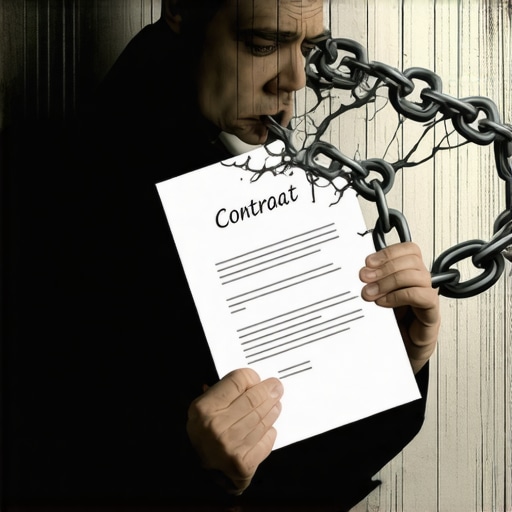
I recently spent 14 hours deconstructing a contract that was designed to be unreadable, only to find the one clause that changed everything. The ink was barely dry, but the stench of desperation from my client was older. They had been cornered in a backroom, threatened with financial ruin, and told that if they did not sign by midnight, their legacy would be liquidated. Most lawyers look at that situation and see a lost cause. I see a tactical opening. Contract law is not a set of polite suggestions; it is a framework of consent. When consent is manufactured through fear, the entire structure of the agreement collapses. If you signed a document with a metaphorical gun to your head, you are not bound by it, but proving that in a courtroom requires more than just feeling pressured. It requires a forensic dismantling of the environment in which that signature was procured.
The anatomy of a forced signature
Duress requires more than just a bad deal or pressure. It involves a wrongful threat that leaves the victim with no reasonable alternative but to sign. Courts examine the specific illegal or improper act used to compel consent, such as physical threats, economic extortion, or psychological manipulation. To void a contract, you must demonstrate that the threat was the effective cause of the signature. This means showing that the pressure was so immense that your free will was essentially suspended. We look for the breaking point. We analyze the timeline leading up to the signature to identify the specific moment the coercion began. Was it a sudden threat of physical harm? Was it a calculated move to withhold vital business assets until a signature was provided? The law differentiates between hard bargaining and illegal coercion. Hard bargaining is a part of life. Duress is a legal defect that renders the contract voidable at the option of the victim. If you can prove that the other party’s conduct was wrongful and that you had no other way out, the contract is dead on arrival.
Where the pressure crosses the legal line
Legal duress occurs when one party utilizes an unlawful act or a threat of an illegal act to obtain a signature. This is not the same as hard bargaining. The threat must be sufficient to overcome the will of a person of ordinary firmness, effectively stripping them of their free agency. In the world of litigation, we focus on the Restatement (Second) of Contracts Section 175. This section dictates that if a party’s manifestation of assent is induced by an improper threat by the other party that leaves the victim no reasonable alternative, the contract is voidable. Improper threats include more than just criminal acts. They can include threats of civil litigation made in bad faith or threats to breach an existing contract in a way that would cause irreparable harm. If the defendant knew that threatening to pull their support from a joint venture would bankrupt you, and they used that leverage to force you into a new, predatory agreement, that is economic duress. The courts look for a nexus between the threat and the signing. If you signed because you were scared of losing your house due to their illegal actions, the law provides a pathway to rescission.
“Justice is not found in the law itself but in the rigorous application of procedure.” – Common Law Maxim
The deposition trap for the coerced party
Depositions in duress cases are won or lost on the timing of the objection. If you cannot pinpoint the exact moment your free will was extinguished, the defense will paint you as a sophisticated negotiator who simply regrets the financial outcome. Silence in the face of pressure is often fatal. During a deposition, the defense attorney will try to make it seem like you had a choice. They will ask about your education, your business experience, and why you did not just walk away. My job is to ensure the record shows that walking away was impossible. We use the discovery process to hunt for the defendant’s internal communications. We look for the emails where they discussed “putting the squeeze” on you. We look for the text messages where they planned the ambush. The goal is to show that the environment was curated to prevent you from seeking legal counsel or considering other options. If the defense can show that you had twenty four hours to think it over and you did not call a lawyer, your claim of duress becomes much harder to sustain. Timing is the heartbeat of a coercion defense.
Why family law disputes are the epicenter of coercion
Family law cases involving prenups or settlement agreements often hinge on the timing of the signing. If a document is presented minutes before a wedding or during a moment of extreme emotional vulnerability, a court may find that the internal pressure constitutes a form of psychological duress. I have seen prenuptial agreements handed to a spouse while they were literally putting on their wedding dress. That is a textbook case of psychological leverage. The threat is not just about money; it is about the public shame and emotional trauma of cancelling a wedding. The law views this as a lack of meaningful choice. In divorce settlements, one party might threaten to keep the children away unless the other signs over the house. This is a brutal, common tactic. To fight this, we document the emotional state of the client through medical records, witness testimony from friends, and the aggressive tone of the opposing counsel’s communications. If the pressure was designed to exploit a specific vulnerability, the court is far more likely to set the agreement aside. Litigation in family law is often about exposing the power imbalance that led to the signature.
The ghost in the settlement conference
Mediation sessions often harbor hidden coercion when a mediator or attorney oversteps their bounds. To void a contract signed here, you must prove that the environment was so hostile or the pressure so immense that the resulting agreement was a product of fear rather than a meeting of minds. Settlement conferences are supposed to be voluntary, but they often turn into high pressure boiler rooms. If your own attorney tells you that you will go to jail if you do not sign, or if the mediator refuses to let you leave the room until a deal is reached, the line has been crossed. This is the most difficult type of duress to prove because it involves the confidentiality of the mediation process. However, if the conduct was egregious enough, the veil of confidentiality can be pierced. We look for signs of physical exhaustion, the denial of food or water during long sessions, and the direct threats of legal sanctions that have no basis in reality. When the process meant to resolve a dispute becomes a tool of entrapment, the resulting contract is a fraud.
“A contract is a meeting of the minds, not a surrender of the spirit.” – ABA Litigation Journal
Documents that prove you had no choice
Evidentiary support for duress includes frantic emails, medical records showing distress, or witness testimony regarding the threat. The paper trail must demonstrate that you actively sought alternatives but were blocked by the opposing party’s wrongful actions. Documentation is the only shield against a motion for summary judgment. In my 25 years of practice, I have learned that the paper trail never lies. If you were being coerced, your digital footprint will show it. Did you search for “how to get out of a contract” three minutes after signing? Did you send a text to your spouse saying “they are forcing me to do this”? These are the artifacts of duress. We also look for the absence of negotiation. If a fifty page contract was signed without a single redline or change, it suggests that the signer did not have the power to negotiate. We analyze the metadata of the documents. If the contract was created and signed within an hour, the defense of duress becomes much stronger. We zoom into the microscopic details of the electronic signatures to see if there was any hesitation or if the document was signed in a location that suggests a lack of privacy or security.
What the defense doesn’t want you to ask
Ask for the internal communications of the party that applied the pressure. Discovery often reveals the intent to coerce. If the other side planned to use a specific threat to force a signature, their premeditation serves as the primary evidence to void the entire contract under the doctrine of bad faith. The defense will always claim that you are just suffering from buyer’s remorse. They will try to make the case about your regret rather than their conduct. To counter this, we turn the spotlight on them. We demand their financial records to show why they needed you to sign so quickly. We depose their associates to find out if this is a pattern of behavior for them. Often, a bully has a history of using these tactics. If we can show a predatory pattern, the court’s skepticism shifts from you to them. The final assessment is simple: litigation is a battle for the narrative. If you can prove that the contract was a product of their wrongful actions rather than your free choice, you can walk away from the deal and leave them with the bill. This is not about the law being fair; it is about making the law work for the person who was wronged.