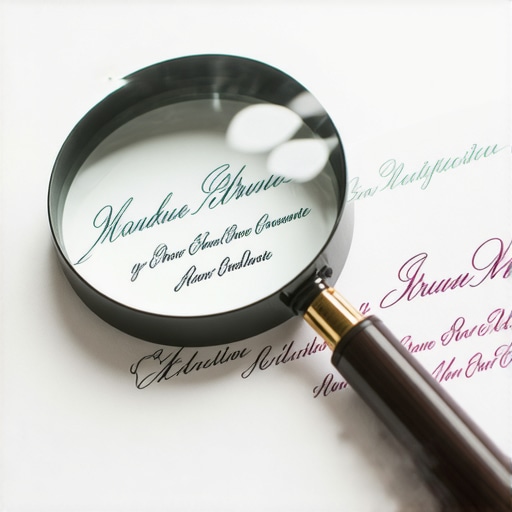
Sit down. Drink your coffee. It is black, bitter, and cold, much like the reality of a contract dispute where the primary defense is a claim of forgery. I watched a client lose their entire claim in the first ten minutes of a deposition because they ignored one simple rule about silence. They felt the need to fill the void with explanations about how they might have signed it or why their signature looks different on Tuesdays. That silence is where cases die. In high-stakes litigation, a forgery claim is not a shield; it is a tactical offensive that requires microscopic precision and a complete lack of sentimentality. If you believe your name was penned by a ghost, you have to prove the ghost exists using the cold tools of forensic science and procedural leverage. The legal services landscape is littered with people who thought they could just say it is not my signature and walk away. That is a fantasy. Litigation is a war of attrition where the ink is the battlefield. We are not looking for truth. We are looking for evidence that survives a cross-examination under the harsh fluorescent lights of a courtroom.
The myth of the perfect copy
To prove a signature was forged, you must immediately secure the original wet ink document for forensic examination. Scans and photocopies hide the hesitation marks, pen pressure variations, and blunt starts that reveal a mechanical or freehand simulation. Expert testimony from a certified document examiner is the primary tool for legal victory. Procedural mapping reveals that most forgery claims fail because the party waits too long to demand the original paper. In the sphere of contract law, a copy is a dangerous hiding place for a fraudster. When we talk about forensic document examination, we are looking at the microscopic interaction between the nib of the pen and the cellulose fibers of the paper. A genuine signature is fluid. It has a natural rhythm and varying degrees of pressure. A forgery, whether it is a slow, painful trace or a practiced simulation, always leaves a trail of hesitation. I have seen cases where the fraudster used a light box. The result is a signature that looks too perfect. It lacks the natural internal variability of a human hand. Case data from the field indicates that a signature that matches an existing genuine signature perfectly is actually more likely to be a forgery. No person signs their name the exact same way twice. We call this the simulation of perfection. If we find two signatures that are identical down to the millimeter, we have found a trace. That is the smoking gun.
“Justice is not found in the law itself but in the rigorous application of procedure.” – Common Law Maxim
Why your digital footprint is the real witness
Digital signatures are verified through metadata analysis, IP address tracking, and audit trails rather than handwriting analysis. To prove a digital forgery, an attorney must subpoena the service provider logs to show the document was accessed from an unauthorized device or location. This technical evidence overrides verbal denials. We are living in a world of DocuSign and Adobe Sign. People think these are bulletproof. They are wrong. While most lawyers tell you to sue immediately, the strategic play is often the delayed demand letter to let the defendant’s insurance clock run out while we quietly gather the metadata. A digital signature is only as good as the email account it is attached to. If your spouse or business partner has your password, your digital signature is a liability. In family law, we often see one spouse sign for the other during a heated divorce. We do not look at the signature; we look at the IP address. If the document was signed from an office in midtown while my client was on a plane to London, the case is over. We use the discovery process to pull every login attempt, every timestamp, and every device ID. This is the new forensic frontier. The strategic timing of a motion to dismiss based on these technical logs can end a multi-million dollar litigation before the first witness is ever called.
Procedural leverage through forensic handwriting analysis
Forensic handwriting analysis requires a minimum of fifteen to twenty genuine signature samples from the same time period as the contested document. An expert examiner uses these exemplars to establish a baseline of individual characteristics including slant, spacing, and terminal strokes to identify fraudulent deviations. You cannot just bring in your driver license and call it a day. We need bank checks, deeds, and letters from the same year. The human hand changes over time. A signature from 2010 is not a valid comparison for a contract dated 2023. We investigate the blunt starts and stops. A real signature usually starts with a flying motion and ends with a tapering flick. A forger starts with the pen already on the paper, creating a heavy, rounded blob of ink. We call this a blunt start. It is the mark of a thief. When we get the expert report, we do not just read the summary. We look at the high-resolution photography. We look at the ink chromatography. If the contract is dated five years ago but the ink was manufactured only two years ago, the defense is finished. This is the level of detail required to win. Anything less is just noise.
“The law of evidence is the system of rules which determines the admissibility of testimony and documents in a court of law.” – American Bar Association
Tactical blunders that kill forgery claims
The most common mistake in forgery litigation is the admission of authenticity through prior conduct or partial performance of the contract. If a party acts as if the contract is valid for months before claiming forgery, the court may apply the doctrine of equitable estoppel to bar the defense. I have seen people pay three installments on a loan and then try to claim they never signed the note. The judge will laugh you out of the building. Your actions speak louder than your handwriting. If you receive the benefits of a contract, you have ratified it, forged or not. This is the brutal truth that many attorneys fail to tell their clients. Litigation is about the entire arc of behavior. We look for the bleed in the ROI of the case. Is it worth fighting a forgery claim if your client already sent an email saying “I am happy with the terms of the deal”? Probably not. The defense will use that email to bury the forgery claim. We call this the evidentiary trap. You have to be consistent from day one. If you claim a forgery, you must act like the document does not exist. You do not negotiate it. You do not pay it. You do not acknowledge it except to denounce it as a fraud.
The ghost in the settlement conference
Proving a forgery in a settlement conference requires the immediate presentation of a preliminary expert affidavit to shift the burden of risk to the opposing party. This creates a credible threat of sanctions and fee-shifting, which often forces a favorable settlement without the need for a full trial. When we walk into a room with a document examiner’s report, the atmospheric pressure changes. The other side starts thinking about their bar license. Forgery is a crime, after all. While we are in a civil litigation sphere, the threat of a referral to the District Attorney is a powerful motivator. We use the forensic data as a hammer. We show them the tremor of fraud in the signature. We show them the inconsistencies in the ink. The strategic goal is to make the cost of continuing the lie higher than the cost of walking away. This is not about justice; it is about leverage. A well-timed motion for an evidentiary hearing can break the opposition. We focus on the logistics of the fraud. Who had the document? Who had the most to gain? We build a narrative of opportunity that supports the forensic evidence. That is how you win a settlement conference before the mediator even opens their mouth.
Family law disputes where the ink is still wet
In family law, forgery often involves prenuptial agreements or property transfers where one party has access to the other person’s personal documents and writing style. These cases require a deep dive into the historical timeline of the relationship to prove the lack of opportunity to sign. Family law is where the most desperate forgeries happen. It is personal. It is messy. I have seen spouses forge signatures on house deeds to pull out equity before a divorce filing. In these cases, the handwriting is often very good because the forger has had years to practice. We do not rely on the signature alone. We look at the notary. Was the notary a friend of the forger? Was the notary even present? We often find that the notary block is the weakest link. If we can prove the notary was not there, the document is dead, even if the signature looks real. This is the flank attack. We don’t go through the front door of the signature; we go through the side door of procedural non-compliance. The lawyer who focuses only on the ink is a lawyer who loses. You have to focus on the entire apparatus of the signing event. Who was in the room? What was the weather? Where is the original pen? Every detail is a potential weapon.
Statutory requirements for a valid forgery defense
State statutes often require that a forgery defense be pleaded with particularity, meaning the specific facts of the alleged fraud must be detailed in the initial responsive pleading. Failure to meet these heightened pleading standards can result in a waiver of the forgery defense entirely. You cannot just file a general denial. You have to be specific. You have to name the names and cite the dates. This is where the ex-military strategist approach comes in. We view the pleading as a deployment of forces. If we miss a statutory deadline for disclosing our expert witness, our evidence is suppressed. The court does not care if the signature is a fake if you did not follow the rules of civil procedure. This is the microscopic reality of the law. It is a game of checklists and deadlines. We map out the discovery schedule to ensure we have the original document in our possession before the defendant has a chance to lose it in a suspicious office fire. The bottom line is this. If you cannot prove the forgery through a combination of forensic science and strict procedural adherence, you have already lost. The law favors the written word on the page. To erase that word, you need more than a story. You need a forensic autopsy of the contract. The coffee is gone. The deposition starts tomorrow. Be silent. Let the ink do the talking.