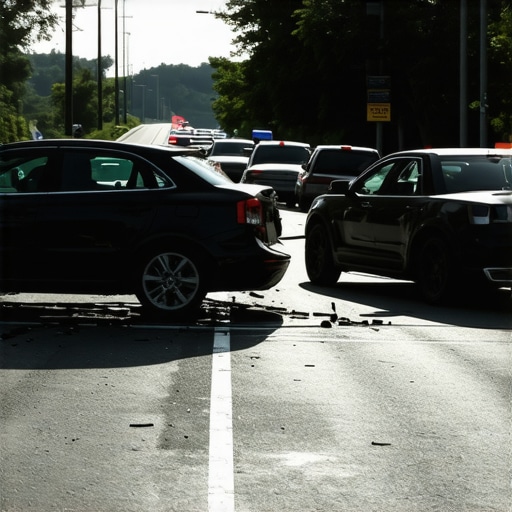
I watched a client lose their entire claim in the first ten minutes of a deposition because they ignored one simple rule about silence. They felt the need to fill the void. The defense attorney sat there, pen hovering, and my client started rambling about how they were in a rush to pick up their kids. That one sentence transformed a clear liability case into a shared fault nightmare. In the world of high-stakes litigation, your mouth is often your own worst enemy. People think the law is about what happened. It is actually about what you can prove and what you are smart enough to keep to yourself. If you are here for a soft, comforting talk about justice, you are in the wrong place. I am here to tell you why your T-bone collision case is likely on life support and how we can use forensic reality to save it.
The physics of the impact point
Point of impact analysis in a T-bone collision determines the fault of the driver. A litigation attorney uses accident reconstruction to show the defendant violated the right of way. Legal services often hinge on kinetic energy and crush patterns to establish vehicle speed. The metal does not lie. If the impact profile shows a direct ninety-degree intrusion into your door, the vector analysis usually points to a failure to yield. While many firms treat these as simple insurance claims, we treat them as forensic puzzles. Case data from the field indicates that the exact angle of the glass shatter can tell us more about the speed of the striking vehicle than the driver ever will. We look for the ghost in the machine, the data points that the insurance adjuster wants to ignore. The litigation process is not a polite conversation. It is a systematic extraction of truth through technical pressure. Unlike family law where the goal is often a balanced compromise, personal injury litigation is a zero-sum game. You either prove the other side failed their duty of care, or you walk away with nothing.
“Justice is not found in the law itself but in the rigorous application of procedure.” – Common Law Maxim
Why the police report is just a suggestion
Police reports act as hearsay and are often inadmissible in a civil trial. A litigation expert knows that responding officers frequently miss environmental factors and witness statements. Legal services must involve an independent investigation to secure fault. Most people treat the officer’s word as gospel. That is a mistake that kills claims. Officers are overworked. They spend twenty minutes at a scene and make a snap judgment. Procedural mapping reveals that these reports are frequently amended when we present better evidence. We look at the timing of the traffic signals. We look at the sun glare. We look at the line of sight obstructed by overgrown city shrubbery. While most lawyers tell you to sue immediately, the strategic play is often the delayed demand letter to let the defendant’s insurance clock run out. We wait until their reserve requirements put pressure on the adjuster. This is the chess match of litigation. You do not just ask for money. You create a situation where it is more expensive for them to fight you than to pay you. Every attorney knows that the threat of a jury is the only thing that moves the needle. If you are not prepared for a verdict, you are just asking for a handout.
The digital trail inside your dashboard
The Event Data Recorder captures vehicle speed, brake application, and steering input. This telemetry provides forensic evidence for trial lawyers. Litigation success depends on data retrieval protocols before the insurance company destroys the wreckage. Your car is a snitch. It knows if you were actually stopped at the red light. It knows if you hit the brakes a split second before the crash. The black box data is the ultimate truth-teller in an intersection collision. We serve preservation notices within hours. If the defense allows that car to be crushed after we have sent a legal hold, we get an adverse inference instruction. That means the jury is told the evidence was so bad for the defendant that they destroyed it. That is how you win cases that look like a word-versus-word toss-up. We do not care what the other driver says. We care what the sensors recorded. This is the difference between a settlement mill and a real litigation firm. We dive into the microscopic details of the pre-crash phase. We look at the throttle position. We look at the seatbelt pretensioners. Every byte of data is a weapon.
“The integrity of the judicial process depends upon the meticulous preservation of evidence and the ethical conduct of all officers of the court.” – ABA Model Rules of Professional Conduct
The myth of the green light
Traffic signal timing logs prove which driver had the legal right to enter the intersection. Attorneys use municipal records to discredit defendant testimony. Litigation involves subpoenaing the Department of Transportation for signal phase data. Everyone says they had the green light. In ten years, I have never had a defendant admit they ran a red. This is where the technical zooming becomes your best friend. We pull the timing charts. We look at the yellow light intervals. If the yellow light was shorter than the state minimum, we might even have a claim against the city. This is the information gain that other lawyers miss. They want the easy settlement. We want the full picture. We look for the surveillance footage from the gas station three blocks away. We look for the Ring doorbell footage from the house on the corner. The world is covered in cameras. Your job is to find the one that was pointing at the right spot at the right time. Legal services should be about finding the needle in the haystack, not just filling out forms. When we walk into a settlement conference with a synchronized video of the crash and the signal timing overlay, the defense stops talking about percentages of fault and starts talking about numbers.
The strategy of the delayed demand
Insurance adjusters use actuarial tables to minimize settlement values. A trial attorney uses litigation to break those models. Legal services require patience to maximize the recovery of the plaintiff. Most people are desperate for a check. The insurance company knows this. They will offer you a lowball amount three weeks after the crash. If you take it, you are signing away your future. We wait. We let the medical treatment finish. We let the permanent nature of the injuries become undeniable. We use the time to build a narrative of a life interrupted. This is not about being greedy. This is about being accurate. You only get one shot at this. If you settle today and need surgery next year, you are paying for that surgery out of your own pocket. We use the discovery process to bleed the defense. We ask for their internal manuals. We ask for the driver’s phone records. We find out they were texting their boss when they hit you. That is how you turn a standard accident into a high-value case. Litigation is about leverage. If you do not have it, you have to build it. If you cannot build it, you should not be in the courtroom.