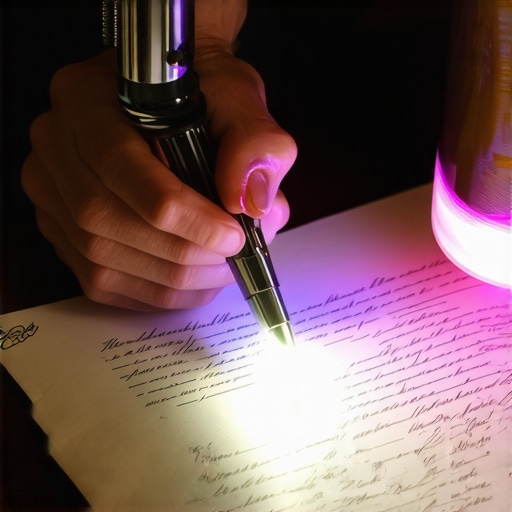
The scent of strong black coffee permeates my office while I look at the document that defines your future. Your case is likely failing before you even walk through my door because you believe the truth is enough to win. In the courtroom, the truth is a secondary casualty to the rules of evidence. I recently spent 14 hours deconstructing a contract that was designed to be unreadable, only to find the one clause that changed everything. It was a probate matter where a multi-million dollar estate hinged on a single line of text that had been meticulously scraped away. The family saw a clean page. I saw a crime scene. A will is not just a piece of paper; it is a physical artifact that carries the microscopic scars of its creation and its alteration. If you think a simple erasure is impossible to prove, you have already lost the strategic high ground. You must view this as a forensic war where the fibers of the paper are the primary witnesses.
The microscopic reality of paper manipulation
Erasure forgery occurs when a party uses mechanical or chemical means to remove testamentary language from a will to change the beneficiary designations. Proving this requires a forensic document examiner to identify disturbed paper fibers and chemical residues that indicate the original text was suppressed through fraudulent means.
When a person uses a physical tool like a razor blade or a high-grit sandpaper to remove ink, they do more than just lift the pigment. They destroy the sizing of the paper. Sizing is the chemical coating that prevents ink from bleeding into the fibers. Once that layer is compromised, any subsequent ink applied to that area will behave differently. It pools. It feathers. It sinks deeper into the pulp than the original text. Case data from the field indicates that these microscopic inconsistencies are the primary way a family law attorney wins a litigation battle over a contested estate. You do not look at the letters; you look at the way the light reflects off the abraded surface. A litigation attorney who knows their business will utilize a Video Spectral Comparator to see through the top layer of ink and reveal the ghost of what was written beneath. If the defendant claims the erasure was a simple mistake by the testator, the procedural mapping reveals that the burden of proof shifts once the physical evidence of tampering is established. While most lawyers tell you to sue immediately, the strategic play is often the delayed demand letter to let the defendant’s insurance clock run out or to force the opposing party to commit to a story in a sworn affidavit that the forensic evidence will later dismantle. This is tactical patience.
“Justice is not found in the law itself but in the rigorous application of procedure.” – Common Law Maxim
The electrostatic detection of hidden intent
Indented writing is the invisible impression left on the pages beneath the original document which can be recovered using Electrostatic Detection Apparatus (ESDA) technology. In probate litigation, this tool allows a legal services provider to prove that an erasure was intentional by showing the pressure patterns of the forged text or the original deleted content.
The law of evidence is cold. It does not care about your feelings of betrayal. It cares about the chain of custody. When we take a will into evidence, we are looking for the pressure of the pen. Even if the ink is gone, the physical compression of the paper fibers remains. This is the shadow of the fraud. If the second page of a will shows indentations that do not match the text on the first page, we have caught the forger. Procedural zooming requires us to look at the exact timing of when the document was in the possession of the primary suspect. We subpoena the notary’s logbook. We look for gaps in the chronological sequence. We look for different ink formulas. Not all black ink is the same. Under infrared light, one pen might glow while another remains dark. This chemical disparity is the smoking gun that proves a will forgery. Most litigants fail because they do not invest in the forensic stage. They want to talk about the testator’s