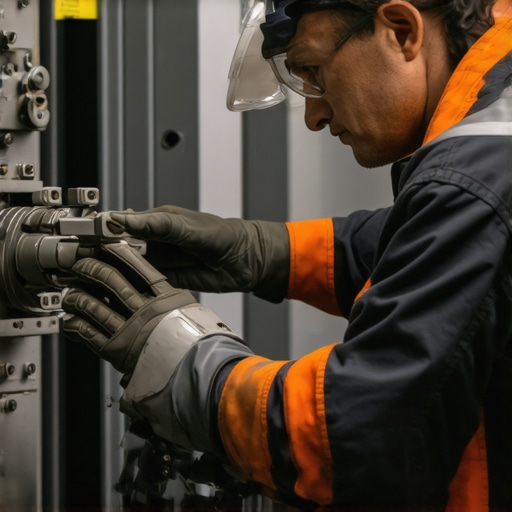
Proof strategies for workplace injuries caused by faulty equipment
I watched a client lose their entire claim in the first ten minutes of a deposition because they ignored one simple rule about silence. He was a machinist with twenty years of experience, a man who knew the vibrations of a lathe better than the sound of his own pulse. When the defense attorney asked if he had ever noticed a flicker in the safety light before the accident, he did not just say yes. He started explaining. He started justifying. He filled the silence with assumptions about maintenance schedules he had never actually seen. By the time he stopped talking, he had admitted to contributory negligence based on a guess. Silence is a weapon in litigation. If you do not know how to use it, the opposition will use it against you. This is the reality of legal services in the world of industrial torts. It is not about what happened; it is about what you can prove through admissible evidence and forensic reconstruction. Most cases are not lost in the courtroom; they are lost in the first forty-eight hours when the machinery is cleaned or the logbooks disappear. This is a cold, procedural game of liability where sentimentality will get you a zero dollar verdict.
The deposition disaster and the cost of silence
Proving a workplace injury caused by faulty equipment requires a disciplined approach to deposition testimony and evidence preservation. An attorney must secure the defective product immediately to prevent spoliation of evidence. Success in these litigation matters depends on expert witness testimony and the chain of custody of the failed component. Case data from the field indicates that the majority of plaintiffs fail because they provide too much subjective information during the initial discovery phase. Your memory is a fallible tool. The defense knows this. They will use your own words to create a narrative where the operator error superseded the mechanical failure. In my experience, the moment a plaintiff tries to be helpful to the defense attorney, the valuation of the case drops by half. Procedural mapping reveals that the first ten pages of a deposition transcript often dictate the settlement leverage for the next two years. You are not there to tell your story. You are there to provide testimony that fits into a pre-constructed legal framework of strict liability or negligence.
“Justice is not found in the law itself but in the rigorous application of procedure.” – Common Law Maxim
The evidence locker and the chain of custody
Securing physical evidence involves a litigation hold directed at the employer and the equipment manufacturer to prevent evidence destruction. The forensic engineer must inspect the failed machinery in its post-accident state without any remediation or repairs. Failure to maintain the chain of custody results in inadmissible evidence at trial. While most lawyers tell you to sue immediately, the strategic play is often the delayed demand letter to let the defendant’s insurance clock run out while you quietly secure third-party maintenance records. This information gain allows the attorney to confront the defendant with facts they thought were buried in internal audits. The litigation process is an extraction of truth from a system designed to hide it. If a hydraulic press fails, I do not just want the press. I want the service history for the last five years, the training manuals for every operator, and the purchase order for the replacement parts. Procedural mapping reveals that a single missing maintenance entry is worth more than a dozen eyewitness accounts. We look for the gaps. We look for the industrial standards that were ignored because a production quota was more important than a safety protocol.
Why your employer already destroyed the proof
Employer liability in workplace injury cases often hinges on intentional spoliation where the faulty equipment is scrapped or repaired before litigation begins. An attorney must file a temporary restraining order to stop the destruction of evidence. This legal strategy ensures the forensic team can examine wear patterns and metallurgical failures. Case data from the field indicates that employers often prioritize operational uptime over legal compliance, leading to the unauthorized repair of defective machinery. When the maintenance crew replaces a blown seal or a shattered guard before the investigator arrives, they are not just fixing a machine. They are tampering with a crime scene. A brutal truth of this legal field is that the safety manager is not your friend. Their job is to minimize corporate exposure. While you are in the emergency room, they are in the breakroom writing a narrative that blames your foot placement or your grip strength. They are looking for the OSHA violation that points at the employee, not the machine. Litigation is the only way to pierce that corporate veil and see the internal emails where they discussed the faulty sensors months before you were hurt.
“A lawyer shall provide competent representation to a client. Competent representation requires the legal knowledge, skill, thoroughness and preparation reasonably necessary for the representation.” – ABA Model Rules of Professional Conduct, Rule 1.1
The expert witness as a tactical weapon
Expert witnesses in product liability provide the scientific basis for the causation between equipment failure and physical injury. These specialists analyze load stresses, electrical surges, and ergonomic defects to testify on the standard of care. A litigation attorney selects an expert based on their ability to withstand Daubert challenges in court. Many people believe legal services are about courtroom speeches, but the real work is the technical analysis performed by a mechanical engineer with a PhD. If the expert cannot explain why the emergency stop button failed in terms of circuitry and logic gates, the jury will default to the defense narrative. We look for manufacturing defects that exist in every unit produced, not just the one that hurt you. This is where mass torts begin. The brutal reality is that an expert witness costs thousands of dollars per hour. This is the ROI of litigation. You are investing in a scientific proof that the manufacturer cannot argue against. If the blueprints show a design flaw, no amount of defense lawyer theatrics can change the physics of the accident.
The trap of the OSHA investigation
OSHA reports serve as a foundation for litigation, but they are often incomplete and can be used as a defense tool if the attorney is not careful. The regulatory fines are often negligible for a large corporation, and the findings may focus on administrative errors rather than mechanical defects. Success requires an independent investigation that goes beyond the government’s scope. Procedural mapping reveals that OSHA investigators are often overburdened and may spend less than four hours on a site. They miss the intermittent electrical fault. They miss the software glitch in the PLC controller. You cannot rely on a government agency to build your personal injury case. An attorney must use the OSHA report as a starting point, not the finish line. The information gain comes from the interview notes the inspector took, not the final citation. Often, the raw data in the investigative file contains admissions from supervisors that never make it into the summary. We hunt for those admissions like forensic predators.
Procedural leverage through the litigation hold
A litigation hold is a formal notice that forces a defendant to preserve all relevant data, including digital logs and physical components. Failure to comply leads to sanctions and a spoliation instruction, which tells the jury to assume the destroyed evidence was harmful to the defendant. This procedural leverage is the most aggressive tool in a trial lawyer’s arsenal. While some general practitioners offer legal services ranging from family law to estate planning, a high-stakes litigation attorney knows that industrial accidents require a forensic mindset. This is not about mediation or polite letters. This is about locking down the facts before they can be sanitized. The brutal truth is that most injured workers wait too long. They trust their employer to do the right thing. By the time they realize the insurance company is lowballing them, the machine has been sold for scrap and the security footage has been overwritten. You must attack the procedure to win the law. Every missed deadline is a victory for the defense. Every vague answer in an interrogatory is a shield they will use at trial. We shred those shields through aggressive discovery and unrelenting pressure on the rules of civil procedure.