I smell like strong black coffee and the recycled air of a windowless deposition room. I have seen the same look of realization on a thousand faces when they realize that the law is not a moral compass but a procedural machine. I once watched a client lose their entire claim in the first ten minutes of a deposition because they ignored one simple rule about silence. They felt the need to fill the air with justification. They started explaining why the verbal deal was fair instead of proving it existed in a legal sense. The judge does not care about your sense of fairness. The judge cares about the elements of a contract and the preponderance of evidence. Litigation is a cold game. If you walked into a small claims court today with nothing but your word, you have already lost. You just haven’t received the judgment yet. Proving a verbal agreement is about forensic reconstruction. You are a historian of a ghost. You are trying to prove that a specific set of words created a binding obligation. Most people fail because they treat the courtroom like a therapy session. It is a battlefield. If you are not prepared to zoom into the microscopic details of your interaction, you should stay home and save the filing fee.
The cold coffee reality of the handshake deal
Proving a verbal agreement requires demonstrating an offer, acceptance, and consideration through secondary evidence like text messages, bank transfers, or witness testimony. Small claims courts do not require a written contract but they demand a preponderance of evidence that a specific promise was made and relied upon for value. You must move beyond your own narrative. The law requires a meeting of the minds. This means both parties understood the terms. In a family law dispute or a general civil matter, the burden is on you. You are the one asking the state to move money from their pocket to yours. The court starts at a position of neutrality, which is functionally a position of skepticism. You need to provide a reason for the judge to believe you over the person who is currently lying to their face. Most lawyers will tell you to sue immediately. The strategic play is often a delayed demand letter. You send a letter that outlines the debt and the verbal agreement in a way that invites a reply. When the defendant replies and argues about the amount instead of the existence of the deal, they have just signed their own confession. That is tactical litigation. That is how you win.
“Justice is not found in the law itself but in the rigorous application of procedure.” – Common Law Maxim
Why your memory is a liability in a court of law
Your memory is not evidence because the human brain reconstructs past events to favor self-interest and emotional narratives rather than objective truth. In the world of legal services, a judge views uncorroborated testimony as a stalemate. To break this deadlock, you must anchor your testimony to external and unchangeable facts like digital logs. A verbal agreement is a sequence of events. First, there was an offer. You must prove exactly what was offered. If you say he offered to fix the car, you are being vague. If you say he offered to replace the head gasket for four hundred dollars by Friday, you are being specific. Specificity is the hallmark of truth. Vague people are seen as liars or fools. The court prefers neither. You need to document the timeline of your conversation. Who was there? What was the weather like? Where were you standing? These details are the sensory anchors that make a story believable. Without them, your testimony is just noise in a crowded docket. This is why litigation is exhausting. It requires a level of detail that most people do not apply to their own lives. You are the architect of your own victory. Do not rely on the judge to find the truth for you. They have ten other cases today. They want to go home. Give them the easiest path to a decision by providing clear, dated, and undeniable evidence of the deal.
The forensic anatomy of a binding promise
A binding promise in a small claims context is defined by the exchange of value which separates a legal contract from a simple gift. If someone promises to give you a car, that is a gift and it is usually not enforceable. If they promise to give you a car in exchange for you painting their house, that is a contract. The painting is the consideration. You must prove that you did your part or were ready to do your part. Litigation often fails because the plaintiff cannot prove they held up their end of the bargain. You need to show the judge the receipts for the paint. You need to show the text messages asking when you could start. You need to show the photos of the finished work. This is the paper trail that proves the verbal agreement existed. Without the trail, you are just a person complaining about a gift. The defense will always argue that there was no agreement or that the terms were different. They will try to muddy the waters. Your job is to keep the water clear. Use short, punchy sentences in your testimony. Do not ramble. Do not get angry. Anger is a sign of weakness in a courtroom. It suggests that your facts are not strong enough to stand on their own. If you have the facts, you can be as cold as the coffee on my desk. The judge will respect the person who is prepared with a chronological folder of exhibits over the person who is waving their arms and shouting about honor. Honor does not pay the bills. Evidence does.
“The lawyer’s role is to translate the client’s chaos into the court’s order.” – American Bar Association Journal on Trial Advocacy
[IMAGE_PLACEHOLDER]
How to manufacture a paper trail from thin air
Manufacturing a paper trail involves sending follow-up communications that confirm the terms of a verbal agreement after the conversation has occurred. This is known as a letter of confirmation and it is the strongest tool in your arsenal. Even if you did not get it in writing at the start, you can get it in writing now. Send an email. Say, I am just following up on our talk from Tuesday where we agreed on the five hundred dollar payment for the repair work. If they do not reply, their silence can be interpreted as acquiescence in some jurisdictions. If they do reply and say they can only pay four hundred, they have just admitted the contract exists. They are now only arguing about the price. You have won the hard part of the case. This is a common tactic in attorney led litigation. It is about trapping the opponent in their own words. Most people are too polite to do this. They think it is sneaky. I think losing your money is worse than being sneaky. Small claims court is a blunt instrument. You have to be the one who sharpens it. Look at your phone records. Look at your GPS history. If you can prove you were at their house for three hours on the day the deal was made, that is circumstantial evidence that the meeting occurred. It is a brick in the wall of your case. You build the wall brick by brick until the defendant has nowhere to run. That is how you get a judgment. That is how you survive the process without losing your mind.
Why the defense wants you to keep talking
The defense strategy in most verbal agreement cases is to let the plaintiff talk until they contradict their own previous statements or evidence. This is the trap of the deposition and the hearing. When you are nervous, you talk. When you talk, you make mistakes. I have seen cases worth thousands of dollars vanish because a plaintiff wanted to be helpful and ended up admitting that the terms were actually a bit flexible. There is no such thing as a flexible contract in court. Either it is a deal or it is not. If you say the price was about five hundred dollars, you have just told the judge there was no fixed price. No fixed price often means no contract. You must be certain. The price was five hundred dollars. The date was June twelfth. The work was the replacement of the water heater. Stop talking after that. Let the defendant try to prove you wrong. Let them be the ones who are vague. Let them be the ones who look like they are guessing. In the world of legal services, the person who speaks the least usually has the most power. You are there to provide facts, not a narrative of your life. Every word you say is a potential weapon for the other side. Do not give them the ammunition. Keep your answers to the point. Yes. No. Five hundred dollars. June twelfth. This staccato delivery projects authority. It tells the judge that you are organized and that your claim is legitimate. It tells the defendant that they are in for a long, difficult afternoon.
The tactical delay that breaks the opposition
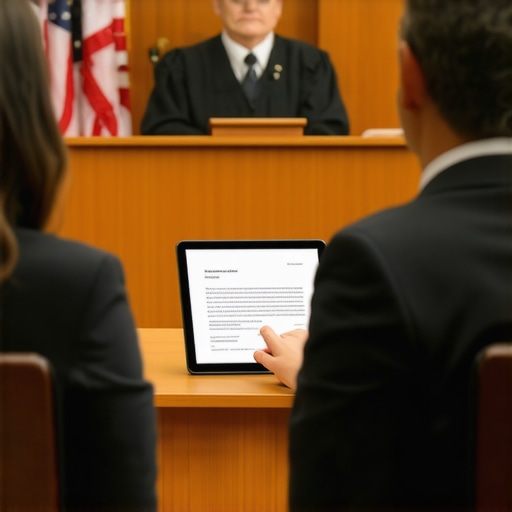
A tactical delay involves waiting to file your lawsuit until you have exhausted every possibility of a written admission from the defendant through informal channels. While most people want to sue the moment they feel wronged, the professional approach is to wait. You want to gather as much digital evidence as possible before the defendant realizes they are being sued and stops talking to you. Once the papers are served, the shutters go up. Before the papers are served, people are often surprisingly chatty. They might apologize in a text. They might explain why they haven’t paid yet. Every one of those messages is a nail in their coffin. Collect them all. Organize them by date. Print them out. Do not just show the judge your phone. Judges hate squinting at small screens. They want a physical exhibit they can mark with a pen. This is part of the procedural zooming that wins cases. The quality of your presentation reflects the quality of your claim. If your exhibits are a mess, the judge assumes your agreement was a mess. If your exhibits are professional, the judge assumes you are a professional who wouldn’t make a deal without clear terms. This is the psychological reality of litigation. It is about perception as much as it is about the law. You are not just proving a contract. You are proving that you are a person who deserves to be paid. That requires discipline, preparation, and a total lack of emotional interference. The law is cold. You should be too.