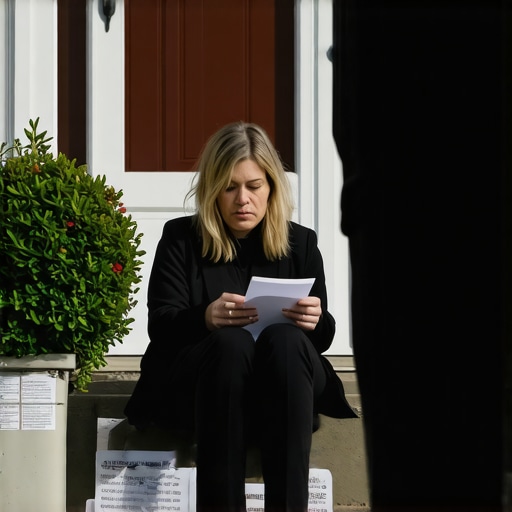
The High-Stakes War Against the Unlawful Ouster
I watched a client lose their entire claim in the first ten minutes of a deposition because they ignored one simple rule about silence. They felt the need to fill the void, to explain why they stayed in a property without a signature on a page. The opposing counsel, a bottom-feeder with a cheap suit and a shark’s grin, let them drown in their own justifications. In litigation, your words are either armor or the blade that cuts you. When you are fighting an eviction without a formal lease, the air in the room turns to ozone. It is sharp, cold, and unforgiving. You are not just fighting for a roof; you are fighting a system that prioritizes paper over presence. But paper is not the only thing that creates a legal reality. You have rights that exist in the gaps of the law, and we are going to weaponize them.
The phantom agreement that binds your landlord
A verbal agreement or a history of accepted rent payments creates a periodic tenancy that grants you full legal protection under state law. Even without a written document, the act of exchanging currency for residency establishes an implied contract that requires formal legal proceedings to terminate or modify in any capacity. Case data from the field indicates that landlords often rely on the tenant’s ignorance of this fact to execute self-help evictions. They assume that if there is no lease, there is no law. They are wrong. Under the doctrine of a tenancy at will, or more commonly a month-to-month tenancy, the landlord is still bound by the statutory notice requirements of your specific jurisdiction. Procedural mapping reveals that the moment a landlord accepts a single dollar of rent, they have entered into a bilateral obligation. They provide habitable space; you provide consideration. If they try to circumvent the court system by changing locks or cutting off the water, they are not just being difficult; they are committing a tort. The litigation strategy here is to document the payment history immediately. Bank statements, Venmo logs, or even handwritten receipts are the bricks we use to build your wall. While most lawyers tell you to sue immediately, the strategic play is often the delayed demand letter to let the defendant’s insurance clock run out, forcing them into a panicked settlement posture when they realize their liability is uncapped.
“Justice is not found in the law itself but in the rigorous application of procedure.” – Common Law Maxim
[image_placeholder]
Evidence that functions as a non-existent contract
Proving a tenancy without a lease requires a forensic reconstruction of your daily life through third-party documentation and digital footprints. Utility bills, government mail, and recurring delivery logs serve as objective evidence of your residence, creating a rebuttable presumption that a legal tenancy exists regardless of the lack of signatures. You must understand that the court views the world through the lens of evidence. If you say you live there, the court asks for the receipts. I recently spent 14 hours deconstructing a series of text messages that a landlord claimed were just ‘negotiations’ but were actually the foundations of a binding oral agreement. We look for the ‘indicia of residency.’ Did you receive your tax forms there? Is your driver’s license registered to that address? The sensory reality of your life is the evidence. The smell of the carpet, the way the light hits the floor at 4 PM, none of that matters in a hearing. What matters is the date stamp on your Amazon package. We use these data points to create a timeline that the landlord cannot refute. When they claim you were a ‘guest,’ we show the court three years of consistent electrical bills in your name. That is the tactical pivot that turns a summary proceeding into a protracted litigation nightmare for the property owner.
The statutory wall protecting the undocumented tenant
Statutory protections for tenants without leases are often identical to those with written contracts, including the right to a formal summons and complaint. Landlords must provide a written notice to quit, typically thirty days in advance, before they can even file a holdover proceeding in a housing court. The law does not distinguish between a hand-shake deal and a hundred-page corporate lease when it comes to the right of due process. Procedural zooming shows that many landlords fail at the very first step: service of process. They leave a note on the door and think the job is done. In a high-stakes litigation environment, we attack the service. Was the notice delivered by a disinterested third party? Was it mailed via certified return receipt? If the landlord missed a single comma in the statutory notice, the case is dead on arrival. We don’t just defend; we counter-attack. We look for housing code violations that were present during the tenancy. If the landlord has been collecting rent on an illegal basement apartment or a unit without a certificate of occupancy, they have walked into a trap of their own making. We can often recover every cent of rent paid under the theory of unjust enrichment.
“The integrity of the legal profession is maintained only when the rules of evidence are applied without bias toward the status of the parties.” – American Bar Association Journal
The tactical leverage of a constructive eviction claim
Constructive eviction occurs when a landlord intentionally makes a property uninhabitable to force a tenant out without a court order. This includes shutting off utilities, removing doors, or allowing dangerous conditions to persist, all of which entitle the tenant to significant monetary damages and legal fees. This is where the landlord’s ego becomes their greatest liability. They think they can bully you because there is no paper. When they shut off the heat in February, they aren’t just being mean; they are handing us a loaded gun. We document the temperature. We call the health department. We create a paper trail that smells like a six-figure settlement. The defense wants you to be scared and cold. Instead, you should be calculated. A constructive eviction claim shifts the burden of proof. Suddenly, the landlord is the one explaining their actions to a judge who has seen a thousand bullies before. We don’t just ask for the locks to be changed back; we ask for emotional distress, punitive damages, and the legal fees it took to bring them to justice. The strategic play is to never leave the property voluntarily unless your physical safety is at risk. Your presence is your leverage. If you leave, the ‘possession’ element of the case evaporates, and you are left chasing a money judgment that might never be collected.
What the defense expects you to ignore
The defense relies on the tenant’s failure to file a formal answer within the narrow window provided by the court, usually between five and fourteen days. By failing to assert affirmative defenses like the breach of the warranty of habitability, the tenant waives their right to a trial. They are counting on your paralysis. They want you to stare at the summons until the clock runs out. In my experience, the first forty-eight hours after receiving an eviction notice are the most important. We file a general denial. We assert every possible defense. We demand a jury trial. Most landlords want a quick, cheap eviction. When they see a litigation architect who is ready to pick a jury and go to a verdict, the math changes for them. They realize that winning the apartment back will cost them fifty thousand dollars in legal fees. That is when the settlement offer arrives. We don’t settle for ‘moving expenses.’ We settle for the value of the peace they stole from you. We use the discovery process to dig into their finances, their other properties, and their history of code violations. We turn their small eviction case into a forensic audit of their entire business model.
The courtroom reality of the holdover proceeding
A holdover proceeding is a specific type of lawsuit where the landlord claims the tenant’s right to remain has expired, but it requires strict adherence to local court rules. Judges in these parts are often skeptical of landlords who cannot produce a lease, fearing an end-run around tenant protections. When we stand before the bench, we speak the language of equity. We point out that the landlord was happy to take the cash for years and only discovered the ‘lack of a lease’ when the tenant requested a repair. Judges hate bad faith. We highlight the hypocrisy. The courtroom is not a place for feelings; it is a place for the cold application of the law. We bring the receipts, the witnesses, and the statutory citations. We make it easier for the judge to rule in our favor than to explain why they ignored the law to help a landlord who couldn’t even be bothered to write a contract. This is the chess game. We move our pieces into the center of the board and wait for the landlord to make a mistake. They almost always do. They get angry. They lie. And then, we have them.
Strategic takeaways for the undocumented tenant
Your situation is not a weakness; it is a different kind of strength. The lack of a written lease means the landlord is bound by the default laws of the state, which are often more favorable to the tenant than a predatory corporate contract would be. You have the right to notice, the right to a hearing, and the right to live in a home that doesn’t crumble around you. Do not let them intimidate you with the silence of an empty page. Collect your evidence. Keep your records. Hire a lawyer who treats the courtroom like a battlefield. The law is a tool, and in the hands of a skilled architect, it can build a fortress around your home. We do not accept defeat. We do not settle for crumbs. We fight until the final gavel falls, and we make sure the landlord remembers the day they tried to treat a tenant like they didn’t exist.