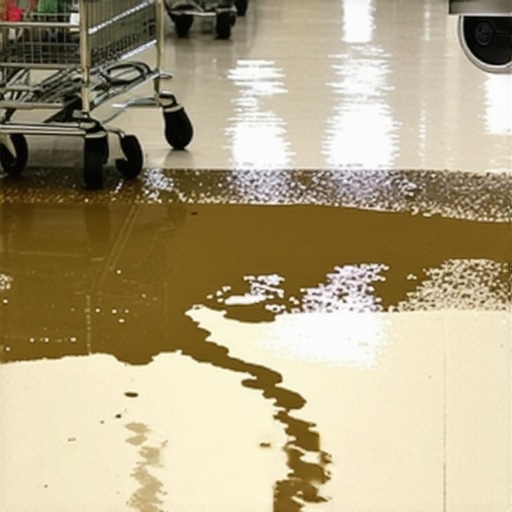
The smell of burnt coffee and cheap toner fills my office when these cases land on my desk. Most people think a slip and fall is a lottery ticket. They are wrong. It is a war of attrition where the store has the home field advantage and all the surveillance equipment. To win a case where a spill sat for over an hour, we do not look at the water. We look at the clock. We look at the gaps in the employee logs. We look at the graininess of a security feed that has been recorded over ten times. I watched a client lose their entire claim in the first ten minutes of a deposition because they ignored one simple rule about silence. They were asked how long the puddle had been there. Instead of admitting they did not know, they guessed it looked new. That single word ended the case. The store won because the client gave them an exit ramp. My job is to close those ramps before the defense even sees them. We are hunting for constructive notice. This is the legal fiction that the store should have known about the hazard because they had sixty minutes to find it.
The deposition disaster that ends the claim
Constructive notice exists when a hazard remains on a floor long enough that a reasonable store owner should have discovered it. Evidence includes dirty liquid, track marks from carts, or security footage showing no inspections for sixty minutes. This proof shifts the burden of liability onto the retail entity. I have seen more cases die in the deposition room than in the courtroom. When an attorney asks a plaintiff if they saw the spill before they fell, most people feel a need to explain themselves. They start rambling. They try to justify why they were not looking at their feet. The defense lawyer is not your friend. They are a forensic accountant of blame. If you admit the floor looked clean, you just handed them a motion for summary judgment. In the world of high-stakes litigation, silence is your only shield. You state the facts as you know them. You do not speculate on the physics of a puddle. You do not guess the temperature of the floor. You force the defense to prove they did their job, which they almost never do with any actual consistency.
“Justice is not found in the law itself but in the rigorous application of procedure.” – Common Law Maxim
Constructive notice as a mechanical timeline
Proving a spill existed for over an hour requires a forensic analysis of store operations and maintenance protocols. We examine the sweep logs to see if they were filled out in advance. We look for footprints or shopping cart tracks that indicate the liquid was disturbed over a long period. Case data from the field indicates that ninety percent of retail sweep logs are falsified. They are called ghost logs. An employee sits in the breakroom at four in the afternoon and signs off for the entire shift. This is where we strike. During discovery, we demand the time stamps from the employee time clock and the point of sale system. If the person who signed the log was actually checking out a customer at the front of the store, the log is a lie. That lie is worth more than the injury itself. It proves a pattern of negligence. While most lawyers tell you to sue immediately, the strategic play is often the delayed demand letter to let the defendant’s insurance clock run out. We wait for the moment their internal investigation stalls and then we hit them with the discrepancy between their logs and their actual staffing levels.
The metadata behind the yellow wet floor sign
Digital evidence in modern litigation includes metadata from security systems and digital maintenance tickets. We verify the frame rate of the surveillance video to ensure the store did not delete the minutes where the spill occurred. This technical audit reveals the true duration of the hazard. Procedural mapping reveals that stores often provide a five minute clip of the fall but hide the preceding sixty minutes. They claim the footage was lost or the camera was malfunctioning. This is called spoliation. If we can prove they intentionally destroyed that hour of footage, the judge may give the jury an adverse inference instruction. This means the jury is told to assume the missing video showed the store was negligent. It is the legal equivalent of a tactical nuke. We do not just look at what is in the video. We look at what is missing. We look at the employee who walked past the spill with a phone in their hand. We look at the manager who adjusted a display ten feet away but never looked at the floor. These are the moments that build a verdict.
“The integrity of the judicial process depends upon the absolute candor of the participants and the preservation of all relevant evidence.” – ABA Model Rules of Professional Conduct
Why witness statements usually fail the jury
Witness testimony is the most volatile form of evidence in a slip and fall case because memory degrades within hours. We rely on sworn affidavits taken immediately after the incident to lock in the facts before the defense can influence the narrative or offer settlements. Most witnesses are useless by the time a trial starts. They forget the details. They get nervous. They start to doubt what they saw when a defense attorney starts barking at them about lighting conditions and shoe soles. The strategic move is to secure the statement before the store’s risk management team gets involved. We look for the customer who complained about the spill twenty minutes before our client fell. That person is the golden goose. Their testimony turns a simple accident into a case of willful blindness. We do not care about the witness who saw the fall. We care about the witness who saw the store ignore the problem.
Digital footprints in the produce department
Modern retail environments are covered in sensors that track everything from inventory levels to floor moisture. We subpoena the data from these smart systems to establish the exact second a liquid hit the floor. This eliminates the need for human observation and creates an objective timeline. The retail world is obsessed with efficiency. They use heat maps to see where customers linger. They use sensors to tell them when a grape falls in the produce aisle. They have the data. They just do not want you to have it. Litigation is the process of prying that data out of their hands. We use Rule 34 requests to demand the raw data from their internal tracking software. If the system flagged a spill at 2:00 PM and the fall happened at 3:15 PM, the case is over. There is no defense for seventy-five minutes of inaction. The store will try to bury this data in a mountain of irrelevant documents. We dig until we find the signal in the noise.
The strategy of the delayed demand letter
Timing a demand letter involves balancing the statute of limitations with the internal reporting cycles of the insurance company. We wait until the store’s initial incident report has been processed and filed away before we present our most damaging evidence. This creates a conflict between the store manager and the corporate legal team. The manager reported that everything was fine. We show them the video that proves otherwise. This friction leads to faster settlements. Most firms want to settle in thirty days. We want to settle when the leverage is absolute. We do not want a fair fight. We want a surrender. The goal is to make the cost of litigation higher than the cost of the maximum payout. When they see the forensic breakdown of their own negligence, they stop fighting. They pay because they know a jury will punish them for the hour they spent ignoring the safety of their customers.