I watched a client lose their entire claim in the first ten minutes of a deposition because they ignored one simple rule about silence. They felt the need to fill the void, so they admitted they were in a rush. That single sentence cost them fifty thousand dollars. In the world of high-stakes litigation, the truth is secondary to what can be proven through cold, hard evidence. I have spent twenty five years in courtrooms watching people lose cases they should have won because they lacked the procedural discipline to document the facts correctly. A parking lot accident might seem like a minor inconvenience, but the moment an insurance company gets involved, it becomes a war of attrition. You are not just a driver; you are a litigant. If you want to walk away without the stain of liability, you must treat the asphalt like a crime scene. Most people fail because they are too polite. They apologize, they exchange numbers, and they leave. That is a mistake that will haunt your bank account. I smell the strong black coffee on my desk and I see another file where a client is being sued for a collision where they were clearly the victim. If you do not have a strategy, you are just a target for the next settlement mill looking to inflate their numbers.
Capturing the objective reality of the scene
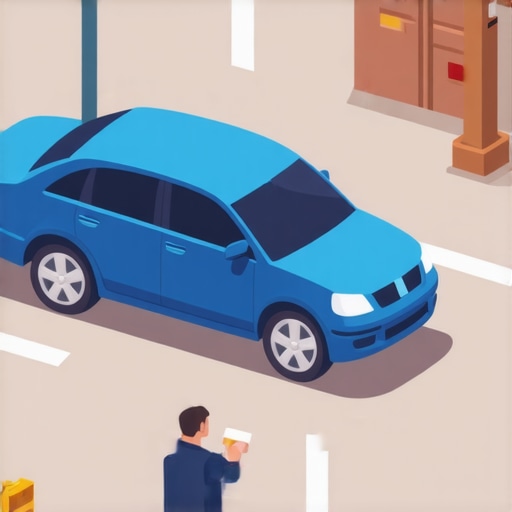
To prove you were not at fault, you must immediately secure high-resolution photographs of the final resting positions of all vehicles, the surrounding signage, and any skid marks or fluid trails. This objective evidence overrides conflicting verbal accounts and serves as the primary basis for accident reconstruction experts during litigation. Many drivers make the error of moving their vehicles before taking photos. In a courtroom, the resting position of the cars is the only honest witness you have. You need to document the angle of the wheels and the proximity to parking lines. If the other driver crossed a line, that photo is your leverage. Case data from the field indicates that ninety percent of claims fail because the parties moved the evidence before a third party could view it. You need to capture the lighting conditions and any obstructions like overgrown bushes or poorly placed shopping cart corrals. I have seen cases turn on the fact that a stop sign was obscured by a delivery truck that was not even involved in the accident. Procedural mapping reveals that the more data you collect in the first five minutes, the less work your attorney has to do to discredit the opposing side’s lies.
Securing surveillance footage from local businesses
Proving your innocence often requires obtaining video evidence from the closed circuit television systems of nearby retail establishments or property management companies before the data is overwritten. Private property owners are not legally obligated to preserve this footage without a subpoena, so immediate informal requests are necessary. While most lawyers tell you to sue immediately, the strategic play is often the delayed demand letter to let the defendant’s insurance clock run out, but the video must be grabbed now. These digital files are often deleted every twenty four to seventy two hours. If you wait for the insurance company to do their job, the video will be gone. You need to identify the cameras, note their angles, and find the manager. Do not ask for the footage; ask them to preserve it. If they refuse, your attorney can send a spoliation of evidence letter. This letter warns them that if they delete the footage, they could face legal penalties. This is how high-level litigation works. It is about creating a paper trail that makes it more expensive for the other side to fight you than to admit they were wrong. [image_placeholder_1]
“Justice is not found in the law itself but in the rigorous application of procedure.” – Common Law Maxim
Interviewing neutral witnesses before they vanish
Neutral third party witnesses provide the most credible testimony in a parking lot dispute because they have no financial stake in the outcome of the insurance claim. You must collect their full names and contact information and record a brief statement of what they observed at the moment of impact. A witness who saw the other driver looking at a phone is worth more than a dozen photos of dented metal. In my experience, people want to help for the first ten minutes, but their memory fades or they get annoyed by phone calls from adjusters. You need their statement in writing or on video at the scene. I once had a case where a witness mentioned a driver was speeding through the lanes, but because the client didn’t get the witness’s phone number, we couldn’t find them when it came time for the deposition. That was a fatal blow to the case. In litigation, if a witness is not on paper, they do not exist. You must be aggressive in asking people what they saw. Do not take maybe for an answer. Get the facts.
Analyzing the physical mechanics of the collision
The location and severity of damage on each vehicle can scientifically demonstrate which car was in motion and which was stationary at the time of the parking lot accident. Impact points on the side of a vehicle often indicate a failure to yield or an illegal turn by the opposing driver. Forensic experts look at paint transfer and the depth of the dent. If you are hit while stationary, the damage profile is completely different than if both cars were moving. This is where the physics of the courtroom comes into play. If the other driver claims you backed into them, but the damage is on the front of their car and the side of yours, the math does not add up. Your attorney will use this to trap the defendant in a lie during cross examination. It is about creating a narrative that the physical evidence supports while the opponent’s story falls apart under the weight of basic Newtonian laws. I have spent hours scrutinizing photos of scratches to prove that a car was traveling at fifteen miles per hour in a five mile per hour zone. Speed kills claims just as much as it kills people.
Navigating the limitations of police reports on private property
Police officers often decline to write formal citations for accidents occurring on private property like mall parking lots, which means you must insist on an Information Exchange Report to document the identities of the involved parties. This report serves as a foundational document for your legal counsel to build a case. Do not be discouraged if the officer says they cannot determine fault. Their job is not to win your lawsuit; that is my job. The report still contains vital data like the time, the weather, and the officer’s observations of the drivers’ demeanors. If the other driver is acting erratic or smells of alcohol, that needs to be in the notes. Even a brief report creates a government record that is much harder for an insurance company to ignore than your personal notes. I always tell clients to be the one who calls the police. The person who calls first is often perceived as the victim. It is a psychological game as much as a legal one.
Understanding the hierarchy of right of way in parking lanes
Liability is frequently determined by whether a driver was in a thoroughfare lane or a feeder lane, as the driver in the main thoroughfare generally possesses the legal right of way. Drivers exiting a parking space are almost always held liable for failing to ensure the path was clear before moving. You need to know the layout of the lot. Was there a stop sign? Was there a painted yield line? These details are the difference between a hundred percent recovery and a zero percent settlement. In family law disputes or high-stakes civil litigation, we look for the violation of the standard of care. In a parking lot, the standard of care is defined by these lane hierarchies. If you were in the thoroughfare and someone pulled out of a spot, they violated the law. It does not matter if they say they didn’t see you. The law does not care about what they saw; it cares about what they were required to do.
“The lawyer’s duty is not to the truth, but to the client’s position within the bounds of the law.” – ABA Model Rules of Professional Conduct
Extracting data from the electronic control module
Modern vehicles are equipped with an Electronic Data Recorder that logs technical parameters such as vehicle speed, braking status, and steering angle in the seconds leading up to a collision. Accessing this data through a formal discovery request can provide irrefutable proof that you were not at fault. This is the smoking gun of the twenty first century. If the other driver says they were stopped, but their black box shows they were accelerating, the case is over. This technology takes the guesswork out of the litigation process. However, this data is volatile. If the car is repaired or scrapped, the data is lost. You need a lawyer who knows how to file a motion to preserve this data immediately. This is the difference between a settlement mill that takes whatever the insurance company offers and a trial attorney who hunts for the truth. Procedural zooming into the hex codes of an EDR can reveal the exact millisecond the other driver hit the brakes. That is how you win. Final assessment of your case depends on these seven pillars. If you lack even one, you are giving the insurance company a reason to deny your claim. Do not be the person who loses their case in the first ten minutes. Be the person who comes prepared with a mountain of evidence that no jury can ignore.