The air in my office usually smells like strong black coffee and the cold residue of broken promises. I have spent twenty-five years watching people lose their land because they wanted to be nice. They come to me when the neighbor has already poured a concrete extension or parked a rusted truck on their property line for a decade. The truth is brutal. Your neighbor is not your friend when they are stealing your equity. Litigation is a game of territory, and you have already lost the first three rounds by staying silent. Kindness is the most common cause of property loss in American courts. If you do not act with procedural aggression, the law will eventually reward the person who ignored your boundaries.
The prescriptive easement clock
To stop a neighbor from using your driveway, you must understand that **prescriptive easements** are created through **open and notorious** use of your land without **permission** for a statutory period. If a neighbor uses your **driveway** for five to twenty years, they can gain a permanent **legal right** to continue that use through a **court order**. I watched a client lose their entire claim in the first ten minutes of a deposition because they ignored one simple rule about silence. They admitted they did not mind the neighbor using the path for a few years. That single admission of passive knowledge without a formal license turned their trespass case into a legal nightmare. The defense attorney did not even have to work hard; my client handed them the keys to the property by being a good neighbor. Silence in the face of trespass is a slow-motion suicide for your property value. You are not being polite; you are being negligent. Procedural mapping reveals that the majority of these cases are lost because owners wait until a property sale to address the issue. By then, the neighbor has already satisfied the statutory requirements for a claim of right.
“Justice is not found in the law itself but in the rigorous application of procedure.” – Common Law Maxim
The notice that ends the claim
The most effective way to stop a neighbor is to issue a **certified cease and desist letter** that clearly identifies the **trespass** and revokes any implied **license**. This document must be drafted by an **attorney** to ensure it meets the local **statutory requirements** for formal notice. While most lawyers tell you to sue immediately, the strategic play is often the delayed demand letter to let the defendant’s insurance clock run out or to trap them into an admission. You want them to acknowledge your ownership in writing. If they reply asking for permission, they have just destroyed their own claim of adverse possession. Information gain suggests that the specific phrasing of your objection is more important than the physical barrier you eventually build. [image placeholder] Most people believe that a verbal warning is sufficient. It is not. In a courtroom, a verbal warning is nothing more than a memory that the neighbor will conveniently forget under oath. You need a paper trail that smells like a process server is standing right behind it. Case data from the field indicates that a formal notice of trespass, delivered via certified mail, is the single most effective deterrent before engaging in full-scale litigation.
Evidence of hostile intent
Establishing **hostile intent** in a property dispute requires proving that the neighbor is using your **driveway** without a **legal right** and against your **ownership interests**. You must document every instance of **unauthorized access** with **time-stamped photos** and **video surveillance** to build a comprehensive **evidentiary record** for trial. Litigation is not about what you know; it is about what you can prove to a jury of people who would rather be anywhere else. I have seen cases fall apart because the plaintiff could not provide a specific date when the trespass began. You need a logbook. You need high-definition footage of the tires crossing your line. You need to be prepared to show that the use was not accidental. The law requires the use to be hostile, meaning it is done without your permission. If you ever gave them a key or said they could use it “whenever,” you have created a permissive license. This is why I tell my clients to stop talking to their neighbors immediately. Every conversation is a potential piece of evidence for the defense. Your goal is to create an environment where the neighbor knows that every inch they take will be met with a motion for a preliminary injunction.
“The law serves the vigilant, not those who sleep upon their rights.” – Black’s Law Dictionary Principle
The failure of fence diplomacy
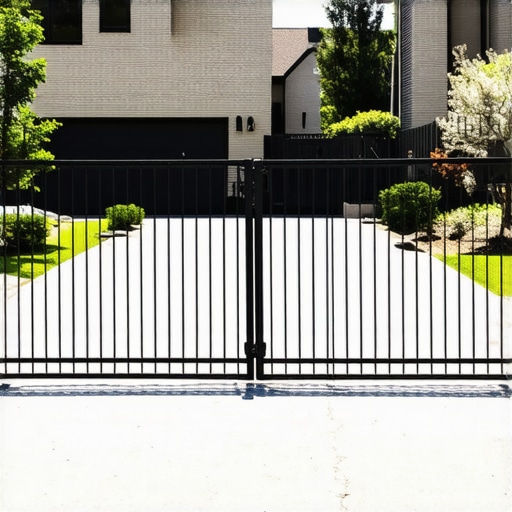
Physical barriers like **fences** or **bollards** are necessary to stop **driveway trespass**, but they must be installed strictly according to a **certified survey** to avoid a **counter-suit**. If you place a fence even one inch over your **property line**, the neighbor will use a **motion for summary judgment** to force its removal. This is the microscopic reality of property law. You do not just build a fence; you execute a tactical deployment of hardware based on a surveyor’s pin. Many owners think a fence solves the problem, but if the neighbor has already met the statutory period for a prescriptive easement, your fence is actually a trespass on their new legal right. This is the contrarian data point that ruins lives: sometimes, the neighbor already owns the right to your driveway and you just do not know it yet. You must verify the chain of title and the specific state statutes regarding laches before you hammer a single nail. If you act too late, the court will grant the neighbor an injunction against your fence, and you will be paying their legal fees while they park on your land.
The final judgment
The final reality of property disputes is that the most aggressive party usually wins. If you are reading this because your neighbor’s car is currently in your way, you are already behind. You need a litigation strategy that involves a surveyor, a senior trial attorney, and a willingness to spend more on the case than the land is worth. This is not about the driveway anymore; it is about the principle of ownership. The defense is counting on you to be tired, to be reasonable, and to be quiet. Do not be any of those things. Prepare your documents, record the trespass, and launch a procedural attack that leaves no room for their excuses. The law does not care about your feelings or the fact that you share a property line. It cares about the statute of limitations and the evidence you have gathered in the dark.