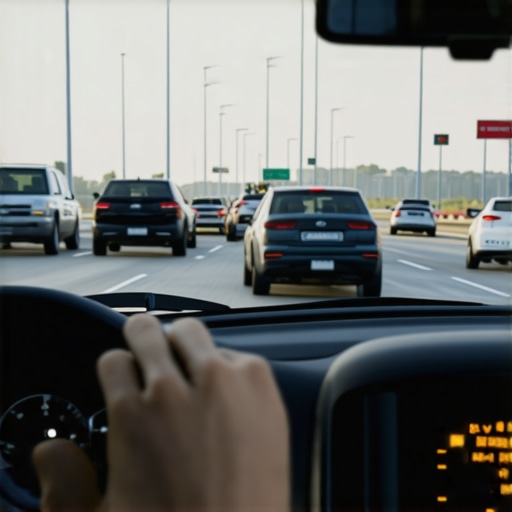
Your case is likely failing before you even pick up the phone to call an attorney. Most people believe that the truth speaks for itself in a courtroom. It does not. I have spent twenty-five years watching the truth get strangled by bad procedure and poor witness discipline. My office smells like strong black coffee because that is the only thing that keeps me sharp while I deconstruct the wreckage of lives and vehicles. I watched a client lose their entire claim in the first ten minutes of a deposition because they ignored one simple rule about silence. He wanted to be helpful. He wanted the defense lawyer to understand his perspective. He spoke when he should have remained quiet. He admitted he was checking his speed for a split second before the impact. That single admission of distraction gave the insurance company the leverage they needed to argue comparative negligence. He walked away with nothing. In a multi-car pileup, you are not just fighting a driver; you are fighting a wall of insurance adjusters and legal services designed to shift blame onto the most convenient target.
The first domino in the highway wreck
Proving you were not at fault in a multi-car pileup requires identifying the primary tortfeasor through a sequence of impacts. Litigation strategies focus on the Point of Impact and the Electronic Data Recorder signatures to establish the exact order of collisions within the chain reaction on the roadway. To survive this process, you must understand the physics of the pileup. If you were the fourth car in a five-car collision, the defense will try to prove you hit the car in front of you before the car behind you struck you. This is the difference between being a victim and being a defendant. We look at the Delta-V. This is the change in velocity. If your car shows a forward spike in speed before the rear impact, you are liable. If the data shows you were at a complete stop when the surge occurred, you are clear. Your car has a black box. It records the five seconds before the airbags deploy. It tracks throttle position. It tracks brake application. It tracks engine RPM. This data does not lie. Witnesses lie. You might lie without meaning to because your brain was flooded with adrenaline. The data is the only truth I care about in high-stakes litigation.
“Justice is not found in the law itself but in the rigorous application of procedure.” – Common Law Maxim
Why your statement to the police ruins your defense
A police report is often the first document used to assign blame in a multi-car pileup, yet it frequently contains hearsay and inaccurate spatial reconstructions. Legal services must often challenge these reports by using forensic experts to prove that the officer misidentified the initial point of contact. When the flashing lights arrive, you feel the need to explain. You are shaking. You are cold. You say things like, I think I tried to stop. Or, it happened so fast I didn’t see him coming. These phrases are weapons. An aggressive attorney will use them to show you were not keeping a proper lookout. Stop talking to the police beyond providing your license and insurance. If you are not under arrest, you have no obligation to provide a narrative. The narrative is my job. The narrative is for the reconstruction expert. I have seen police officers assign fault to the middle car simply because they could not find the driver of the lead vehicle. This is lazy work. It happens every day. We counter this by filing a motion to exclude the officer’s opinion on fault if they were not a certified accident reconstructionist. Procedure is the shield that protects you from a bad report.
The deposition trap you will likely fall into
Depositions are the most dangerous phase of litigation because they allow opposing counsel to lock you into a version of events that may be incomplete. Proving innocence requires disciplined responses that do not speculate on distances, speeds, or the intentions of other drivers involved in the crash. They will offer you water. They will act like your friend. The defense attorney is not your friend. They want to hear you say you were tired. They want to hear you say you were in a rush. They will ask the same question five different ways. They are looking for a crack. If you change your answer by two feet or five miles per hour, they will call you a liar in front of a jury. I tell my clients to answer in three words or less when possible. Yes. No. I do not recall. The phrase I do not recall is not a weakness; it is a defensive wall. If you do not have a calibrated radar in your eyes, you do not know exactly how fast the other car was going. Do not guess. Guessing is the fastest way to lose a seven-figure settlement. In the litigation of complex accidents, your silence is the most valuable asset your attorney has.
“The duty of an attorney is to ensure that the facts are not merely presented but are contextualized within the framework of existing litigation standards.” – Bar Association Protocol
The litigation clock and the insurance company game
Insurance companies use the statute of limitations and the cost of discovery to pressure plaintiffs into accepting low settlements after a multi-car pileup. Effective litigation involves a delayed demand strategy that allows for the full extent of medical injuries and vehicle damage to be quantified. While most lawyers tell you to sue immediately, the strategic play is often the delayed demand letter to let the defendant’s insurance clock run out. They want you to settle before you realize you have a herniated disc. They want you to settle before the forensic engineer finishes the 3D map of the crash site. We use this time to gather evidence they cannot ignore. We look for cell phone records. We look for trucking logs if a commercial vehicle was involved. We look for social media posts from the other drivers. You would be surprised how many people post photos of the wreck while admitting they were distracted on their own timeline. This is information gain that changes the leverage in a settlement conference. If the insurance company knows we have proof their driver was texting, the check gets bigger.
Finding the first domino in the wreckage
The primary goal of an attorney in a pileup case is to locate the driver who initiated the chain reaction by failing to maintain a safe following distance. Proving this requires a microscopic analysis of tire scrub marks and the crush depth of each vehicle involved in the litigation. Think of the pileup as a deck of cards falling. We need to find the hand that pushed the first card. Often, the car at the very front is not the cause. It is the car that couldn’t stop. We analyze the skid marks. If there are no skid marks from the lead defendant, it means they didn’t even try to brake. They hit the car in front at full speed. This is gross negligence. We also look at the headlight filaments. If the lights were on during the impact, the filaments deform in a specific way. If the driver says they had their lights on but the filaments are straight, we have caught them in a lie. This level of detail is what separates a real trial lawyer from a settlement mill. We do not just look at the cars; we look at the metallurgy. We look at the physics. We look at the reality of the road. Even in matters involving family law where assets must be protected during a divorce, the outcome of a massive litigation case like this can change everything. You cannot afford to be wrong.
[IMAGE_PLACEHOLDER]