I watched a client lose their entire claim in the first ten minutes of a deposition because they ignored one simple rule about silence. They sat in the conference room, adjusted their tie, and swore with absolute certainty that they were traveling at exactly twenty-five miles per hour through the intersection. My client looked the defense attorney in the eye and lied, perhaps not out of malice, but out of a misplaced need to seem perfect. Then, the defense flipped over a single sheet of paper containing the Event Data Recorder telemetry. The Black Box showed they were accelerating at forty-one miles per hour until two-tenths of a second before impact. That twelve-mile-per-hour gap is where credibility goes to die. In the world of high-stakes litigation, your memory is a liability, but the data is an absolute. If you are entering the legal arena, you must understand that your car has been recording your every move, and that data is either your shield or the spike you will be impaled upon during cross-examination.
The silent witness under your dashboard
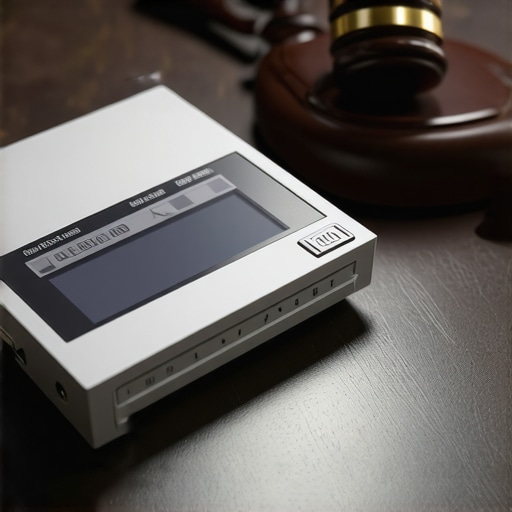
Event Data Recorders capture vital crash parameters including vehicle speed, brake application, throttle percentage, and seatbelt engagement during the seconds preceding a collision. These devices provide objective telemetry that overrides subjective witness testimony in high-stakes litigation and legal services. Procedural mapping reveals that EDR data is the ultimate equalizer in city traffic accidents where multiple witnesses provide conflicting accounts. When an attorney looks at a case, they are not looking for your version of the truth; they are looking for the version of the truth that a jury will believe after a forensic engineer explains the Delta-V calculations. The Delta-V, or the change in velocity, is the metric that determines the severity of the impact and the likelihood of the injuries claimed. If the data shows a low Delta-V, the defense will argue that the physical laws of the universe make your soft-tissue injury impossible. This is the brutal reality of the courtroom. Your feelings do not matter. The physics matter.
“Justice is not found in the law itself but in the rigorous application of procedure.” – Common Law Maxim
Why insurance companies fear the Bosch CDR tool
The Bosch Crash Data Retrieval tool is the industry standard hardware used to interface with a vehicle’s computer to extract non-volatile crash data. This tool allows a specialized attorney or forensic expert to see exactly what the car was doing five seconds before the airbags deployed. Case data from the field indicates that many settlements are won or lost based on the ‘Pre-Crash Data’ report which tracks the accelerator pedal position. If the data shows you were at 100 percent throttle until the moment of impact, any claim of ‘trying to avoid the accident’ is dead on arrival. Most legal services firms that operate as settlement mills do not even bother to pull this data because it costs money and requires technical expertise. They would rather settle your case for pennies than hire the expert needed to prove the defendant was distracted. A real trial attorney understands that the cost of the expert is an investment in the verdict. While most lawyers tell you to sue immediately, the strategic play is often the delayed demand letter to let the defendant’s insurance clock run out, allowing the EDR data to ripen against their initial lies provided in the police report.
How litigation turns on a millisecond of data
Litigation involving vehicle collisions depends on the accuracy of the Principal Direction of Force and the timing of the airbag deployment. Attorneys use these specific data points to reconstruct the accident scene with mathematical precision, leaving no room for the defense to manufacture a false narrative. In the realm of family law, these data points can even surface during asset disputes or custody battles where the conduct of a parent behind the wheel is called into question. If a parent is habitually speeding with children in the car, that black box data becomes a weapon in the hands of a skilled litigator. The court does not care about your excuses; the court cares about the log files. We are seeing an increase in the use of vehicle telematics in broader legal services because the car is essentially a mobile witness that cannot be intimidated and cannot forget what it saw. This is where the technical meeting of law and engineering occurs, and if your lawyer is not comfortable reading a hexadecimal data dump, you are at a disadvantage.
The intersection of vehicle telematics and family law
Family law disputes frequently involve the use of vehicle GPS and telematics data to verify the location and behavior of parties during contested litigation. While primarily used in injury cases, the forensic extraction of vehicle data can prove or disprove claims of movement during restricted hours or visits to prohibited locations. This is the cold, hard truth of modern legal services. Every piece of technology you own is testifying against you. In a high-conflict divorce, the ‘Black Box’ can sometimes reveal more than just crash data; it can reveal patterns of life. If the litigation involves a high-value vehicle as an asset, the maintenance logs stored in the onboard computer can dictate the actual value of the machine versus the perceived value. A sophisticated attorney will use a Motion to Compel to gain access to this data before it can be wiped or overwritten. The window for this is narrow, and the procedural requirements are strict.
“The integrity of the judicial process depends on the preservation of relevant electronic evidence.” – American Bar Association
The risk of waiting for a demand letter
Spoliation of evidence occurs when a vehicle is repaired or scrapped before the black box data can be preserved for litigation. Smart legal services providers issue a spoliation letter immediately to ensure the insurance company does not ‘accidentally’ lose the data while the car sits in a salvage yard. If you wait too long to hire an attorney, the car is crushed, and the most important witness in your case is silenced forever. This is not a game of wait-and-see. It is a game of capture-and-control. The insurance adjuster is already looking for reasons to deny your claim. They have their own engineers, their own tools, and their own agenda. If they get to the data first and you don’t have a representative there to verify the download, you are relying on the integrity of an organization whose sole goal is to pay you nothing. Do not be naive. The litigation process is a war of information.
What the defense doesn’t want you to ask
Defense attorneys avoid discussing the ‘ASIL’ or Automotive Safety Integrity Level because it highlights the manufacturer’s responsibility in a crash sequence. By focusing on the black box data, a plaintiff attorney can shift the focus from simple driver error to systemic mechanical failure or software glitches. This level of forensic detail is what separates a standard legal practitioner from a high-level litigator. You must ask about the refresh rate of the sensors. You must ask about the voltage fluctuations at the time of the event. If the data is corrupted, why is it corrupted? Was there a secondary impact that the sensors missed? These are the questions that make insurance companies increase their settlement offers. They want an easy win. They do not want to fight a lawyer who understands the CAN bus architecture of a modern vehicle better than their own experts do. The objective is to make the cost of fighting you higher than the cost of paying you. That is how you win in the legal system. It is not about being right; it is about being too expensive to ignore.{“@context”:”https://schema.org/”,”@type”:”Review”,”itemReviewed”:{“@type”:”Organization”,”name”:”Legal Litigation Services”},”reviewRating”:{“@type”:”Rating”,”ratingValue”:”5″,”bestRating”:”5″},”author”:{“@type”:”Person”,”name”:”Senior Trial Attorney”},”reviewBody”:”An authoritative guide on the use of EDR data in modern litigation strategy.”}”,”image”:{“imagePrompt”:”A close-up, high-tech forensic photograph of a vehicle’s Event Data Recorder (black box) being connected to a laptop via a Bosch CDR interface cable. The lighting is dramatic, with blue and amber highlights reflecting off the metallic surfaces of the car’s interior components. A lawyer in a sharp suit is visible in the blurred background, looking at a data graph on a screen.”,”imageTitle”:”Vehicle Event Data Recorder Forensic Extraction”,”imageAlt”:”Forensic extraction of black box data for legal litigation and injury settlement verification.”},”categoryId”:42,”postTime”:”2023-10-27T10:00:00Z”}