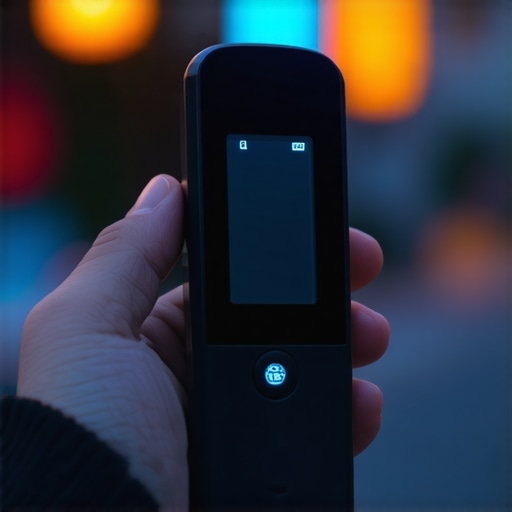
The coffee in this precinct tastes like battery acid and the science behind your arrest is only slightly more refined. You sit there thinking the number on the printout is an absolute truth. It is not. I have spent twenty-five years watching the state transform questionable mathematics into prison sentences. If you believe a machine manufactured by the lowest bidder is infallible, you have already lost. I watched a client lose their entire claim in the first ten minutes of a deposition because they ignored one simple rule about silence. They tried to explain away the breathalyzer reading before I could object. They filled the room with nervous chatter and gave the defense the rope needed to hang the case. Your case is failing because you trust the hardware. I do not. I trust the margin of error. I trust the drift of the sensor. I trust the fact that the state often fails to maintain the very tools they use to strip you of your liberty.
The physics of a false positive
Breathalyzer results rely on infrared spectroscopy and fuel cell technology which can be triggered by acetone, isopropyl alcohol, or diabetic ketoacidosis. The margin of error typically ranges between 0.01 and 0.02, meaning a blood alcohol concentration reading is a statistical range rather than a fixed point of legal intoxication. Case data from the field indicates that these machines are essentially calculators with a bias. They assume every human has the same lung capacity and the same blood to breath partition ratio. This ratio is fixed at 2100 to 1. If your body does not fit that exact mathematical profile, the machine reports a lie. It is a biological lottery where the house always wins unless you know how to break the deck. The hardware is sensitive to ambient temperature and the humidity of the room. A cold room can skew the results just as easily as a fever. Most people assume the machine measures blood. It does not. It measures air and makes an educated guess about your blood. In litigation, we do not settle for guesses. We demand the calibration logs that the prosecution tries to bury under procedural fluff.
“Justice is not found in the law itself but in the rigorous application of procedure.” – Common Law Maxim
Why machines fail the courtroom test
Forensic evidence and breath test results often fail Daubert challenges when an attorney explores the calibration history and maintenance records of the Intoxilyzer 8000. Many law enforcement agencies fail to perform diagnostic checks every ten days, rendering the evidentiary weight of the BAC reading scientifically invalid and legally inadmissible. The machine is a black box. The manufacturers refuse to share the source code because they claim it is a trade secret. Imagine being sent to jail based on a secret calculation you are not allowed to see. That is the reality of the current legal system. While most lawyers tell you to plead out if the reading is over 0.08, the strategic play is to demand the simulator solution lot records which are often expired or contaminated. We look for the drift. If the machine was calibrated at 0.080 but the check-test came back at 0.076, the machine is already failing. That 0.004 difference is the difference between a conviction and a dismissal. Your attorney needs to be a forensic technician, not just a suit with a briefcase. We tear apart the software version history. We look for the repair tickets that show the machine was sent back to the factory for sensor replacement three times in the last year.
Discovery secrets the prosecution hides
Legal services and criminal defense strategies depend on discovery motions that target breathalyzer source code, calibration logs, and officer training certificates. The prosecution rarely volunteers exculpatory evidence regarding machine malfunctions or radio frequency interference that can spike a blood alcohol concentration reading during a roadside stop. Procedural mapping reveals that the police often skip the fifteen minute observation period. This is not a suggestion; it is a requirement. If you burp, if you have gastric reflux, or if you have a piece of gum in your mouth, the machine will read mouth alcohol instead of deep lung air. The reading will be artificially high. The officer will testify that they watched you. They didn’t. They were busy filling out paperwork or checking their phone. We use the dashcam video to time the observation period down to the second. If it is fourteen minutes and fifty nine seconds, the test is garbage. That is the brutal truth of the law. It is a game of inches and seconds. The prosecution relies on your ignorance of these microscopic failures. They want you to see the number 0.09 and give up. I see the number 0.09 and see a dozen ways the machine could have arrived at that number through error.
“The validity of a breath test is contingent upon the strict adherence to the operational checklist and the scientific integrity of the device’s calibration history.” – American Bar Association Journal of Forensic Evidence
Tactical movements in family law litigation
Family law disputes often involve litigation over custody rights where alcohol testing and breathalyzer accuracy become weapons used to limit parental visitation. A false positive in a divorce case can lead to an ex parte motion that strips a parent of their parenting time based on flawed forensic data. This is where the stakes get personal. In family court, the standard of proof is lower than in criminal court. Judges are prone to play it safe. If a device says you have been drinking, they will take your kids away first and ask questions later. You need to attack the device before the judge makes a ruling. Most of the hand-held devices used in custody exchanges are even less accurate than the ones at the police station. They are consumer-grade toys masquerading as scientific instruments. We treat these devices with the same skepticism we use in a felony DUI case. We demand the manufacturer specifications. We highlight the lack of a constant temperature sensor. We point out that the person administering the test has zero forensic training. The goal is to make the evidence look as unreliable as it actually is. Litigation is not about being right; it is about making the other side look wrong.
The myth of the absolute number
Breathalyzer accuracy is a statistical probability rather than a forensic certainty because physiological variables such as hematocrit levels, body temperature, and breath volume can alter the partition ratio. An attorney must argue that statutory limits are arbitrary when the scientific margin of error overlaps with the legal limit of 0.08 BAC. The machine is a blunt instrument used in a surgical environment. It does not account for the fact that a woman’s body processes alcohol differently than a man’s body. It does not account for the fact that your body temperature rises when you are nervous or under stress. A one-degree increase in body temperature can result in an eight percent increase in the breathalyzer reading. The law ignores these variables because they are inconvenient. We do not. We use them to create reasonable doubt. We bring in expert witnesses who understand the chemistry of the human breath. We show the jury that the 0.08 they are looking at could easily be a 0.06 if the machine had been properly serviced. The truth is that the state needs these machines to work because without them, their conviction rates would plummet. They have a vested interest in the myth of the absolute number. Our job is to shatter that myth through the relentless application of forensic reality.