I watched a client lose their entire claim in the first ten minutes of a deposition because they ignored one simple rule about silence. They believed that because a patrol officer wrote a name in the fault column of a report, the case was over. They walked into that wood-paneled room smelling of unearned confidence. They stopped being careful. They stopped listening to the questions. They assumed the document would do the heavy lifting. By the time I could intervene, the defense counsel had already used the report to trap them in a contradiction that cost two hundred thousand dollars in leverage. This is the reality of the courtroom where the smells of ozone and mint mingle with the cold sweat of a failing witness. A police report is not a verdict. It is a starting point, and often, it is a flawed one that can sink a legitimate legal strategy if you treat it as gospel.
The badge does not grant objective truth
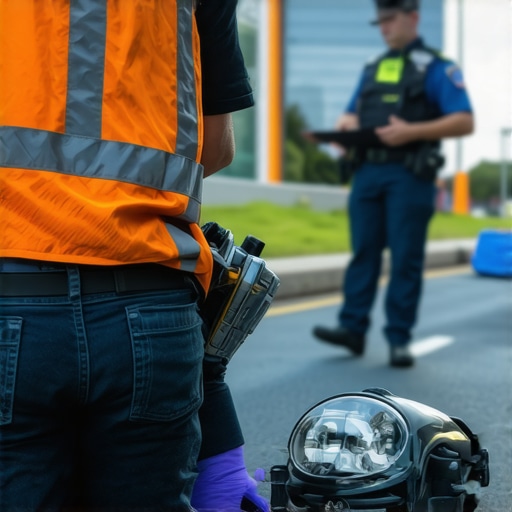
Police reports represent the initial impressions of a responding officer who rarely witnessed the accident or incident firsthand. These documents are hearsay under most rules of evidence because they are out of court statements offered to prove the truth of the matter asserted. While a litigation expert knows how to navigate these hurdles, an attorney who relies solely on the officer’s accident reconstruction is gambling with your legal services outcome. Case data from the field indicates that the officer’s primary goal is clear the roadway and restore traffic flow, not to build a litigation package for a personal injury or family law matter. They spend an average of fifteen minutes on the scene. They talk to the loudest person first. They miss the nuance of the mechanical failure or the distracted driving patterns that a private investigator would find in a week. While most lawyers tell you to sue immediately, the strategic play is often the delayed demand letter to let the defendant’s insurance clock run out while we gather actual, admissible evidence that survives a motion in limine.
“Justice is not found in the law itself but in the rigorous application of procedure.” – Common Law Maxim
The officer’s narrative is a collection of fragments. They are jotting down notes while sirens are still wailing and victims are being loaded into ambulances. This is the definition of a high-pressure, low-accuracy environment. In many jurisdictions, the actual report is barred from being introduced as evidence during the trial phase. It is a procedural tool to refresh a witness’s memory, nothing more. If the officer did not see the impact, their opinion on who caused it is often legally irrelevant. This is where statutory and procedural zooming becomes your best friend. We look at the specific wording of the local evidence code. We find the gaps where the officer failed to interview the witness who was standing fifty feet away but had the best view. We look for the calibration logs of the equipment used to measure skid marks. If those logs are missing, that police report becomes a piece of fiction.
Hearsay limitations in the modern courtroom
Hearsay rules generally prohibit police reports from being admitted as substantive evidence unless they fall under specific exceptions like the public records exception. However, even then, the opinions and conclusions within the report regarding liability or fault are frequently excluded by judges during pre-trial motions. Procedural mapping reveals that the defense attorney will move to strike any part of the report that relies on statements from third-party witnesses who are not present in court. This creates a vacuum. If your entire litigation strategy was built on that piece of paper, you now have no evidence. The attorney must instead build the case through depositions, subpoenas, and forensic analysis. You need the black box data from the vehicle. You need the cell phone tower records. You need the biomechanical engineer who can prove the force of impact was inconsistent with the defendant’s story. The report is a ghost. It looks like it is there, but when you try to grab it during a settlement conference, your hand goes right through it.
[image_placeholder_1]
Fault is a legal conclusion rather than a factual observation
Legal fault is determined by a jury or a judge applying statutory law to facts, whereas a police officer often uses traffic codes as a shorthand for negligence. A citation for speeding does not automatically mean the driver is liable for the civil damages in a litigation context. In family law cases involving domestic incidents, a report may state no arrest was made, but that does not mean abuse did not occur. The legal services provided by a trial lawyer involve translating these raw observations into a legal framework of duty and breach. Information gain dictates that we look for the contrarian data point. For example, the officer might note the road was dry, but meteorological records prove there was a localized black ice patch that the officer missed because they were wearing heavy boots. These are the details that win verdicts. The report is a summary, and summaries are where the truth goes to die.
“The integrity of the record is the only shield against the fallibility of the witness.” – American Bar Association Journal
The hidden bias of the responding officer
Officer bias often skews the police report toward the party who is most cooperative or coherent immediately after a traumatic event. A plaintiff who is in shock or pain may fail to give a clear statement, leading the officer to favor the defendant’s version of events. This asymmetry of information becomes a procedural obstacle in litigation. When we depose the officer, we often find they have no independent recollection of the scene. They are just reading their notes. If we can show their notes were incomplete or biased, we can dismantle the defense case. This requires an attorney who understands forensic psychology. We look at the time stamps on the body cam footage. We compare the radio dispatch logs to the arrival times. If there is a discrepancy, the credibility of the entire report evaporates. In high-stakes litigation, we do not accept the official narrative. We rewrite it with verified facts.
Private investigators against the patrol car
Private investigators provide a comprehensive analysis that police officers lack the time and resources to perform during a standard call. While the police focus on criminal violations, an investigator hired by your attorney focuses on civil liability and damages recovery. They find the surveillance video from the gas station across the street that the police never checked. They interview the witnesses who left the scene before the patrol car arrived. This is how you win litigation. You do not wait for the state to do your work. You take control of the evidence chain. The police report is a sketch. Our investigation is a high-definition photograph. We look for the tread depth on the tires. We look for the maintenance logs of the commercial vehicle. We look for the history of complaints against the driver. These are the levers that force a settlement or win a jury over.
Insurance adjusters and the weaponized statement
Insurance companies use police reports as a shield to deny claims or undervalue settlements when the report contains ambiguous or unfavorable information. They know that most pro se litigants or inexperienced attorneys will see a negative report and withdraw the case. A veteran trial attorney knows that the adjuster’s reliance on the report is a tactic to delay payment. We counter this by filing suit and noticing depositions immediately. Once the officer admits under oath that they did not see the accident, the insurance company’s primary defense collapses. The ROI of litigation increases the moment you disprove the official document. We do not play the adjuster’s game. We move the dispute into the courtroom where the rules of evidence, not insurance company guidelines, dictate the outcome. The report is their anchor. We cut the chain.
The final reckoning during the trial phase
Trial success depends on the admissibility of physical evidence and expert testimony rather than the conclusions found in a police report. You must prepare your case as if the report does not exist. This means securing experts in accident reconstruction, medicine, and economics. In family law, it means expert witnesses in child psychology or forensic accounting. The attorney who builds a case on a police report is building a house on sand. When the storm of cross-examination hits, that house will fall. We build on granite. We build on statutes, precedents, and hard data. The jury wants the truth, and the truth is rarely found in the scrawled notes of a tired officer at the end of a shift. It is found in the rigorous, expensive, and exhaustive process of discovery and litigation. That is the brutal truth of the legal system.