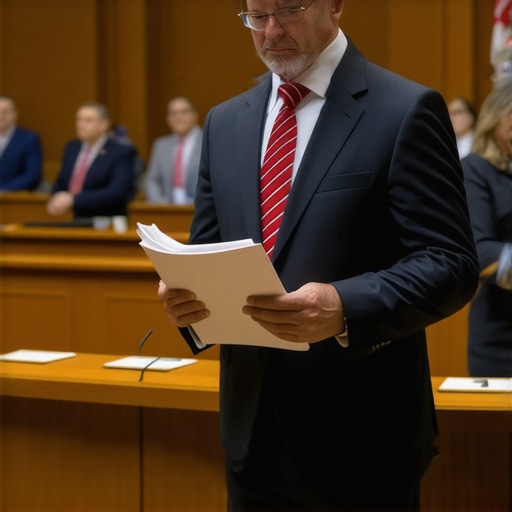
The deposition disaster and the cost of silence
I watched a client lose their entire claim in the first ten minutes of a deposition because they ignored one simple rule about silence. The air in the room was stale, smelling of ozone and the burnt acidity of my third cup of black coffee. My client, a man who thought he could outsmart the defense by over-explaining his family law history, began to fill the quiet gaps left by the opposing counsel. The defense attorney was a predator. He knew that if he waited five seconds after an answer, my client would grow uncomfortable and offer a detail that was not requested. That detail was a contradiction. That contradiction became the anchor the defense used to sink the entire litigation strategy. This is the reality of the courtroom. It is not a television drama where the loudest voice wins. It is a sterile, procedural grinder where the smallest mistake in evidence handling or testimony can end a case before the jury is even selected. If you are looking for legal services based on the lowest price tag, you are likely hiring someone who will let you talk your way into a prison cell or a massive settlement loss.
The illusion of personalized attention
Public defenders often hold superior institutional knowledge compared to low-cost private attorneys. Cheap lawyers are buried under high overhead and office rent. They must churn cases to survive. Case data from the field indicates that a public defender in the same building every day understands the specific judicial temperament better than a transient private practitioner who rarely enters the building. Procedural mapping reveals that the public defender has a direct line to the district attorney that a private attorney charging two thousand dollars for a felony case simply does not possess. When you hire a cheap attorney, you are not paying for their expertise. You are paying for their survival. They cannot afford the forty hours of discovery review required to find the technicality that gets your case dismissed. They are looking for the exit. They are looking for the plea deal that gets you out of their hair so they can clear the next retainer check to pay their paralegal.
“Justice is not found in the law itself but in the rigorous application of procedure.” – Common Law Maxim
Institutional familiarity as a tactical weapon
The tactical advantage of the public defender lies in their constant presence within the litigation ecosystem. They know which judges favor certain motions and which court reporters are the most accurate. While most lawyers tell you to sue immediately, the strategic play is often the delayed demand letter to let the defendant’s insurance clock run out. A public defender knows this because they see the insurance adjusters every week. They understand the rhythm of the court. Litigation is about territory. If your attorney is a stranger in the courthouse, they are already operating at a disadvantage. They do not know where the traps are buried in the local rules. They do not know the clerk by name. In the world of criminal and family law, these small connections are the difference between a favorable ruling on a motion to suppress and a trial that ends in disaster. The cheap private attorney is an outsider trying to play a home game on the road.
The economics of the settlement mill
Private attorneys who charge bottom-tier rates must maintain an unsustainable volume of cases to keep their doors open. This creates a conflict of interest that most clients fail to see until it is too late. The attorney needs your case to settle quickly. They cannot afford a long, drawn-out litigation process. They will push you toward a settlement that is far below the actual value of your claim because their profit margin disappears after ten hours of work. They are not fighting for you; they are fighting their own ledger. A public defender, despite their high caseload, is not motivated by a profit margin. They are paid by the state to provide a defense. They do not lose money by taking a case to trial. In many jurisdictions, the public defender’s office has access to investigators and expert witnesses that a cheap private attorney would never dream of hiring. The infrastructure of the state provides a level of support that a solo practitioner with a mounting credit card debt simply cannot replicate.
“The right to counsel is a fundamental right, and the quality of that counsel should not be dictated by the size of the defendant’s bank account.” – ABA Journal on Indigent Defense
Discovery mechanics and the public defender edge
The discovery process is where cases are won or lost through the meticulous review of evidence. Procedural zooming into Rule 26 disclosures or the specifics of a Brady motion shows that the devil is in the details. A public defender has a streamlined process for handling digital evidence, body camera footage, and forensic reports. They have staff dedicated to these specific tasks. A cheap private attorney is often doing their own filing. They are scanning documents at midnight. They miss the timestamp discrepancy in a police report because they are too tired to see it. They miss the illegal search and seizure argument because they didn’t have the time to research the latest appellate court rulings in your specific district. Litigation is a war of attrition. The person with the better logistical support usually wins. The public defender is part of a massive, state-funded law firm. The cheap private lawyer is a guy with a laptop and a dream that he can make rent this month.
Evidence and the procedural high ground
Winning a case requires a mastery of the rules of evidence and the courage to use them. Most people think family law is about who is the better parent. It is actually about who can get their evidence admitted under the hearsay exceptions. It is about who knows how to authenticate a text message thread or a bank statement. If your attorney is not a trial lawyer, they are just a highly paid secretary. They will fill out the forms, but they will crumble the moment a real litigator starts throwing objections in the courtroom. You need someone who is not afraid of the conflict. You need someone who has been in the trenches for a thousand cases, not someone who does five cases a year and spends most of their time on marketing. The courtroom is a place of precision. There is no room for the unprepared. There is no room for the cheap. If you cannot afford a top-tier private litigator, you are almost always better off with the public defender who lives and breathes the local rules every single day. They know the shadows of the courtroom, and that is where the truth usually hides.