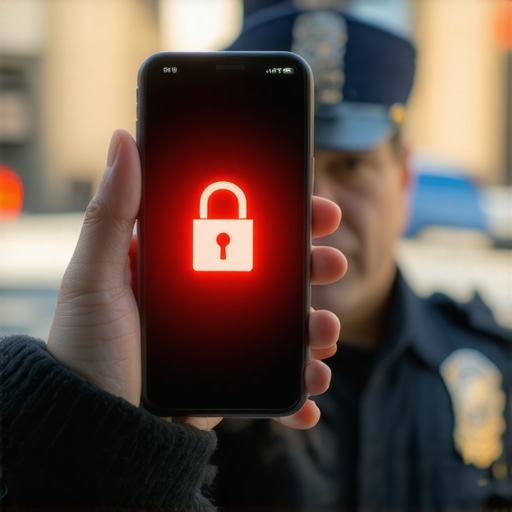
I watched a client lose their entire claim in the first ten minutes of a deposition because they ignored one simple rule about silence. They thought being helpful would speed things up. It did. It sped them straight into a dismissal. This is the reality of the legal system. It is not a place for the helpful. It is a battlefield where every bit of data you surrender is a bullet the opposition will use to finish you. When we talk about biometric locks and facial recognition, we are not talking about convenience. We are talking about the surrender of the self under the guise of modern technology. Attorneys know the law is a lagging indicator of technological reality. The police know this too. They rely on the confusion between physical evidence and testimonial communication to bypass your rights.
The biometric loophole that kills defense strategies
Legal services often highlight that biometric data resides in a gray area where the Fifth Amendment protection against self incrimination meets the physical reality of the Fourth Amendment search and seizure rules. Current litigation trends suggest that while a passcode is considered testimonial, your face is often argued to be merely physical. This distinction is where cases are won or lost. Case data from the field indicates that law enforcement officers are trained to exploit the immediate shock of a stop to gain biometric access before you can request an attorney. They want you to look at the screen. They want the infrared sensors to map your features before you realize you have the right to look away. This is not just a search. It is a forced extraction of a key that only you possess. The litigation architect views this as a breach of the communicative act. If the act of unlocking the phone communicates to the government that you have control over the contents, it is testimonial. We fight on that line.
“Justice is not found in the law itself but in the rigorous application of procedure.” – Common Law Maxim
The friction between physical evidence and mental thought
The Fifth Amendment protects the contents of your mind but the courts have historically struggled to define where the body ends and the mind begins in the digital age. Compelling a suspect to provide a fingerprint or a face scan is treated by some jurisdictions as akin to taking a blood sample. This is a dangerous legal fiction. A blood sample does not provide the state with a map of your private life, your attorney communications, or your family law history. A smartphone does. While most lawyers tell you to sue immediately, the strategic play is often the delayed demand letter to let the defendant’s insurance clock run out while we build the evidentiary record of the forced search. Procedural mapping reveals that the moment a face scan is used to bypass a lock, the nature of the evidence changes from a physical characteristic to a functional key. You are being forced to testify that you are the owner of the device and everything within it. This is the core of the litigation strategy. We argue that the face is the password. If you cannot be forced to speak a password, you should not be forced to provide your face to accomplish the same result.
Landmark rulings that slow the police down
Supreme Court decisions like Carpenter versus United States have begun to shift the landscape by recognizing that digital data is qualitatively different from physical objects. Attorneys use these precedents to argue that the biometric unlock is a warrantless entry into a protected digital sanctuary. The law moves slowly. It is a heavy, rusted machine. But when it turns, it crushes those who ignored the shift. The American Bar Association has frequently discussed the evolving nature of privacy in the context of emerging tech. Litigation in this area requires a deep understanding of the act of production doctrine. If the act of showing your face to the camera reveals the location of incriminating evidence that the police did not already know existed, that act is testimonial. It is a silent confession. We see the police use intimidation to bypass this. They will tell you they can get a warrant anyway. Maybe they can. But let them try. Forced consent is no consent at all. The courtroom is where we litigate the difference between a voluntary act and a submission to authority. It is a game of millimeters.
“The right of the people to be secure in their persons, houses, papers, and effects, against unreasonable searches and seizures, shall not be violated.” – U.S. Constitution, Fourth Amendment
Tactics for the immediate aftermath of a stop
A strategic defense begins at the moment of contact by explicitly stating your refusal to consent to any search and immediately disabling biometric features if possible. Family law disputes often involve one party attempting to use police intervention to gain access to a spouse’s phone through biometric coercion. This is where the forensic psychology of the encounter matters. You must be silent. You must be firm. The police are not your friends. They are data harvesters. If they force your phone in front of your face, keep your eyes closed. Do not assist in your own prosecution. The litigation strategy for a biometric breach involves challenging the good faith exception of the warrant. If the officers knew or should have known that the facial scan violated the Fifth Amendment, the evidence can be suppressed. This is the goal. We want the data thrown out. We want the fruits of the poisonous tree to be discarded. The attorney is the shield. The law is the sword. Use both. Never rely on the kindness of an officer or the supposed safety of a tech feature. The only real safety is a solid procedural defense and an attorney who knows how to tear a warrant to pieces. The battle is won in the fine print and the quiet moments of the stop. Be prepared for both. The litigation architect does not wait for a trial to start winning. We win by controlling the evidence from the very first second of the encounter. This is how you protect your digital life. This is how you survive the system. No excuses. No surrender. Just the law.