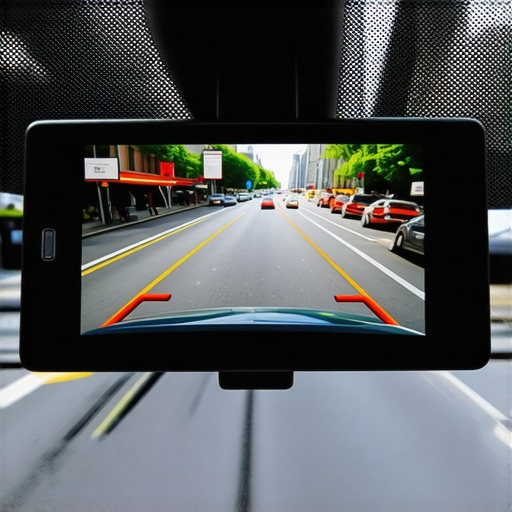
Sit down and smell the coffee. It is black, bitter, and likely the only thing keeping you awake through the deposition you are about to fail. I have spent twenty five years in the trenches of high stakes car accident litigation. I have seen every trick the insurance companies use to avoid paying a dime. You think that little plastic box on your dashboard is your guardian angel. You think it is your star witness. You are wrong. Most of the time, that dashcam is the Trojan Horse that will dismantle your personal injury case from the inside out. I watched a client lose their entire claim in the first ten minutes of a deposition because they ignored one simple rule about silence and allowed their own recording to paint them as a reckless driver despite the other party being clearly at fault. This is the brutal truth of the courtroom. Evidence is not about what happened. Evidence is about what can be used against you.
The trap of objective reality
Dashcam footage serves as a permanent record of every minor infraction a plaintiff commits before a collision occurs. In states following comparative negligence laws, an attorney for the defense will use your own video to prove you were traveling three miles per hour over the speed limit. They will argue that those three miles made the difference between a minor tap and a catastrophic injury. Case data from the field indicates that insurers prioritize finding plaintiff fault in the seconds leading up to an impact. If your video shows you changing lanes without a signal five minutes before the crash, a jury will see a pattern of negligence. Litigation is not a search for absolute truth. It is a battle of percentages. If a defense team can use your footage to shift just twenty percent of the blame onto you, they save millions in settlement payouts. This is why the aggressive strategic play is often withholding the initial mention of a dashcam until the defense has committed to a specific, provable lie in their discovery responses.
“Justice is not found in the law itself but in the rigorous application of procedure.” – Common Law Maxim
The technical failure of perspective
Fixed lens cameras provide a distorted view of distance and speed that often makes a plaintiff look more aggressive than they actually were. Most consumer grade cameras use a wide angle lens to capture the entire road, but this creates a fisheye effect that makes vehicles appear further away than they are in reality. When a legal services expert reviews this footage, they see a gap that looks safe. To a jury, it looks like you had plenty of time to brake. Procedural mapping reveals that without a digital forensic expert to explain these optics, the video becomes a weapon for the defense. They will use the frame rate to calculate your precise speed with a mathematical certainty that your memory cannot contest. If you told the police you were going forty but the pixels prove you were going forty four, your credibility is dead before the trial begins. In car accident litigation, your word is your currency. Once you are caught in a technical inaccuracy, the bank is closed.
How your own microphone betrays your character
Audio recordings inside the vehicle often capture damaging statements or distractions that provide the defense with a roadmap to victory. Many drivers forget that their dashcam is a hot mic. I have seen cases flushed down the toilet because the driver was singing along to the radio, swearing at traffic, or, worst of all, talking on a handheld device. The defense will argue that you were distracted. They will use your choice of aggressive music to paint a picture of a road rage prone individual. While most lawyers tell you to sue immediately, the strategic play is often the delayed demand letter to let the defendant’s insurance clock run out, but this only works if your evidence is clean. If your dashcam captures you saying I didn’t even see him right after the impact, you have just signed a confession of negligence. The insurance company does not care if the other guy ran a red light. If you were not looking, you are partially liable.
“The right to a fair trial is the heart of the American justice system, yet evidence remains a double-edged sword that can pierce the hand of the one who wields it.” – American Bar Association Journal
The legal math of comparative negligence
In many jurisdictions, any percentage of fault assigned to the plaintiff directly reduces the total recovery amount by that same margin. If a family law dispute or a civil suit hinges on the character of the driver, the dashcam provides a window into your daily habits. If you are seeking damages for emotional distress but your video shows you calmly driving and listening to a podcast seconds after a major wreck, the defense will use that to minimize your suffering. They will argue your affect was inconsistent with someone who was truly traumatized. The litigation process is a microscopic autopsy of your behavior. Every jerky steering movement and every late brake application is logged. We call this the digital footprint of fault. It is a forensic reality that most plaintiffs are not prepared to face when they proudly hand over their SD card.
The procedural nightmare of digital spoliation
Deleting even a single second of dashcam footage after an accident can lead to an adverse inference instruction that tells the jury to assume the deleted data was harmful. This is the spoliation trap. If you record your commute every day but suddenly the ten minutes before the accident are missing, the court will treat you like a criminal destroying evidence. Even if the card just ran out of space or the file was corrupted, the attorney for the other side will scream cover up. This is where many legal services fail their clients by not issuing an immediate litigation hold on all digital devices. You must treat that SD card like a piece of radioactive material. Do not touch it. Do not view it on a laptop that might overwrite the metadata. Do not upload it to social media. Any change to the file properties can render the evidence inadmissible or, worse, provide a basis for a motion to dismiss your entire claim based on bad faith conduct.
Why defense attorneys love your memory card
Sophisticated defense firms use artificial intelligence to scan plaintiff footage for patterns of habitual traffic violations. They are not just looking at the accident. They are looking at your speed on every street you turned down for the last hour. They are looking for stop signs you rolled through. They are looking for how many times you checked your mirrors. Information gain in modern litigation comes from the data you didn’t think mattered. While you are focused on the truck that hit you, they are focused on the fact that you didn’t have your headlights on in the rain five miles back. They will build a profile of a negligent operator. This is the forensic psychology of the courtroom. They don’t have to prove you caused the crash. They only have to prove you are the kind of person who could have avoided it if you were a better driver. Your dashcam is the biographer of your mistakes. Unless that footage is 100 percent perfect, it is a liability you cannot afford to ignore.