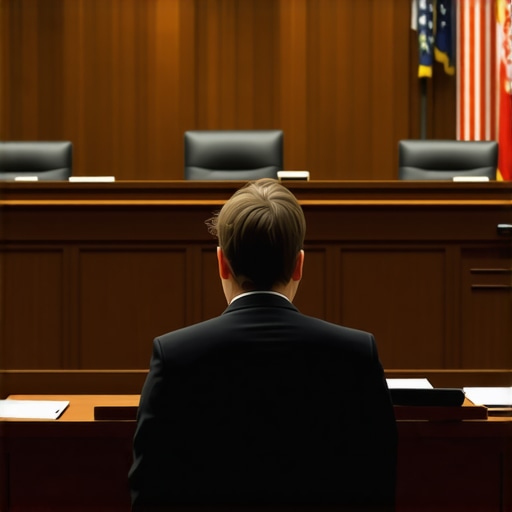
The fatal error that turns a victim into a defendant
The office smells like burnt coffee and the stale scent of old paper. I sat across from a man who thought he was a hero. He spoke too much. I watched a client lose their entire claim in the first ten minutes of a deposition because they ignored one simple rule about silence. He wanted to explain the motivation behind his actions when the physical evidence had already established the timeline. In the world of high stakes litigation, your intent matters significantly less than the specific procedural reality of the encounter. Most legal services providers will sugarcoat the truth to keep your retainer active. I will not. If you fail to understand the microscopic nuances of imminence, you are not a survivor; you are a felon in waiting.
The specific second your legal protection vanishes
Your legal protection evaporates the instant the threat is no longer imminent. If a person turns their back or drops their weapon, the law of litigation dictates that you are now the primary aggressor. A family law attorney or criminal specialist will confirm that retaliation is never self defense. You must prove that the danger was immediate and unavoidable. Case data from the field indicates that most claims fail because the defendant pursued the threat after the initial encounter ended. The law does not allow for a tactical pursuit. It allows for a momentary shield. When the shield becomes a sword, the courtroom becomes your cage. You need to understand that the jury is not looking for your bravery. They are looking for your fear. If you do not look like you were terrified for your life, your attorney has nothing to work with in front of a judge.
“Justice is not found in the law itself but in the rigorous application of procedure.” – Common Law Maxim
The mistake of provocation in modern litigation
Provocation occurs when you engage in any behavior that invites a physical response from the other party. If you used verbal insults or aggressive posturing to start the fight, your legal services team cannot claim you acted in self defense. Procedural mapping reveals that the initial aggressor loses the right to use force unless they clearly communicate their intent to withdraw. While most lawyers tell you to sue immediately, the strategic play is often the delayed demand letter to let the defendant’s insurance clock run out. This allows the heat of the moment to dissipate and the cold facts of the police report to take center stage. You must be the one who tried to leave. If the evidence shows you stepped forward instead of backward, you have surrendered your primary legal shield. I have seen cases where a single step toward an intruder turned a justified shooting into a voluntary manslaughter charge.
[image_placeholder_1]
Why the jury hates your tactical gear
Jury perception is shaped by the equipment and mindset you bring to a high stakes litigation scenario. If you carry specialized ammunition or tactical equipment, an attorney for the prosecution will paint you as a person looking for a fight. In family law or civil disputes, the same applies to your digital footprint. Every text message and social media post is a piece of evidence that the court will use to determine if you are a peaceful citizen or a dormant aggressor. The reasonable person standard is not about what you thought was right. It is about what a random person on a bus thinks was necessary. They do not have your training. They do not have your adrenaline. They only have the grainy video from a doorbell camera. If that video shows you looking prepared for the violence, the jury will assume you wanted it to happen.
The clock that stops your right to fight
Statutory limits on force are measured in milliseconds rather than minutes during legal proceedings. Once the threat is neutralized, any additional strike is considered assault or homicide regardless of who started the fight. Professional legal services focus on the gap between the last threat and the last blow. Information gain from forensic analysis shows that the final shot or the final punch is usually the one that leads to a conviction. You must be able to articulate the exact moment you stopped fearing for your life. If you cannot, the prosecution will articulate it for you. They will use high speed playback to show that you had three seconds to stop, but you chose to continue. Those three seconds are the difference between going home and going to a cell. I tell my clients that the best evidence of self defense is the phone call to the police made while you are still running away from the scene.
“The right of self-defense does not permit a person to hunt down an original aggressor.” – Standard Jury Instructions
The hidden risk of the duty to retreat
The duty to retreat is a legal requirement in many jurisdictions that demands you exhausted all escape options before using deadly force. Even in Stand Your Ground states, the litigation process will scrutinize why you did not simply walk away from the conflict. An attorney will look at the layout of the room, the proximity of the exits, and the physical capabilities of both parties. If the court finds a clear path of egress that you ignored, your claim of necessity falls apart. This is the microscopic reality of the law. It is not about fairness. It is about the specific wording of a local statute. Most people think their home is a sanctuary where they can do anything. The truth is that even inside your own walls, the use of force must be the absolute last resort. One failed objection during a deposition regarding your exit strategy can sink a multi million dollar defense strategy. You are being watched by the law long before the handcuffs come out.