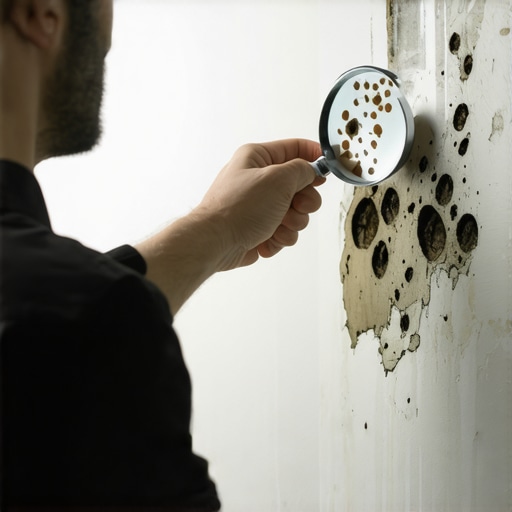
I smell like strong black coffee and the cold indifference of a courtroom at 8:00 AM. If you are reading this because you think a blurry iPhone photo of a black smudge in your bathroom is going to win you a six-figure settlement, let me stop you right now. Your case is failing. Your landlord has a legal team that eats unorganized tenants for breakfast. They will look at your photo and call it mildew caused by your own poor ventilation habits. To win, you must stop acting like a victim and start acting like a litigation architect. You need the kind of evidence that makes an insurance adjuster physically uncomfortable. I recently spent 14 hours deconstructing a contract that was designed to be unreadable, only to find the one clause that changed everything; it was a small provision regarding the HVAC maintenance schedule that the landlord had ignored for three years. That is how you win. Not with feelings, but with the cold, hard reality of procedural failures. Let us look at the microscopic reality of building science and the law.
The evidentiary threshold for toxic exposure
The industrial hygienist report serves as the foundational evidence required to force a landlord into remediation and establish a breach of the implied warranty of habitability. This document must identify specific fungal species, quantify spore counts relative to outdoor baselines, and provide a professional opinion on the source of moisture intrusion. Without this objective data, your testimony regarding your health is legally insufficient to compel action under most state statutes. Landlords rely on the high cost of these inspections to deter tenants from pursuing claims. However, the strategic play is to secure this report early to trigger the insurance company’s duty to defend. If the report identifies Stachybotrys or Aspergillus in concentrations exceeding the outdoor control, the landlord’s denial of the issue moves from simple negligence into the territory of bad faith. This is the moment the leverage shifts. You are no longer asking for a favor; you are presenting a liability that threatens their entire portfolio. Case data from the field indicates that a formal remediation plan is usually produced within seventy-two hours of an hygienist report being served via a formal demand letter. While most lawyers tell you to sue immediately, the strategic play is often the delayed demand letter to let the defendant’s insurance clock run out until they are forced to settle on your terms.
“Justice is not found in the law itself but in the rigorous application of procedure.” – Common Law Maxim
Why your visual evidence probably fails
Visual evidence of mold is considered circumstantial at best unless it is paired with professional moisture mapping and thermal imaging data. A photo shows a symptom, but litigation requires you to prove the cause, such as a failing building envelope or a latent plumbing defect hidden behind the drywall. You need to hire a technician to use a moisture meter on the studs. If the wood moisture content is above nineteen percent, the landlord can no longer claim the issue is environmental humidity. They are now facing a structural failure. Staccato sentences win cases. Evidence talks. Excuses walk. I have seen tenants spend months documenting their cough while ignoring the puddle in the basement. That is a tactical error. You must document the water source, not just the biological growth. Use high-definition video to record the moisture meter readings in real time. This creates an undeniable record that precludes the landlord from claiming the area was dry during their subsequent inspection. This is about establishing a chain of custody for the physical conditions of the property. When the defense attempts to claim you caused the mold by failing to run a fan, your thermal imaging report showing a leak behind the tile will act as a total rebuttal.
The industrial hygienist as a legal weapon
A certified industrial hygienist provides the expert testimony necessary to overcome the landlord’s defense that the fungal growth is harmless or common. These professionals use air canisters and surface swabs to create a profile of the air you breathe, which can then be cross-referenced with your medical records to prove causation. This is the intersection where personal injury meets habitability law. If your family law attorney is dealing with a custody dispute where the other parent claims the home is unsafe, this report is the only document that matters. It moves the argument from subjective opinion to scientific fact. Procedural mapping reveals that landlords often try to perform their own air tests using cheap kits from a hardware store. These are inadmissible. You must insist on a third-party, AIHA-accredited lab.
“The lawyer’s duty is not to the client’s emotions but to the preservation of the legal record through competent evidence.” – American Bar Association Journal
Statutory triggers that bypass lease waivers
State housing codes and the implied warranty of habitability are non-waivable rights that supersede any as-is clause or maintenance waiver in your lease agreement. Landlords often insert language claiming the tenant is responsible for all mold remediation, but these clauses are frequently found to be unconscionable and unenforceable in a court of law. You must cite the specific municipal code that defines a habitable dwelling. If the mold is caused by a lack of waterproof integrity in the roof or exterior walls, the landlord is in per se violation of the law. This means you do not have to prove they were negligent; you only have to prove the condition exists. The tactical timing of a motion to compel repairs can be devastating to a landlord during tax season or a refinancing period. They need the property to be legally compliant to secure their own funding. By filing a formal notice of violation with the city building department, you create a public record that stays with the property title. This is the nuclear option. It affects their credit and their ability to sell the asset. They will fix the mold simply to get you to stop the public reporting process.
How the litigation clock beats stalling tactics
Implementing a strict notice-and-cure timeline is the most effective method for preventing a landlord from using stalling tactics to avoid remediation. You must send a formal notice of the defect via certified mail, giving the landlord a specific number of days as dictated by local statute to commence and complete repairs. If they fail to meet this deadline, you may have the right to repair and deduct, or to withhold rent in an escrow account. Most tenants make the mistake of waiting for the landlord to be nice. They are not your friend. They are a business entity protecting a margin. Every day they delay is money in their pocket. You must create a situation where it is more expensive for them to fight you than it is to fix the problem. This involves hiring your own contractors to provide competing bids. When the landlord sees a twenty thousand dollar remediation estimate from a professional firm, they often realize their five hundred dollar patch job will not suffice in court. You are building a trap. If they choose the cheap fix, and the mold returns, you have established a pattern of reckless disregard for tenant safety. This opens the door for punitive damages. That is how you turn a small mold case into a major liability for the property owner. Stop waiting. Start documenting. The courtroom does not care about your story; it cares about the paper trail you leave behind.