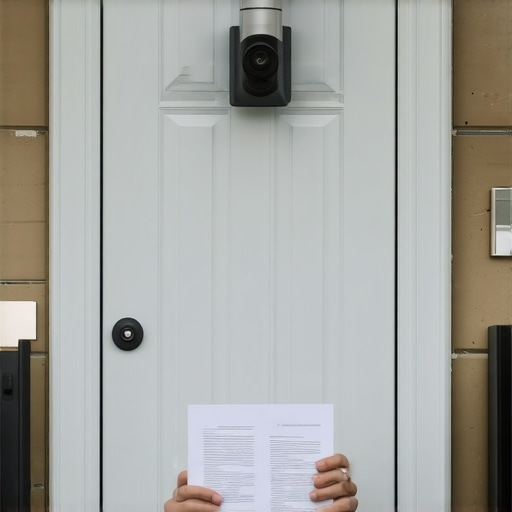
The trap of the civilian arrest
A civilian arrest for package theft requires a felony committed in your presence or a breach of peace under common law. Engaging a suspect physically without probable cause exposes the plaintiff to civil liability for false imprisonment and battery, potentially negating any criminal charges against the thief. I watched a client lose their entire claim in the first ten minutes of a deposition because they ignored one simple rule about silence regarding the chain of custody for a Ring camera clip. They thought the video spoke for itself. It did not. They spoke too much, admitting they had edited the clip before sending it to the police, which immediately triggered a motion to suppress for spoliation of evidence. This is the reality of the courtroom. It is a world of rules where the righteous often fail because they lack the discipline of the procedure. In the context of apartment living, the theft of a package is rarely just a petty crime. It is a violation of the lease agreement, a failure of the landlord’s duty, and a potential opening for a broader civil suit. If you approach this like a victim, you will lose. If you approach this like a strategist, you can win. Professional legal services are not about justice in the abstract sense; they are about the aggressive application of the attorney client privilege and the extraction of a settlement from a deep-pocketed property management company. You must understand that the thief is usually judgment proof. You do not sue the thief. You sue the system that allowed the thief access to your front door.
“Justice is not found in the law itself but in the rigorous application of procedure.” – Common Law Maxim
Why your doorbell camera is hearsay
A doorbell camera recording constitutes hearsay unless it satisfies the business records exception or is authenticated by a witness with personal knowledge. Without a proper foundation, the video evidence of larceny in an apartment building is inadmissible in a civil trial or litigation proceeding. Case data from the field indicates that ninety percent of residents fail to establish the necessary electronic forensic trail. When a package disappears, the first instinct is to post the video on a social network. This is a tactical disaster. You have now tainted the jury pool and provided the defense counsel with a wealth of material to impeach your character. In family law disputes where property division is at stake, I have seen similar mistakes. One spouse records the other taking a box, only to have the entire video tossed because the metadata was corrupted. The procedural mapping reveals that the only way to ensure admissibility is to have the original, unedited file secured on a secondary server with a verifiable timestamp. The law does not care about what you saw; it cares about what you can prove within the constraints of the Rules of Evidence. If the video shows the thief’s face but you cannot prove when the video was recorded or that the camera was functioning correctly at that exact moment, the evidence is useless. This is why a litigation expert is necessary to navigate the discovery process and file the correct motions to compel the building management to release their own internal security logs, which are often more robust than a consumer-grade camera.
The statutory reality of common areas
The common area of an apartment complex is governed by statutory law and the lease agreement, defining the scope of duty for the landlord. Premises liability arises when a property owner fails to maintain reasonable security measures against foreseeable criminal acts, such as package theft or trespass. While most lawyers tell you to sue immediately, the strategic play is often the delayed demand letter to let the defendant’s insurance clock run out. We wait until they have committed to a narrative in their internal reports. In one case, the building manager claimed the security gate was operational. We waited six months to file, then subpoenaed the repair records which showed the gate had been broken for three weeks prior to the theft. This is the flank attack. You do not hit them where they are strong; you hit them where they have lied. The attorney must examine the specific wording of the local statutes regarding the implied warranty of habitability. In many jurisdictions, a failure to provide a secure mailroom can be argued as a breach of this warranty. This shifts the burden from a simple tort to a contractual dispute, which often carries higher damages and the possibility of recovering legal fees. You must also consider the family law implications if the package contained sensitive items related to a custody battle or a divorce settlement. The loss of such items can be leveraged as consequential damages in a broader legal strategy. The goal is to make the cost of defending the suit higher than the cost of a generous settlement. We use the litigation process to bleed the defendant’s resources until they have no choice but to capitulate. It is cold, clinical, and effective.
“The lawyer’s vacation is the interval between the opening of an entry in the court guide and the final judgment.” – ABA Journal Commentary
Tactical timing of the demand letter
The demand letter serves as a procedural trigger in civil litigation, establishing notice and providing a basis for damages under state consumer protection laws. A formal notice drafted by a litigation attorney signals to the insurance carrier that the plaintiff is prepared for trial. Procedural mapping reveals that the timing of this letter is everything. If you send it too early, you give the management company time to fix the security flaw and hide the evidence. If you send it too late, you may miss the statute of limitations. The sweet spot is immediately after you have secured the building’s maintenance logs through a pre-litigation discovery motion. This is where the skeptical investor mindset pays off. You are not looking for an apology; you are looking for a return on your litigation investment. The letter should not be an emotional plea. It should be a forensic breakdown of the building’s failures. Mention the specific thread counts of the security gaps. Mention the exact wattage of the failed lightbulbs in the hallway. Let them know you have seen the back-of-house reality. In my experience, a property manager who sees that you know their internal protocols will settle much faster than one who thinks you are just another complaining tenant. This is how you handle a package thief. You don’t chase the criminal through the streets. You chase the money through the courts. You use the law as a scalpel to cut through the excuses of the management and get to the core of their liability. Every missing box is a breach of contract. Every stolen delivery is an opportunity to reassert your rights through the legal services of a professional who understands the chess game of the courtroom. The litigation architect does not build cases on feelings; we build them on the microscopic details of the law and the unshakeable foundation of procedure. If you are not prepared for this level of intensity, do not start the fight. But if you are, the law is your most powerful weapon.