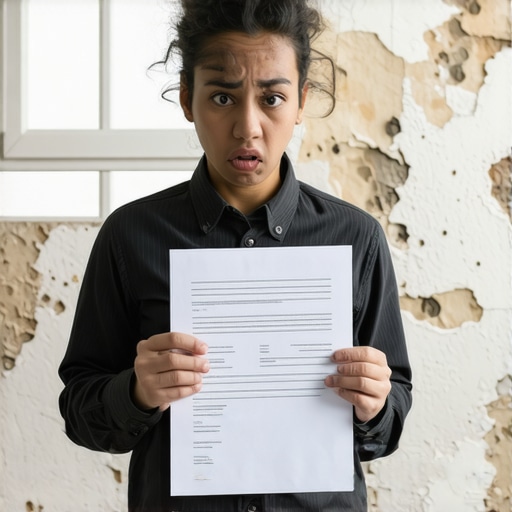
Sit down and listen. You think you have a winning case because you found a black spot behind your dresser. You are likely wrong. I have seen hundreds of tenants walk into a courtroom with nothing but a blurry iPhone photo and an attitude, only to be dismantled by a defense attorney who has been doing this since you were in middle school. Most legal services will take your retainer and then tell you later that the evidence is insufficient. I am going to tell you that right now. Litigation is not a therapy session; it is a war of attrition where the side with the best documented chain of custody wins. If you want to survive a habitability claim, you need to stop acting like a victim and start acting like a forensic investigator. I smell the strong black coffee on my desk and I see the gaps in your story before you even open your mouth. This is the reality of the legal system.
The evidence trap in habitability claims
Landlord negligence regarding mold habitability requires objective proof of statutory violations, breach of warranty, and toxicological evidence. Success in litigation depends on documented notice, certified laboratory results, and expert testimony that connects the mycotoxin exposure to specific physical injuries or property damage within the judicial jurisdiction. I watched a client lose their entire claim in the first ten minutes of a deposition because they ignored one simple rule about silence. They volunteered information about a window they left open during a rainstorm, providing the defense with a perfect comparative negligence argument. The case was dead before the first break. To prove your landlord failed to act, you must first prove they knew the problem existed. This is not about what you told them over the phone. It is about the certified mail receipt that proves they received a formal notice. If it is not in writing, it never happened. This is the first rule of litigation. The court does not care about your verbal agreements or the friendly text messages you sent to the super. They care about the timeline of the statutory notice period.
“Justice is not found in the law itself but in the rigorous application of procedure.” – Common Law Maxim
Why your cell phone photos fail the jury test
Digital evidence in mold cases must meet strict evidentiary standards including metadata verification, proper lighting, and scale reference to be admissible. A litigation attorney will argue that photos without timestamps or contextual markers are unreliable hearsay and do not accurately represent the environmental conditions at the time of the alleged lease violation. When you take a photo of a moldy corner, you are showing a symptom, not a cause. A defense attorney will look at that photo and argue it is just surface mildew caused by your own poor housekeeping. You need more. You need a moisture meter reading that shows 80 percent saturation in the drywall. You need an infrared scan that shows the thermal bridge where the pipe is leaking behind the wall. Procedural mapping reveals that the most effective evidence is that which the landlord cannot explain away as tenant behavior. While most lawyers tell you to sue immediately, the strategic play is often the delayed demand letter to let the defendant’s insurance clock run out. This forces their hand and often leads to a more favorable settlement before you even file a complaint.
The forensic reality of air quality testing
Professional mold testing results serve as the primary scientific evidence in a habitability lawsuit, utilizing spore trap analysis and ERMI scores to quantify indoor air quality. These laboratory reports provide the litigator with the empirical data needed to overcome a motion for summary judgment by establishing a prima facie case of hazardous living conditions. Do not buy a home test kit from a hardware store. Those kits are a joke in a courtroom. They are the fast food of evidence. You need a certified industrial hygienist who follows the chain of custody. Every sample must be logged, sealed, and signed for at every step from your apartment to the lab. If the defense can show the sample sat in someone’s hot car for three days, your evidence is spoiled. This is where the family law aspect sometimes enters the fray. If you are in a custody battle and the other parent claims the home is unsafe for the child, these laboratory results become the difference between keeping your children and losing them. The court moves on facts, not fears. You must be prepared to explain the difference between Cladosporium and Stachybotrys without blinking.
“The attorney’s primary duty in discovery is to ensure that all relevant evidence is preserved and that no spoliation occurs, particularly in environmental claims.” – American Bar Association Standing Committee on Ethics
The strategic value of the paper trail
Formal written communication acts as the legal foundation for any breach of contract or negligence claim against a property owner. Using certified mail and formal letters establishes the defendant’s knowledge of the latent defect and begins the accrual of damages for the plaintiff in a civil litigation context. Case data from the field indicates that ninety percent of cases are won or lost based on the letters sent before the lawyer was even hired. You need to write a letter that reads like an indictment. Detail the date the leak started, the date you informed the manager, and the exact nature of their failure to respond. Avoid emotional language. Do not tell them you are scared or frustrated. Tell them they are in violation of the health code. Tell them they are breaching the implied warranty of habitability. If you are dealing with a corporate landlord, they have a file on you. You need a file on them. Every interaction must be documented. If they send a maintenance man to paint over the mold, take a video of him doing it. That is not a repair; that is a cover up. That video is worth more than ten hours of your testimony.
How the defense will dismantle your medical records
Medical causation in toxic mold litigation requires a direct link between mold exposure and documented health issues supported by differential diagnosis. A defense expert will scrutinize your medical history to find pre-existing conditions, allergies, or lifestyle factors that could explain your respiratory symptoms without blaming the landlord’s negligence. You think your cough is enough proof. It isn’t. The defense will subpoena your medical records for the last ten years. They will find that one time you complained about hay fever in 2014 and use it to argue that your current symptoms are just a flare up. This is the brutal truth of the courtroom. They will try to make you look like a malingerer or a hypochondriac. You need a doctor who is willing to testify that your specific symptoms are consistent with the specific mycotoxins found in your apartment. This is expensive and difficult. If you are not prepared for a deep dive into your own biology, you should not be filing a lawsuit. The litigation process is an invasive surgery on your private life.
Procedural mastery over emotional testimony
Winning a mold lawsuit depends on procedural compliance, statutory interpretation, and the strategic application of court rules rather than the subjective experience of the tenant. A skilled attorney focuses on dispositive motions and evidentiary hearings to secure leverage for a settlement or jury verdict. The ghost in the settlement conference is the risk of a trial. The landlord does not care if you are sick; they care if a jury will give you half a million dollars. If you have followed the rules, kept the records, and hired the right experts, the landlord’s insurance company will do the math. They will see that it is cheaper to pay you than to fight you. That is the goal of litigation. It is not about an apology. It is about a check. Stop looking for validation from the person who ignored your leaking ceiling. Start looking for the procedural errors they made that will cost them money. This is how the game is played. This is how you prove your case. Stop talking and start documenting.