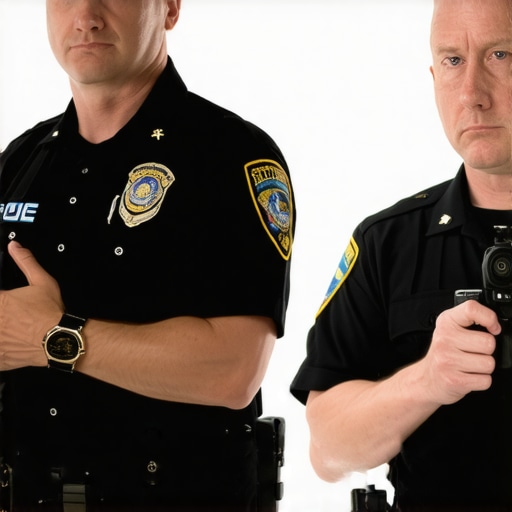
I smell the bitter scent of over-extracted black coffee as I look at your file. You think you have a winning case because there is video. You are wrong. I watched a client lose their entire claim in the first ten minutes of a deposition because they ignored one simple rule about silence. We were watching a body cam clip of a domestic dispute. The footage was grainy. The audio was distorted. The opposing counsel played ten seconds and then stopped. They sat in absolute silence. My client, desperate to fix the perception of the video, started talking. They explained their anger. They admitted to a motive we had spent months denying. They committed suicide by narrative because they believed the camera was an objective truth. It is not.
The trap of digital perception
Police body cam footage is often incomplete evidence that fails to capture pre-incident indicators or the subjective fear of the participants. In family law litigation, this digital record can be prejudicially admitted to sway a judge or jury without the necessary contextual framework required for legal services. You cannot rely on a single perspective to prove a complex legal claim in court.
The camera is a physical object with limitations. It has a fixed lens. It has a limited field of view, usually between 95 and 130 degrees. A human being has a peripheral range of nearly 180 degrees. When an attorney reviews this footage, they are seeing a tunnel. They are not seeing the person to the left holding a blunt object. They are not seeing the subtle hand signals of a domestic abuser standing just outside the frame. In family law, these omissions are fatal. If the camera did not see it, the court assumes it did not happen. This is the fallacy of the lens. We call it the observer effect, but in a trial, it is simply a gap in the defense. Your legal services must involve a forensic breakdown of what is missing, not just what is visible.
“Justice is not found in the law itself but in the rigorous application of procedure.” – Common Law Maxim
Why the frame rate determines your fate
The technical specifications of body cameras, specifically the frame rate and shutter speed, create visual artifacts that litigation experts must challenge. High-stakes family law cases often hinge on micro-expressions or rapid movements that are blurred or omitted by standard police hardware, making the video evidence unreliable for determining intent. Professional attorneys must audit the metadata.
Consider the mechanical reality of a standard Axon or Motorola unit. These devices often record at 30 frames per second. In a struggle, a hand can move several feet in a fraction of a second. The camera records a smear. An aggressive prosecutor or a ruthless family law attorney will take that smear and call it a punch. They will take a blur and call it a weapon. If you do not have a lawyer who understands the physics of light and sensor lag, you are walking into a slaughterhouse. We must hire experts to deconstruct the digital file. We must look at the lighting. We must look at the ISO settings. If the sensor was struggling with low light, it might have added digital noise that looks like a sudden movement. This is not theory; this is the reality of how cases are lost in the modern era.
The ghost in the settlement conference
Video evidence acts as a psychological anchor during a settlement conference, forcing litigants to accept lower valuations based on misinterpreted footage. A skilled attorney uses counter-narratives and forensic analysis to break this anchoring effect, ensuring that litigation reflects the total evidence rather than just the police record. This is essential legal strategy for asset protection.
Most lawyers are lazy. They see a video and they try to settle. They tell you that the jury will hate the way you looked on camera. I tell you that the jury will hate being lied to. When the defense brings a body cam clip to the table, they are trying to scare you. They are using the footage as a weapon of intimidation. My job is to disarm them. I look for the moments before the camera was turned on. Most department policies allow for a thirty second buffer of video without audio. I look for the body language in those thirty seconds. I look for the officer reaching for the power switch. Why then? Why at that specific second? If the recording started late, the recording is a lie by omission. We use the missing audio to create a vacuum of credibility that the defense cannot fill.
“The legal profession’s primary responsibility is to ensure that evidence is presented in a context that does not mislead the trier of fact.” – ABA Standards for Criminal Justice
How family law utilizes visual evidence
In custody disputes and restraining order hearings, police body cam footage is frequently used to characterize parental fitness through isolated incidents. An experienced attorney must invoke the Doctrine of Completeness to ensure the court views the entire timeline of the legal services matter, preventing prejudicial bias from partial recordings. This litigation tactic is non-negotiable for family law.
Parents are often at their worst when the police arrive. There is screaming. There is crying. There is chaos. The camera captures the peak of the emotional crisis. It does not capture the three years of sobriety. It does not capture the thousands of bedtimes handled with care. It captures the one night where everything broke. If you let that video stand alone, you lose your children. We fight this by bringing in the context. We use the police report to find the contradictions in the video. If the officer wrote that you were aggressive, but the video shows you backing away with your hands up, we destroy the officer’s credibility. We do not just defend the video; we attack the person who recorded it. We question their training. We question their bias. We question the very ground they stood on.
Tactical counter-measures for your attorney
Effective litigation requires a multi-phase strategy to neutralize body cam footage, including motions in limine and expert testimony. By challenging the chain of custody and the authenticity of the file, an attorney can protect client rights in family law and general legal services. You must discredit the recording before it reaches the judge or jury.
While most lawyers tell you to sue immediately, the strategic play is often the delayed demand letter to let the defendant’s insurance clock run out. We wait. We gather the data. We wait for the department to fail in their evidence retention policy. If they lose the original raw file and only provide a compressed copy, we move to exclude it. Compression changes the data. It removes details. It creates artifacts. A compressed video is not the event; it is a ghost of the event. We do not accept ghosts in this firm. We demand the high-resolution original metadata. If they cannot produce it, we have the leverage. We move for sanctions. We move for a dismissal. This is how you win. You do not win by playing nice with the evidence. You win by tearing the evidence apart until there is nothing left but the truth that favors my client.