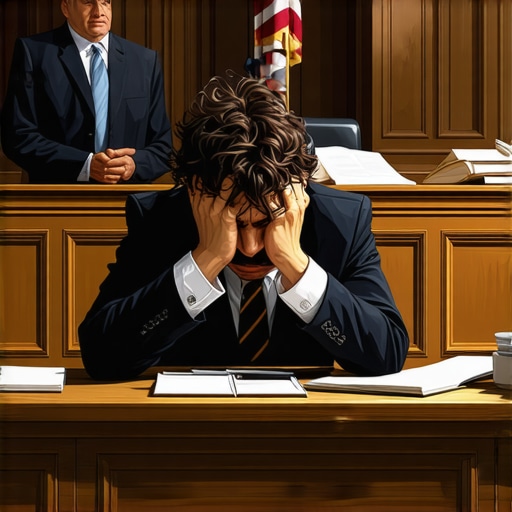
The office smells like strong black coffee and old paper. It is 6:00 AM. I am reviewing a case file that most lawyers would have settled for pennies. My client is broken, not with a shattered femur or a scarred face, but with a mind that refuses to restart after a wreck. I watched a client lose their entire claim in the first ten minutes of a deposition because they ignored one simple rule about silence. She felt the need to fill the air. She started talking about her weekend hikes. The defense lawyer, a man who smells like expensive gin and cheap cologne, smiled. If she could hike, he argued, her depression was a lie. The claim died right there on the court reporter’s transcript. This is the reality of the legal system. It is not about your pain; it is not about the truth of your suffering. It is about what the evidence says on a Tuesday afternoon during a cross-examination. If you want to sue for emotional distress, you must understand that your life is now an open book, and the defense has a highlighter. They will find every mistake you ever made and use it to prove you are not traumatized, just opportunistic.
The cold reality of psychological injury
To sue for emotional distress within a personal injury framework, a plaintiff must establish negligent infliction of emotional distress or intentional infliction of emotional distress. This requires documented psychological trauma, medical evidence, and proof of the defendant’s liability causing mental anguish or physical manifestations of stress within the legal record. Case data from the field indicates that psychological claims are the first to be slashed during settlement negotiations. The defense views your anxiety as a line item they can delete. You must treat your mental state as a physical injury. If you do not have a diagnosis from a board-certified psychiatrist, you do not have a case. Procedural mapping reveals that courts are increasingly skeptical of claims that lack a physical nexus. In many jurisdictions, the impact rule still stands. This means if the defendant did not physically touch you, your emotional claim might be dead on arrival unless you were in the zone of danger. You are fighting an uphill battle against a system designed to favor tangible, visible wounds. The coffee in my mug is bitter, much like the realization that your suffering must be quantified in a spreadsheet to matter to a jury.
Economic vs non-economic damages in the modern court
Economic damages cover the tangible losses like medical bills and lost wages, while non-economic damages encompass emotional distress and pain and suffering. Winning these requires a meticulous attorney to connect the defendant’s negligence directly to the plaintiff’s internal state through expert testimony and credible witness accounts.
“Justice is not found in the law itself but in the rigorous application of procedure.” – Common Law Maxim
The calculation of general damages is where most personal injury cases fall apart. There is no receipt for a panic attack. There is no invoice for the inability to sleep. Most lawyers use a multiplier method, taking your medical bills and multiplying them by three. This is lazy. A sophisticated legal services team will look at the per diem approach, assigning a daily value to your suffering. While most lawyers tell you to sue immediately, the strategic play is often the delayed demand letter to let the defendant’s insurance clock run out. This allows the full extent of the trauma to manifest. If you settle too early, you leave money on the table for the long-term PTSD that has not yet been diagnosed. You need a litigation expert who understands the difference between temporary upset and permanent psychological impairment.
The mechanics of the impact rule
The impact rule requires that a plaintiff must have suffered a physical touch or impact to recover damages for emotional distress. In states where this remains law, an attorney must prove that the defendant’s negligence resulted in actual physical contact, however slight, to unlock the right to sue. This is a relic of old common law, but it still breathes in several states. It is a gatekeeper. If a car nearly misses you but causes a heart attack from fear, some courts will deny the claim because there was no impact. However, procedural mapping reveals exceptions for those in the zone of danger. If you were close enough to fear for your life, or if you witnessed a close relative suffer an injury, you might bypass the impact rule. It is a technical dance. One wrong word in your complaint and the judge will toss the case. You need to identify the exact moment of the breach. You need to show that the defendant’s conduct was not just negligent, but outrageous. The bar for outrageousness is higher than you think. It is not just being mean; it is conduct that goes beyond all possible bounds of decency.
Why a medical record is your only weapon
Medical records serve as the primary evidence in a personal injury lawsuit involving emotional distress. These documents provide a chronological account of the plaintiff’s mental health treatment, medication history, and diagnostic codes which are essential for proving the severity of the psychological impact to the court. Without a paper trail, you are just a person with a story. Stories do not win trials; records do. The defense will subpoena every record from the last ten years. They will look for that one time you mentioned feeling sad in 2014 to prove your current distress is pre-existing. You must be transparent with your attorney. If you hide a previous diagnosis, the defense will find it, and they will use it to destroy your credibility. Your psychiatrist’s notes are discovery fodder. Every word you say in therapy could be read aloud in a courtroom. It is a brutal process. I have seen the most private moments of a person’s life dissected by a defense expert who has never met them. This is the price of litigation. You are trading your privacy for a chance at a verdict. The ROI of your case depends on the strength of these files.
The trap of the independent medical exam
An independent medical exam is a tool used by the defense to challenge the plaintiff’s claims of emotional distress. A defense-hired doctor will evaluate the plaintiff to provide an alternative perspective that often downplays the severity of the psychological injuries to minimize the insurance company’s payout.
“The attorney’s duty is not to the client’s feelings but to the evidentiary record that survives the scrutiny of the court.” – ABA Model Rules Commentary
The word independent is a lie. These doctors are paid by the insurance companies. They are professionals at finding reasons why you are fine. They will look at your body language. They will look at how you walked into the room. If you look too put-together, they will say you are not depressed. If you look too disheveled, they will say you are malingering. It is a trap. I prepare my clients for these exams like they are going into a deposition. You do not volunteer information. You answer the questions and you leave. Case data from the field indicates that these exams are the single most effective tool the defense has to lower the value of a claim. You need a lawyer who knows how to cross-examine these experts, pointing out the thousands of dollars they receive from the insurance industry every year.
Strategic timing of the demand letter
The demand letter is the formal document that starts the negotiation process between the plaintiff’s attorney and the defendant’s insurance company. Timing this letter correctly is vital, as it must reflect the full scope of both economic and non-economic damages to be effective. Most people want their money yesterday. They are behind on rent. They have medical debt piling up. The strategic play, however, is to wait. You wait until the point of Maximum Medical Improvement. If you send the demand before you know the full extent of the psychological damage, you are guessing. And in litigation, guessing is failing. Procedural mapping reveals that insurance adjusters have a ceiling. If your demand is too low, they will meet it and you are stuck. If it is too high without evidence, they will ignore it. The letter must be a narrative of destruction. It must detail the before and the after. It must show how the litigation will cost them more than the settlement. You are not asking for money; you are presenting a business case for why they should avoid a trial. The courtroom is a territory, and the demand letter is your first flag planted in the ground.
The myth of the easy settlement
A settlement is a voluntary agreement to resolve a legal dispute without a court judgment. While most personal injury cases settle, achieving a fair amount for emotional distress requires a credible threat of trial and an attorney willing to litigate the case to a jury. The insurance company is not your friend. They are not looking to be fair. They are looking to close a file for the least amount of money possible. If they know your lawyer is afraid of the courtroom, they will lowball you every time. I have walked away from six-figure offers because I knew the jury would see the truth. Sometimes you have to be willing to lose everything to win what you deserve. This is not a game for the faint of heart. Family law and civil litigation overlap here when the distress impacts domestic life. Your spouse might even have a claim for loss of consortium. The layers of a case are thin and fragile. You need a litigator who can navigate the procedural minefields without stepping on a motion to dismiss. The coffee is gone. The sun is up. It is time to go to work. The defense is already moving, and we cannot afford to be second.