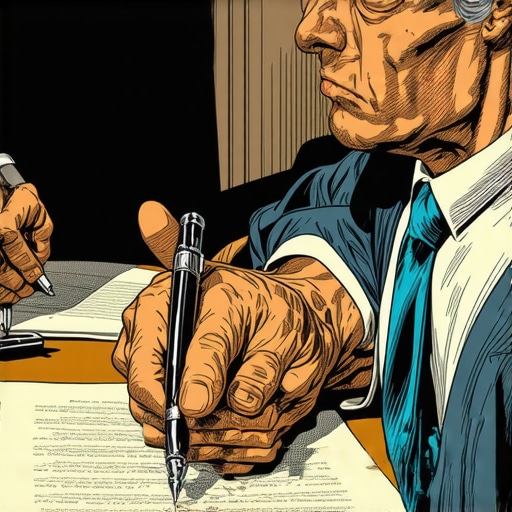
The office smells like strong black coffee and the silent weight of a career ending. I sit across from professionals who believe their company is being generous. They see a check with several zeros. I see a predator. They see a bridge to their next job. I see a reinforced concrete wall that will block their path to justice. If you are holding a severance agreement, you are not holding a gift. You are holding a contract that was drafted by a team of defense attorneys whose only job is to protect the corporate treasury from you. You are in a high-stakes chess match, and you are currently playing without a queen.
The contract that cost a career
A severance agreement is a binding legal contract that trades a lump sum of money for your right to ever sue the company. It functions as a complete waiver of all claims under local and federal laws. If you sign it without a rigorous legal review, you lose your leverage. I recently spent 14 hours deconstructing a contract that was designed to be unreadable, only to find the one clause that changed everything. My client thought they were getting six months of pay. In reality, the fine print contained a claw-back provision that would have forced them to return every penny if they mentioned the company’s name in a public forum. We did not settle. We litigated. We won because we looked at the microscopic reality of the phrasing. Most people do not look. They sign because they are afraid of the mortgage. They sign because they want the bleeding to stop. But the bleed is just beginning if you sign away your rights to litigation without knowing what those rights are worth in the current market.
“Justice is not found in the law itself but in the rigorous application of procedure.” – Common Law Maxim
The finality of the general release
The general release clause is the most dangerous paragraph in any severance package because it acts as a permanent shield for the employer. It covers every possible cause of action from discrimination to breach of contract. Once you sign, your legal life regarding this employer is over. Case data from the field indicates that ninety percent of employees do not understand that a general release often includes unknown claims. You are not just waiving what you know today. You are waiving what you might discover tomorrow. Imagine finding out next month that your supervisor was embezzling and blaming your department. If you signed that release, you have no recourse. You are locked out. In the realm of legal services, we see this as the ultimate trap. The employer is buying peace of mind. They are buying your silence. They are buying the certainty that they will never see you in a courtroom. The price they offer is usually the lowest they think you will accept. It is a market transaction, and you are the product being liquidated. We analyze these documents with the cold eye of a skeptic. We look for the gaps. We look for what is not there. Often, the absence of a specific carve-out for vested benefits or unemployment insurance is where the real damage occurs.
The trap of the non-disparagement clause
Modern non-disparagement clauses are designed to be one-sided weapons that prevent you from ever speaking the truth about your termination. They often lack a reciprocal requirement for the company to remain silent about you. This creates a massive imbalance of power in future job hunts. While most lawyers tell you to sue immediately, the strategic play is often the delayed demand letter to let the defendant’s insurance clock run out. This tactic allows for a more aggressive negotiation of the non-disparagement language. You need a clause that prevents the company from giving you a bad reference. You need a clause that identifies exactly who in the company is prohibited from speaking about you. Without this, your former boss can poison the well with a phone call while you remain legally muzzled. This is where the litigation architect earns their keep. We do not just look at the money. We look at your reputation. Your reputation is your only remaining asset in a competitive labor market. If you sign a severance agreement that allows the company to disparage you while you are silent, you have committed professional suicide. We fight for mutual non-disparagement. We fight for a neutral reference letter to be attached as an exhibit to the agreement. This is how you protect your future earnings.
“The lawyer’s role in reviewing a release is to ensure the client understands the finality of the waiver.” – American Bar Association Model Rules
The logic of the twenty one day review window
Federal law, specifically the Older Workers Benefit Protection Act, provides employees over forty with twenty one days to consider a severance offer. This time period is a mandatory cooling-off phase designed to prevent coerced signatures. It is a window of opportunity for legal strategy. Procedural mapping reveals that companies use the ticking clock to create a sense of urgency. They want you to feel that the offer will vanish if you do not act now. This is a psychological tactic. In reality, the offer is rarely withdrawn because the company wants the release as much as you want the money. They need the release to close their books and satisfy their auditors. We use this time to perform a forensic audit of the termination. Was it a reduction in force? Was it a performance-based fire? We look for the inconsistencies. If the company says it is a layoff but they only fired people over fifty, we have a different conversation. We look at the litigation potential. A lawsuit is a business expense for them. A severance package is a settlement. We ensure the settlement reflects the actual risk they face. If the risk is high, the check should be higher. Never rush the process. The silence of the consideration period is your strongest weapon. Use it to build your case.
The intersection of employment and family law assets
A severance package is not just income; it is a marital asset that can become a focal point in family law disputes. If you are going through a divorce, the timing and structure of your severance are critical. Litigation in the family court often hinges on the characterization of these funds. Is it a replacement for future earnings or a reward for past service? The answer changes how the money is divided. If you sign a poorly drafted agreement, you might accidentally categorize the entire sum as a divisible asset, leaving you with half of what you expected. We coordinate with family law attorneys to ensure the language of the severance agreement protects your financial interests on all fronts. This is the microscopic reality of legal planning. You cannot look at a severance agreement in a vacuum. It sits at the center of your entire financial life. It affects your taxes, your health insurance, and your retirement accounts. A senior trial attorney looks at the 360-degree impact. We see the ripples in the pond. We see the way a single clause in an employment contract can bankrupt a client two years later in a child support modification hearing. Everything is connected. Nothing is simple.
Strategies for the litigation architect
The goal of reviewing a severance package is to maximize the consideration while minimizing the restrictions on your future. You must approach the negotiation as a battle for your economic freedom. This requires a cold assessment of the evidence. We start by demanding the personnel file. We look for the internal memos. We look for the emails that the company thinks they deleted. This is how we find the leverage. If we find evidence of a hostile work environment, the price of the release goes up. If we find evidence of wage theft, the price goes up. We do not accept the first offer. We do not accept the second offer. We build a narrative of liability. We show them the hole in their defense. Then, and only then, do we talk about the check. This is not about being difficult. This is about being professional. The company has an attorney. You should have one too. The disparity in legal expertise is the reason these contracts are so one-sided. We level the field. We take the ozone and the mint of the courtroom and bring it into the conference room. We make them understand that signing is a choice, not a requirement. We make them understand that the alternative to a fair severance is a long, expensive, and public litigation process. That is the only language a corporation speaks. That is the only way to win. Control the paper. Control the process. Control your future. The coffee is cold now. The decision is yours. Do not sign until you are ready to give up your voice. Because once you sign, the silence is permanent.