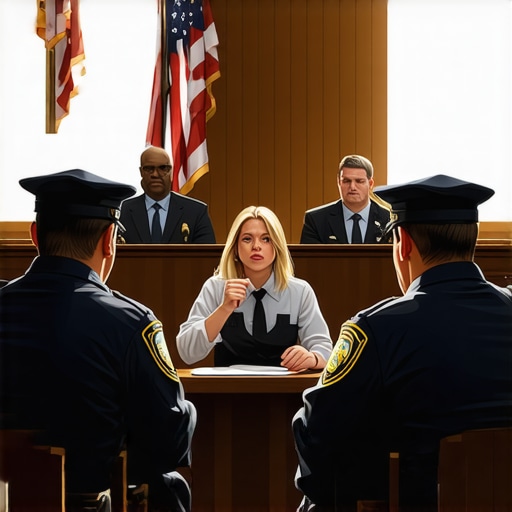
Why Your Police Statement Is Your Biggest Mistake After an Arrest
I smell like strong black coffee and the metallic tang of a holding cell at four in the morning. I have spent twenty-five years watching people talk themselves into a prison cell. I watched a client lose their entire claim in the first ten minutes of a deposition because they ignored one simple rule about silence. They thought they could explain their way out of a handcuffs situation. They were wrong. You are probably wrong too. When the police arrest you, they are not looking for the truth. They are looking for evidence to close a file. Your statement is the final nail in a coffin you are building for yourself.
The trap of the helpful suspect
Statements made to law enforcement are permanent evidence that cannot be retracted. Even innocent explanations provide the prosecution with corroborative details or impeachment material. Once a recorded statement exists, your defense attorney loses the ability to control the narrative during litigation or family law proceedings. The police officers are trained in the Reid Technique. They will offer you water. They will talk about their own families. They will act like your only friend in a cold room. It is a performance. Their goal is to get you to speak. Every word you utter is a gift to the district attorney. You think you are being helpful. In reality, you are providing the context they need to convict you. If you say you were at the scene but did nothing, you have just admitted to being at the scene. That is half their job done. You have eliminated the defense of mistaken identity before your lawyer even looks at the file. This is the brutal reality of the system. It does not reward honesty; it rewards procedural compliance.
Silence is a procedural shield
Invoking your Fifth Amendment right is not an admission of guilt. In criminal defense, the right to remain silent prevents the police from using your own words to bridge gaps in their probable cause. Silence is the only tool that cannot be misquoted or taken out of context. You must understand that the law does not require you to help the state build a case against you. When you speak, you waive a protection that took centuries of legal evolution to perfect. I have seen litigation strategies crumble because a defendant wanted to appear cooperative. Cooperation is a currency you should only spend when your attorney is at the table to negotiate the exchange rate. Without a lawyer, you are just giving away your leverage for free. The Fifth Amendment is your most powerful weapon in the courtroom. Use it by saying absolutely nothing. The legal services you hire later will thank you for your restraint.
“Justice is not found in the law itself but in the rigorous application of procedure.” – Common Law Maxim
The high cost of explaining yourself
Explaining your side often creates inconsistencies that a prosecutor will exploit. In family law litigation, a statement made during an arrest can be used to challenge custody or parenting time. Legal services often focus on damage control for words already spoken. Imagine a domestic dispute where you explain that you only pushed someone away. You think you are describing self-defense. The attorney on the other side sees an admission of physical contact. In a family law context, that admission can lead to a restraining order that keeps you away from your children for years. The nuances of litigation are unforgiving. A single sentence about your emotional state can be twisted into proof of instability. You are not a litigator. You do not know the rules of evidence. You do not know what constitutes a spontaneous utterance or how it bypasses hearsay protections. Stop talking.
What the interrogation room hides from you
The environment of an interrogation is designed to break your psychological resolve through isolation and sensory deprivation. Every attorney knows that the physical layout of the room is a tool used to elicit incriminating statements. The chairs are uncomfortable. The temperature is kept slightly too low. The clock is often missing or wrong. They want you to feel the weight of time. They want you to believe that the only way out of that room is to talk. This is a lie. The only way out of that room with your future intact is to demand a lawyer and then shut your mouth. Case data from the field indicates that suspects who remain silent are significantly more likely to have charges dropped or reduced. The litigation process starts the second the lights go on in that room. If you fail the first test, the rest of the legal services you pay for will be uphill battles. You are fighting against a professional who does this every day. You are an amateur playing a pro game with your life on the line.
Your lawyer cannot unsay your words
Once a statement is recorded, it becomes an immutable record that your attorney must navigate around. In civil litigation or criminal defense, an admission against interest is a powerful exception to the hearsay rule. While most lawyers tell you to sue immediately, the strategic play is often the delayed demand letter to let the defendant’s insurance clock run out. However, if you have already given a statement, that clock is irrelevant. Your words are locked in. I cannot tell a jury you were somewhere else if you told the police you were there. I cannot argue you were calm if you screamed at the officer on camera. You have handcuffed your legal services provider before they even get to the office. The litigation becomes about explaining away your mistakes rather than attacking the prosecution’s weaknesses. This is why the attorney-client privilege is so vital. It is the only space where your words are safe. The police station is the exact opposite of that space.
“The right of the people to be secure in their persons, houses, papers, and effects, against unreasonable searches and seizures, shall not be violated.” – U.S. Constitution, Fourth Amendment
The tactical advantage of a delayed response
Waiting to speak allows your legal team to review the discovery materials and police reports before committing to a narrative. Procedural mapping reveals that early statements are almost always detrimental to the defense because they are made without knowing the evidence the state possesses. You do not know what the neighbor saw. You do not know what the security camera caught. If you give a statement that contradicts a video you didn’t know existed, you are now a liar in the eyes of the jury. Even if the contradiction is an honest mistake of memory caused by the stress of the arrest, it looks like guilt. A litigation expert will tell you that memory is a fragile thing under pressure. By remaining silent, you allow your attorney to gather the facts and present a version of events that is consistent with the physical evidence. This is how cases are won. This is how you survive the litigation meat grinder. Stay silent. Wait for the coffee to wear off. Wait for your lawyer.