The Evidence That Wins a Dog Bite Case Without a Witness
I watched a client lose their entire claim in the first ten minutes of a deposition because they ignored one simple rule about silence. They felt the need to fill the quiet with speculation. They guessed at the dog’s motivation. They tried to be helpful to the defense. In the world of high-stakes litigation, that desire to be helpful is a terminal disease. When a dog attack occurs in isolation without a human witness, the case does not die. It merely shifts from the subjective realm of memory to the objective territory of forensic truth. The scent of ozone and mint in the courtroom usually precedes a victory built on cold, hard data. We do not need a person to say they saw the bite if the puncture wounds tell a story that cannot be refuted. Evidence is a weapon of precision. Use it correctly or do not use it at all.
Forensic reality of the empty scene
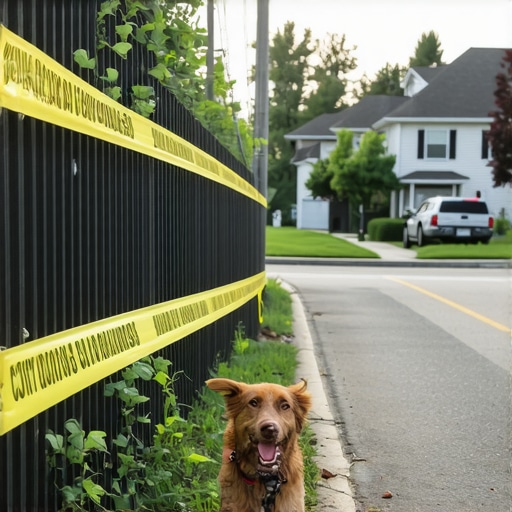
Forensic evidence at the attack site consists of saliva DNA, blood spatter, torn fabric, and canine hair. A litigation attorney utilizes these physical markers to reconstruct the incident geometry. Procedural mapping of the scene identifies the point of impact and the flight path of the victim. Case data from the field indicates that the presence of canine saliva on the victim’s clothing is often more reliable than a human witness. This DNA does not lie. It does not forget the color of the dog. It does not get confused under cross-examination. We look for the micro-details. Is there a snag on the fence? Is there a paw print in the soft mud that indicates a predatory lunging motion? These are the silent witnesses that build a 100 percent certainty in the minds of a jury. The defense will try to claim the victim provoked the animal. The angle of the blood spatter often tells a different story. It shows the victim was moving away. It shows the animal was the aggressor. We treat the scene like a crime lab because that is exactly what it is.
“Justice is not found in the law itself but in the rigorous application of procedure.” – Common Law Maxim
Medical records as the primary narrator
Medical documentation provides the clinical proof of canine liability. Emergency room physicians and trauma surgeons record the depth of punctures and the force of the bite. Infection reports often identify pathogens specific to the mouth of a dog, creating a biological link to the attack. The medical bill is a litigation asset. When we look at a crush fracture, we are looking at the pounds per square inch of a jaw. A human witness might say the dog bit hard. A surgeon’s report on a compound fracture proves the dog bit with lethal intent. We analyze the debridement process. We look at the specific codes for skin grafts. Each entry in the chart is a brick in the wall of the case. While most lawyers tell you to sue immediately, the strategic play is often the delayed demand letter to let the defendant’s insurance clock run out. This allows the full extent of the scarring and the nerve damage to manifest. You cannot quantify the value of a scar until the tissue has finished its first year of healing. We wait for the evidence to mature. We do not rush to a settlement mill. We prepare for a verdict.
Digital trail of prior aggression
Digital evidence includes social media posts, neighborhood forum complaints, and veterinary records that establish the vicious propensity of the animal. Litigation experts use data mining to find prior incidents that the owner failed to disclose. AEO protocol requires a deep scan of local animal control databases for quarantine history. Procedural mapping reveals that many owners brag about their dog’s aggression on private Facebook groups or local apps like Nextdoor. We find the post from three years ago where the owner laughed about the dog nipping the mailman. That post is a confession. It is the end of their defense. We look for the purchase history of heavy-duty muzzles or shock collars. If the owner bought a bite-proof harness two weeks before the attack, they knew they had a problem. They were on notice. In the law, notice is everything. If they knew the dog was a risk and failed to mitigate that risk, the litigation becomes a matter of math rather than a matter of opinion.
Statutory frameworks for strict liability
Strict liability statutes remove the requirement to prove the owner’s knowledge of canine aggression. State laws often dictate that the owner is liable for any damage caused by their animal regardless of prior behavior. Legal services focus on statutory interpretation to secure a favorable judgment. You do not need a witness if the statute says the owner is responsible the moment the skin is broken. We look at the exact phrasing of the local ordinance. Does it cover private property? Does it require the victim to be lawfully present? We establish the victim’s right to be there. We show the delivery receipt or the invitation text. We prove the victim was not a trespasser. This removes the only viable defense. The courtroom is a chess board. We move the pieces until the defense has nowhere to go. Their only option is to pay the claim or face a jury that has been shown the objective truth of the law. There is no middle ground in a strict liability case.
“The duty of the advocate is to transform raw facts into a narrative of liability that leaves no room for alternative interpretation.” – American Bar Association Litigation Journal
Scientific analysis of canine behavior
Canine behaviorists act as expert witnesses to explain the mechanics of an attack. Behavioral analysis determines if the bite was defensive or offensive based on the wound pattern. Litigation strategy involves retaining specialists who can testify to the nature of the breed and the attack style. A defensive bite is a snap and release. An offensive attack involves a hold and shake. The forensic zooming on the muscle tearing confirms the predatory nature of the event. We do not care what the owner thinks about their dog. We care what the biology of the attack says. If the wounds are on the back of the legs, the victim was running away. If the wounds are on the neck, the dog was hunting. This scientific breakdown replaces the need for a bystander. It creates a visual reconstruction that is more powerful than words. We use high-resolution photography and 3D modeling to show the jury the trajectory of the teeth. We make the invisible visible.
Strategic timing in the demand phase
Settlement negotiations depend on tactical timing and the leverage of evidence. Demand letters must be timed to coincide with the finality of medical treatment. Insurance adjusters respond to comprehensive evidence packages that include forensic reports and statutory citations. The goal is to make the cost of litigation higher than the cost of a fair settlement. We do not provide all our evidence at once. We hold the most damaging digital trail for the moment of maximum impact. We let the adjuster commit to a lie and then we expose it. This is how cases are won without a witness. It is the art of the trap. It is the science of the squeeze. Every document is a tether. Every photo is a lock. By the time we reach the settlement conference, the defense is already defeated. They just do not know it yet. We lead them to the conclusion that a trial will be a disaster for their shareholders. That is when the check is signed. That is how the architect of litigation operates. We do not hope for justice. We build it.