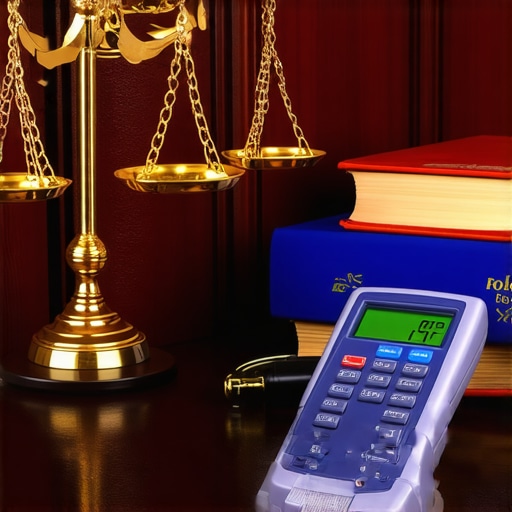
The air in my office smells like burnt espresso and the stale anxiety of people who waited too long to call me. You think that because the machine flashed a digital number above point zero eight your life is over. That is your first mistake. Your second mistake is trusting that the police department keeps their gear in better shape than their squad cars. I watched a defendant lose their entire defense in the first ten minutes of a preliminary hearing because they admitted to drinking two beers instead of standing on the failure of the machine. They tried to be honest with a system that is built on technicalities. In litigation, honesty without a strategy is just a confession. This is not about what you drank. This is about whether a piece of plastic and circuitry manufactured during the previous decade has the legal authority to take away your driver license.
The machine is a liar
Breathalyzer technology relies on strict maintenance protocols and calibration cycles. If the Intoxilyzer 8000 or similar DUI breath testing equipment is outdated, the blood alcohol content (BAC) results become inadmissible. An attorney must challenge the maintenance logs to prove the evidentiary breath test was scientifically unreliable. Most departments are underfunded and overworked. They skip the monthly checks. They ignore the internal error codes. They treat the most important piece of evidence in your case like a neglected kitchen appliance. When the machine is old, the infrared spectroscopy sensors degrade. This is not a matter of opinion; it is a matter of physics. If the device has not been serviced by a certified technician within the statutory window, that number on the screen is legally meaningless. While most lawyers tell you to plead guilty if you failed the test, the strategic play is to force the prosecution to produce the full repair history of that specific unit. Often they cannot find it. If they cannot find the paper trail, they cannot find a conviction.
“Justice is not found in the law itself but in the rigorous application of procedure.” – Common Law Maxim
The myth of the breathalyzer accuracy
Breath testing devices operate on the assumption that every human body shares a partition ratio of 2100 to 1. This forensic assumption is frequently flawed because it ignores biological variables like body temperature or hematocrit levels. In litigation, attacking the scientific foundation of the breath test is the primary objective for any legal services provider. You are not a mathematical average. You are a biological entity. An old machine cannot account for the drift in its own sensors. Over time, the fuel cell in a handheld device or the optical bench in a desktop unit loses its sensitivity. This leads to a false positive or an inflated reading. I have seen cases where a machine was kept in service for three years past its recommended retirement date. The prosecutor will call it a minor oversight. I call it a violation of due process. We do not gamble with your freedom using equipment that belongs in a museum. If the machine was manufactured before the current software patch was released, its results are suspect. We look for the ghost in the machine.
The forensic anatomy of a 2100 series device
Infrared spectroscopy works by passing a beam of light through a chamber containing your breath sample. The ethanol molecules absorb specific wavelengths of light. The detector at the other end measures the light attenuation to calculate the concentration of alcohol. This is a delicate process. If the sample chamber is contaminated with microscopic debris or if the light source is dimming due to age, the calculation fails. Think about a lightbulb in your house. It does not just burn out; it flickers and dims for weeks before it dies. An old breathalyzer is a dimming lightbulb. It provides a flickering version of the truth. We demand the raw data from the gas chromatography checks. We want to see the slope detector logs. If the machine took more than two seconds to stabilize during its internal standard check, it is a lemon. A lemon cannot be used to prove a crime beyond a reasonable doubt. We zoom in on the voltage fluctuations. We look for the moments where the machine struggled to breathe as much as you did. This is where the case is won. It is won in the technical weeds of the hardware.
Why the maintenance log is your best witness
Maintenance logs are the digital diary of the police department and their forensic accountability. Every calibration adjustment and repair record must be documented under state administrative codes. If an attorney finds a gap in these legal records, the chain of custody for the evidence is broken. I recently reviewed a log where a machine had been repaired for a heater circuit failure three times in one month. They still used it to arrest my client the following week. That is not just negligence; it is a gift to the defense. We subpoena the training certificates of the officer who performed the monthly accuracy check. If their certification expired forty eight hours before they touched the machine, the test is dead. The law is a game of inches. We measure those inches with a microscope. If the department uses a third party contractor for repairs, we go after their records too. We want to know if they used generic parts instead of OEM components. A machine is only as good as its weakest link.
“The reliability of scientific evidence is the bedrock of the Fourth Amendment’s protection against unreasonable searches.” – Legal Standards Review
The ghost of the last calibration
Calibration standards require the use of a simulator solution or a dry gas standard with a known alcohol concentration. These chemical standards have their own expiration dates and lot numbers. If the law enforcement agency used an expired gas canister to calibrate an old machine, the entire evidentiary chain is poisoned. This happens more often than you would believe. Bureaucracy is slow. Canisters sit on shelves. Technicians get lazy. We check the lot numbers against the manufacturer certificates of analysis. If there is a discrepancy of even zero point zero zero five, we have an opening. We are not just looking for a mistake; we are looking for a pattern of failure. When an old machine meets an expired calibration gas, the result is fiction. You do not go to jail based on a work of fiction. This is why we do not take the first plea offer. We wait for the discovery. We wait for the state to realize they have no foundation for their house of cards.
The strategic pause in the discovery phase
Discovery motions in a DUI litigation case are designed to flush out the prosecution evidence before it reaches a jury. By strategically delaying certain requests, an attorney can catch the crime lab in a procedural bottleneck. This is about leverage. If we know the machine is old, we wait for the prosecution to commit to its accuracy in their initial filing. Then we hit them with the repair history. It forces them to either dismiss the charges or risk a humiliating loss at trial. This is where family law often intersects with criminal proceedings. A DUI conviction can be weaponized in a custody battle. It can be used to argue that a parent is unfit. The stakes are higher than just a fine. Your ability to see your children might depend on our ability to prove that a machine from 2012 is a piece of junk. We treat every DUI as a high stakes chess match because it is. We do not move until the board is in our favor.
When the software version is out of date
Software algorithms inside the breathalyzer unit are responsible for filtering out mouth alcohol and interfering substances like acetone. Old source code may lack the analytical sophistication to distinguish between isopropyl alcohol and ethanol. This is a technological flaw that can lead to a wrongful arrest. If the machine is running version 2.0 and the manufacturer has already released version 4.5, why is the department still using the old code? The answer is usually money. They do not want to pay for the upgrade. But your rights are not subject to their budget constraints. We bring in forensic software experts to testify about the known bugs in older versions of the firmware. We show the jury that the machine is essentially a computer from the era of dial up internet. Would you trust your bank account to a computer running Windows 95? Of course not. So why trust your freedom to a breathalyzer running obsolete code? It is an absurd proposition that we dismantle piece by piece.
The fatal flaw in the roadside test
Preliminary Alcohol Screening (PAS) devices are even less reliable than the stationary units at the station. These handheld sensors are exposed to extreme temperatures in the back of patrol cars. Thermal degradation destroys the accuracy of the fuel cell sensor. In the litigation of a DUI charge, we focus on the storage conditions of the device. If the officer left the unit in a car that reached 120 degrees in the sun, the sensor is fried. It will give a reading, but that reading is a random number. We ask for the GPS logs of the patrol car. We correlate the weather data with the sensor performance. We prove that the device was compromised before it ever touched your lips. This is the microscopic reality of the case. We do not look at the big picture. We look at the tiny, broken pieces of the process. The defense is built on the failure of the hardware. When the hardware fails, the state fails.
Your next move in the courtroom
Trial strategy requires a senior attorney to communicate technical failures to a jury in a way that feels visceral. We do not just talk about calibration; we talk about fairness. If the state wants to convict you, they must bring a clean case with reliable tools. They have neither. We highlight the procedural shortcuts. We expose the maintenance gaps. We make the jury feel the weight of the injustice. The final verdict is not about whether you had a drink. It is about whether the state can prove it using a broken, old, and unreliable machine. They cannot. We use silence in the courtroom to let the absurdity of their evidence sink in. We let the prosecutor scramble for an explanation that does not exist. Then we move for a directed verdict. We win because we know the machine better than the people who use it. We win because we refuse to accept a points zero eight at face value.