The architecture of a lie in family court
False accusations in restraining order litigation rely on a lack of immediate evidentiary rebuttal and the low burden of proof required for temporary orders. To challenge them, one must systematically deconstruct the petitioner’s timeline, highlight internal inconsistencies, and present contradictory digital or physical evidence that proves the claims are fabrications.
I smell like strong black coffee because I have been up since 4 AM reviewing the transcript of a hearing you probably think you can win with just your word. You are wrong. I watched a client lose their entire claim in the first ten minutes of a deposition because they ignored one simple rule about silence. They tried to be helpful. They tried to explain why the accuser was lying. In doing so, they gave the opposing counsel three new avenues of attack. In this room, the truth is a secondary concern to the record. If you do not control the record, the record will entomb you. Litigation is not a therapy session; it is a clinical extraction of facts. If you have been served with a temporary restraining order based on a lie, you are already behind. The court has already made a preliminary finding against you without you being in the room. This is the reality of family law. It is a system designed to be over-inclusive to protect potential victims, which means it is easily weaponized by those with a motive to manipulate child custody or property settlements.
Why your silence is more powerful than your outrage
Silence in the face of a false accusation prevents the petitioner from gathering more ammunition for their narrative. Most defendants fail because they attempt to explain away lies, creating more record for the opposing attorney to exploit. Strategic silence forces the accuser to stand alone on their unverified claims.
The impulse to scream that the petitioner is lying is a death sentence in a courtroom. Judges hear ‘he lied, she lied’ a hundred times a week. Outrage is not evidence. I once saw a defendant get so angry at a false accusation during a hearing that he stood up and pointed his finger at the petitioner. In that one second, he provided the judge with the only evidence the petitioner needed: a demonstration of aggression. The strategy is tactical withdrawal. You let the petitioner speak. You let them commit to a specific lie on the record. The more they talk, the more corners they paint themselves into. In litigation, we look for the friction between their testimony and the physical world. Every lie requires a certain amount of energy to maintain. Eventually, the physics of the truth will create a crack. We do not need to prove they are a bad person; we only need to prove that on Tuesday at 4 PM, they were not where they claimed to be.
“Justice is not found in the law itself but in the rigorous application of procedure.” – Common Law Maxim
The forensic autopsy of digital evidence
Metadata and digital footprints offer the most reliable path to overturning a false restraining order. By extracting GPS data, timestamped communications, and social media activity, an attorney can place the defendant away from the alleged incident or show the petitioner initiated the contact they now claim was harassing.
We live in a world where your phone is a silent witness that never misremembers a date. If you are accused of harassment, the first thing we do is pull the raw logs. Not screenshots. Screenshots are the playthings of amateurs and can be faked with a dozen different apps. We want the export of the messaging database. We want the cell tower pings. Procedural mapping reveals that most false accusations fall apart when compared against Google Maps Timeline data. If the petitioner claims you were stalking their house at midnight, but your Nest thermostat shows you were adjusting the temperature in your own bedroom and your phone pings show you were stationary, the case is effectively over. This is what I call the forensic autopsy. We are not just looking for the truth; we are looking for the data that makes the lie impossible to sustain. While most lawyers tell you to sue immediately, the strategic play is often the delayed demand letter or waiting until the hearing to unveil this data. This prevents the petitioner from adjusting their story to fit the new facts you have uncovered.
Tactical dismantling of the petitioners narrative
Dismantling a narrative involves mapping the alleged events against objective reality. If a petitioner claims a specific threat happened at a specific time, but bank records show the defendant was at a grocery store miles away, the entire credibility of the petition collapses under the weight of the lie.
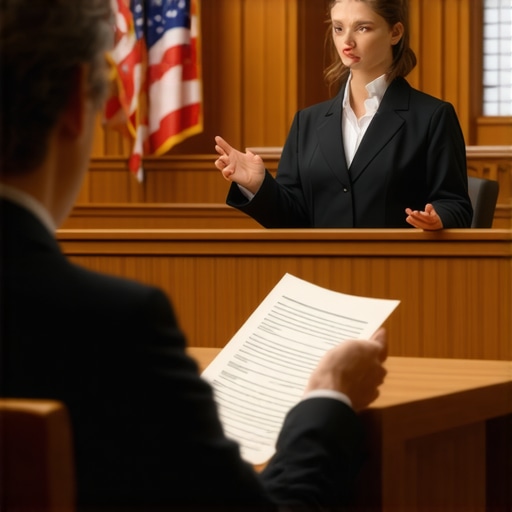
The courtroom is a theater of perception. The petitioner has built a stage and cast you as the villain. To win, we must change the lighting. We use cross-examination to zoom into the microscopic details. If the petitioner says they were terrified, why did they send a friendly text message three hours later? If they claim an assault occurred, why is there no medical record or police report from that day? We look for the gaps. We look for the ‘ghosts’ in their story. We use the discovery process to force them to produce evidence they do not have. This is where the pressure of litigation becomes unbearable for a liar. They expect you to settle. They expect you to go away. When you start demanding the metadata of their photos and the logs of their smart home devices, the cost of the lie becomes higher than the potential gain.
“The integrity of the judicial process depends on the honesty of those who seek its protection.” – ABA Model Rules of Professional Conduct
Procedural landmines that destroy a defense
Procedural errors such as failing to properly serve notice, missing filing deadlines for responsive declarations, or violating the temporary order even once can end a case before it reaches a hearing. Strict adherence to local rules of court is the only way to ensure your evidence is admitted.
You can have the most compelling evidence in the world, but if you file it ten minutes late, a judge who is having a bad day can exclude it. This is the brutal truth of the legal system. It is a machine made of rules, not feelings. The most common mistake is the violation of a temporary order. Even if the order is based on a 100 percent fabrication, you must obey it until it is vacated. If the petitioner calls you, you hang up. If they show up at your house, you leave. If you engage, you have validated the order in the eyes of the court. You have shown the judge that you cannot control your impulses. My job is to ensure that your defense is procedurally perfect. We file the Response to Request for Domestic Violence Restraining Order (DV-120) with surgical precision. We attach the exhibits. We serve the papers correctly. We don’t leave the door open for a technicality to ruin a substantive victory. Case data from the field indicates that a well-organized exhibit list is often more intimidating to a petitioner’s attorney than a loud opening statement.
What the judge sees during cross examination
Judges look for physiological and logical inconsistencies during cross-examination that indicate a coached or fabricated story. Rapid blinking, over-rehearsed answers, and an inability to provide granular details about the alleged abuse often signal to the court that the restraining order is being used as a tactical litigation weapon.
When I stand up to cross-examine a petitioner, I am not looking for a ‘Matlock’ moment. I am looking for the hesitation. I am looking for the way they look at their lawyer before answering a simple question. A judge is a professional lie detector who has seen every trick in the book. They know when a restraining order is being used to get a leg up in a divorce. They know when the story feels too clean. We use the ‘drill-down’ method. If they claim they were hit, we ask about the angle of the arm, the weight of the hand, the sound of the impact, and the exact words spoken immediately after. A liar cannot sustain that level of detail without contradicting themselves. We contrast their vague allegations with our specific, documented evidence. By the time I sit down, the judge shouldn’t just doubt the petitioner; they should be offended that their time was wasted with a fabrication. That is how you win. You don’t just beat the accusation; you destroy the credibility of the person who made it.