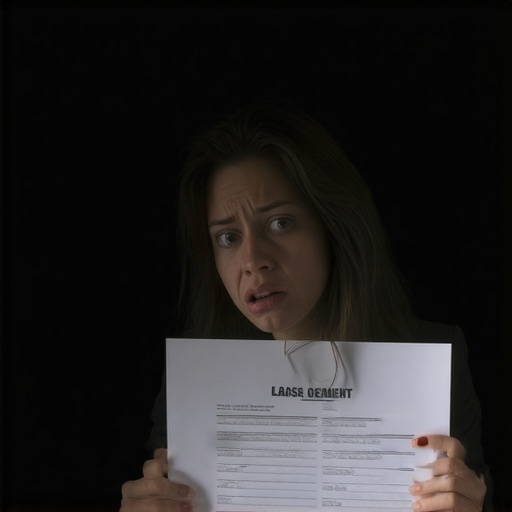
Sit down. Drink your coffee. Your commercial lease is a death warrant disguised as a business asset. I recently spent 14 hours deconstructing a contract that was designed to be unreadable, only to find the one clause that changed everything; a tiny provision buried in the ‘miscellaneous’ section that allowed the landlord to terminate the lease if the tenant’s gross sales dropped for two consecutive quarters, regardless of rent payments. This is the reality of the commercial real estate market. You are not a partner to your landlord; you are a line item. If you think your ‘standard’ agreement protects you, you have already lost the first round of the litigation you do not yet know is coming. Legal services in the commercial sector are built on the wreckage of businesses that failed to read the fine print. Litigation is expensive; reading is free. Let us look at the wreckage.
The standard lease agreement fallacy
Commercial lease agreements are predatory contracts drafted by landlord attorneys to shift financial liability, maintenance costs, and legal risk onto the tenant while securing a guaranteed revenue stream through common area maintenance fees and personal guarantees that bypass corporate protections and limited liability structures. You see a standard form; I see a tactical map where every landmark is a trap. Most tenants sign these documents believing they are non-negotiable. That is the first lie. The second lie is that the law protects you. In commercial law, there is no ‘implied warranty of habitability’ like there is in residential law. If the roof leaks and ruins your inventory, you still pay rent. If the HVAC dies in mid-August, you still pay rent. You are an adult, a sophisticated party in the eyes of the court, even if you are just a small family law firm trying to rent 500 square feet. The court assumes you knew what you were doing when you signed. You didn’t.
“Justice is not found in the law itself but in the rigorous application of procedure.” – Common Law Maxim
The phantom square footage calculation
Landlords utilize the BOMA standard of measurement to inflate usable space by adding load factors, common area percentages, and vertical penetrations to your base rent calculation, effectively forcing tenants to pay premium rates for elevator shafts, janitorial closets, and communal hallways they do not exclusively occupy. You think you are renting 2,000 square feet. You measure it. You only find 1,600. Where is the rest? It is in the ‘load factor.’ You are paying for the lobby you share with twenty other people. You are paying for the air in the atrium. Case data from the field indicates that these load factors can be as high as 25 percent in high-rise buildings. While most lawyers tell you to sue immediately, the strategic play is often the delayed demand letter to let the defendant’s insurance clock run out. We look for the discrepancy between the ‘rentable’ and ‘usable’ square footage. If the landlord misrepresented the core factor, we have a leverage point for a rent abatement negotiation.
Common area maintenance charges as a silent killer
Common Area Maintenance fees, or CAM charges, function as an unregulated tax where landlords pass operational expenses, capital improvements, property taxes, and management fees directly to the tenant, often without auditing rights or expenditure caps that would prevent budgetary abuse. This is where the landlord hides their profit. I have seen leases where the CAM charges include the landlord’s personal travel expenses or the legal fees they spent fighting a different tenant. Without a ‘right to audit’ clause, you are writing a blank check every month. You must demand an itemized list. You must demand caps on how much these fees can increase annually. Most ‘standard’ leases have no such caps. They want you to pay for the new marble in the lobby while your own office has a stained carpet. It is a shell game. Litigation in these cases often turns on the ‘accounting of expenses’ discovery phase, where we force the landlord to produce every single receipt for the last three years. They hate that. It is expensive for them. It gives us the leverage to settle.
“The attorney who fails to scrutinize the boilerplate effectively consents to his client’s financial execution.” – Bar Association Journal of Trial Advocacy
Relocation clauses as hidden eviction tools
Relocation clauses allow property owners to forcibly move a tenant to a comparable space within the building or complex, effectively destroying brand visibility, customer flow, and custom improvements while the landlord prioritizes a major anchor tenant or redevelopment project. Imagine you spent $200,000 on a custom build-out for your law firm. You chose the corner unit for the light and the foot traffic. Six months later, the landlord gives you 30 days notice to move to a windowless basement unit because a national bank wants your space. They say it is ‘comparable.’ The law says ‘comparable’ is a subjective term. Your business dies in the dark. Procedural mapping reveals that if you do not strike this clause or at least demand that the landlord pays for 100 percent of the new build-out and moving costs, you are a squatter in your own shop. You need a ‘non-disturbance agreement’ to ensure that even if the building is sold, your lease remains intact. Without it, you are at the mercy of the next owner’s whim.
The confession of judgment trap
Confessions of judgment are legal provisions where a tenant waives their right to a trial and allows the landlord to automatically enter a judgment against them in court upon an alleged default, bypassing due process and service of process requirements. This is the ‘nuclear option.’ You miss one payment because of a bank error. The landlord goes to the courthouse. They have a judgment against you before you even know you are in default. They can freeze your bank accounts. They can seize your equipment. All because you signed a piece of paper that says ‘I am guilty.’ Many states have banned these, but in those that haven’t, they are the landlord’s favorite weapon. A senior trial attorney knows that fighting a confession of judgment is like trying to un-ring a bell. You have to prove fraud or a massive procedural error. It is a high-stakes chess match where you start without a queen. Never sign a lease with a confession of judgment. Ever.
Personal guarantees and the end of limited liability
Personal guarantees strip away the corporate veil of LLCs and corporations, making business owners personally liable for lease obligations, which means a business failure can result in the seizure of personal assets, homes, and savings accounts. Your business is a separate entity for a reason. You want to protect your family. But the landlord’s attorney wants your house. They will tell you it is ‘company policy.’ They will tell you they can’t sign the lease without it. They are lying. You can negotiate a ‘Good Guy Guarantee’ which limits your personal liability to the date you vacate the premises and return the keys. Or you can offer a larger security deposit in exchange for removing the guarantee. Do not let your commercial lease become a family law issue. I have seen more divorces triggered by commercial lease defaults than by infidelity. The financial pressure is a vise that crushes everything. The strategic play is to limit the guarantee to a specific dollar amount or a specific period of time. Make the guarantee burn off after the first three years of timely payments. Give yourself an exit.
The verdict on lease negotiations
The courtroom is a place of perception, not truth. If you enter a dispute with a signed contract that favors the landlord in every paragraph, the judge’s hands are tied. You must win the case before you sign the lease. You do this by being the most difficult person in the room during negotiations. You do this by hiring an attorney who views every clause as a potential litigation point. The ‘ghost in the settlement conference’ is always the bad contract you signed three years ago. Stop looking at the rent price and start looking at the default section. Stop looking at the amenities and start looking at the indemnification clauses. You are entering a battlefield. Bring a shield. Your landlord has a sword. Do not go into the arena naked and wonder why you are bleeding. The market is cold. The law is colder. Your lease is rigged. Now go fix it.