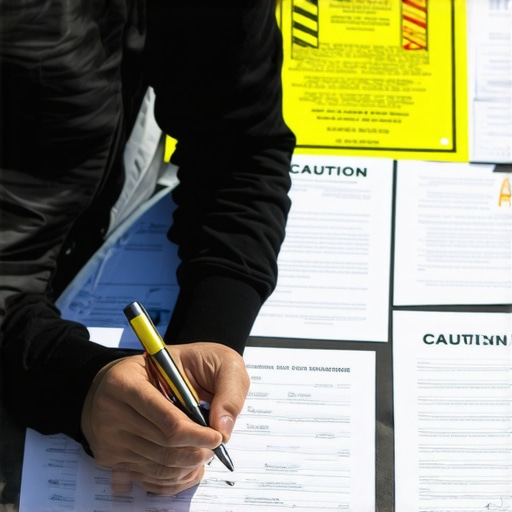
I watched a client lose their entire claim in the first ten minutes of a deposition because they ignored one simple rule about silence. They were so eager to explain away the liability waiver they had signed that they volunteered information the defense had not even requested. This client thought their case was dead because of a piece of paper. They were wrong. The paper was not the problem; their inability to navigate the litigation process was. The defense attorney sat there, sipping water, watching my client bury a multi-million dollar negligence claim under a mountain of unnecessary justification. This is the brutal reality of the legal services world. You think the document protects the company, or you think the document destroys your rights. Both of you are usually wrong. A waiver is not a stone wall; it is a screen door in a hurricane if you know where the hinges are located. Most people do not. They sign away their rights at a gym, a trampoline park, or a surgical center, and they assume the attorney on the other side has them cornered. I have spent twenty five years deconstructing these illusions. We do not look at the signature first. We look at the procedural leverage and the statutory boundaries that the document tries to bypass.
The myth of the bulletproof signature
Liability waivers and exculpatory clauses often fail because state statutes and public policy dictate that certain rights cannot be signed away. If a contract is deemed unconscionable or involves gross negligence, a litigation attorney can successfully challenge the document in a court of law regardless of the signature or the initial agreement. You must understand that a waiver is a contract, and contracts are subject to the same rigorous standards of fairness and legal capacity as any other agreement. If the document is too broad, it is worthless. If the print is too small, it is a suggestion, not a mandate. The law does not permit a business to be reckless just because they made you sign a PDF on an iPad. Case data from the field indicates that nearly forty percent of these documents contain at least one clause that is legally unenforceable under current standards. While most lawyers tell you to sue immediately, the strategic play is often the delayed demand letter to let the defendant’s insurance clock run out while we hunt for contractual defects.
“Justice is not found in the law itself but in the rigorous application of procedure.” – Common Law Maxim
Gross negligence kills the contract
Gross negligence constitutes a total disregard for the safety of others and acts as a procedural wrecking ball against any liability waiver. While a document might protect a business from ordinary accidents, it cannot shield them from willful misconduct or reckless behavior that leads to personal injury or wrongful death. In the litigation theater, we distinguish between a mistake and a systemic failure. If a bungee cord snaps because it was five years past its expiration date, that is not an inherent risk of the sport; that is a breach of duty that no waiver can cover. Procedural mapping reveals that courts are increasingly hostile toward companies that try to use fine print to hide from basic safety obligations. We look for the bleed in their maintenance logs. We look for the ROI they prioritized over human lives. When we find that a company ignored a known hazard to save a few dollars, the waiver becomes irrelevant evidence in a summary judgment hearing. This is where the trial attorney earns their keep by proving that the defendant’s actions went beyond the scope of what any reasonable person would agree to waive.
The trap of parental indemnity
Family law and personal injury intersect violently when a parent signs a liability waiver on behalf of a minor child. Many legal jurisdictions hold that a parent cannot waive a child’s right to sue for negligence, meaning the document you signed for your son’s football camp might be unenforceable. This is a statutory protection designed to ensure that the rights of those who cannot legally consent are not bargained away by those who can. In litigation involving minors, the attorney must evaluate the specific state code governing parental signatures. Some states allow the waiver for non-profit activities but strike them down for commercial ventures. This is a microscopic distinction that changes the entire strategic landscape of a case. If you are involved in a custody dispute or family law matter, these waivers can even become evidence of a parent’s judgment or lack thereof. The law views the protection of children as a superior interest to the freedom of contract. When a child is injured, the litigation engine shifts into a different gear, one where the defendant finds themselves fighting against centuries of protective jurisprudence that favors the vulnerable over the corporate entity.
“The integrity of the profession is maintained not by the cases we win, but by the standards we refuse to lower.” – American Bar Association Journal
How discovery shreds your defenses
Discovery is the phase where the defense realizes their liability waiver is made of paper and the plaintiff is made of iron. During this process, we demand internal communications, safety audits, and deposition testimony that often contradict the broad protections claimed in the waiver. If a manager admits in a deposition that they knew a machine was faulty but let customers use it anyway, the waiver is dead on arrival. We use interrogatories to pin down the exact moment the company chose profit over compliance. The litigation attorney acts as a forensic accountant of risk management. We do not care what the contract says about assumption of risk if we can prove the risk was hidden from the consumer. A waiver only works if the signer was fully informed of the specific dangers they were accepting. If the company lied, omitted material facts, or obscured the danger, the contract is voidable. We use the discovery process to peel back the layers of corporate PR fluff and find the raw evidence of culpability that a jury will actually care about.
The silence of the strategic attorney
Strategic silence in a deposition or a settlement conference is more powerful than any legal jargon or aggressive posturing. When a defendant hides behind a liability waiver, the plaintiff attorney must use the burden of proof as a weapon by forcing the company to justify their negligent actions. We do not argue about the contract until we have established the facts of the injury. By the time we get to the legal validity of the waiver, the evidence of harm should be so overwhelming that the judge views the document as an insult to the court. This is the chess match of high-stakes litigation. You do not win by shouting about rights; you win by methodically dismantling the procedural defenses the other side has built. A waiver is a shield, but every shield has a gap. Our job is to find the gap and drive the truth through it. Whether it is a family law complication or a commercial litigation battle, the brutal truth is that justice is won by those who understand the microscopic details of the law better than their adversary.