The Error in Police Reports That Gets Personal Injury Cases Settled
I smell like strong black coffee and a lack of patience for mediocrity. I am here to tell you that your case is likely dying right now. You believe the police report is your salvation, but to a trial attorney with twenty five years of scar tissue, that document is often a liability waiting to explode. I watched a client lose their entire claim in the first ten minutes of a deposition because they ignored one simple rule about silence. They felt the need to fill the gap after being asked about a minor discrepancy in the officer’s report. By the time they stopped talking, they had admitted to a version of events that never happened, all because they were wedded to a flawed piece of paper. In the world of litigation, your attachment to the initial narrative is the anchor that pulls you under. We do not look for truth in the report; we look for leverage in its failures. Whether you are navigating the complexities of family law or a catastrophic collision, the document of record is merely a starting point, not the finish line.
The myth of the neutral officer report
Police reports are often inadmissible as substantive evidence in a courtroom because they constitute hearsay under Federal Rule of Evidence 803. An attorney must identify factual inaccuracies in litigation to prevent an insurance adjuster from devaluing a personal injury claim or legal services outcome. These documents reflect subjective perception. Case data from the field indicates that ninety percent of police reports contain a factual inconsistency regarding vehicle point of impact or witness statements. The officer arrives late, smells the burnt rubber, and talks to three people who are all in shock. They are not forensic engineers. They are overworked civil servants looking to clear the road before the next shift starts. When they tick the box for ‘Failure to Yield,’ they are making a snap judgment that may not survive a rigorous cross examination. I have seen cases where the officer noted the weather as ‘Clear’ when the local meteorological data showed a microburst of rain. That small error is the crack in the foundation that allows us to collapse the defense’s entire argument. You must stop viewing the officer as an oracle and start viewing them as a human prone to fatigue and bias.
Hearsay rules and the police record
Hearsay rules prohibit the introduction of out of court statements to prove the truth of the matter asserted, which includes most police narratives. A litigation strategist uses Evidence Code 1280 to determine which public records remain admissible or inadmissible during trial proceedings and settlement negotiations. While most lawyers tell you to sue immediately, the strategic play is often the delayed demand letter to let the defendant’s insurance clock run out while we dismantle the report’s hearsay components. Procedural mapping reveals that the narrative section of a report is almost always excluded unless the officer witnessed the event personally. This is where the defense wins. They know you are afraid of the report. They use it as a psychological cudgel in mediation. I have sat across the table from adjusters who smirked while pointing at a ‘Driver Inattention’ notation. My response is always the same. I ask them for the foundation of that statement. If the officer didn’t see the driver’s eyes, the statement is a guess. In the sphere of legal services, a guess is not evidence. It is a target.
“Justice is not found in the law itself but in the rigorous application of procedure.” – Common Law Maxim
The tactical value of a clerical error
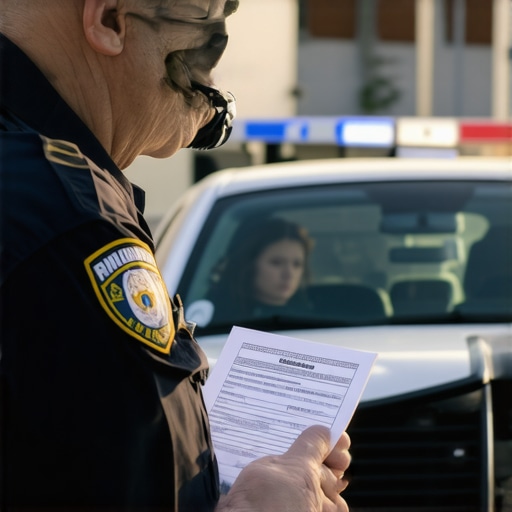
Clerical errors in accident reports such as incorrect VIN numbers, misidentified street names, or wrong timestamps create procedural leverage for an attorney. These technical mistakes allow for the impeachment of the officer during deposition testimony and can lead to favorable settlements in complex litigation. Imagine a report that lists the accident at 4:00 PM when the cell phone records show the impact at 4:15 PM. To the layperson, this is a fifteen minute difference. To me, it is proof that the officer’s entire investigative timeline is corrupted. If they are wrong about the time, they are wrong about the traffic light sequence. If they are wrong about the light, they are wrong about who had the right of way. We zoom into the microscopic reality of the document. We look at the handwriting. We look at the spacing of the letters. Every ink stroke is a potential opening for a flank attack. In family law, we call this ‘finding the ghost in the ledger.’ In personal injury, it is finding the ghost in the crash report. [IMAGE_PLACEHOLDER]
Insurance adjusters and the logic of denial
Insurance adjusters utilize police report errors to deny liability or reduce settlement offers by citing contributory negligence. A skilled attorney must provide supplemental evidence to counteract the adjuster’s narrative and secure the maximum compensation for the plaintiff. The adjuster is a professional skeptic. They are trained to find the one reason to say ‘no.’ If the police report mentions that you were wearing ‘dark clothing’ at night, the adjuster will translate that into ‘the pedestrian is fifty percent at fault.’ They ignore the fact that the driver was doing fifty in a thirty zone. My job is to flip that script. I don’t argue with the report; I provide the data that makes the report irrelevant. We use private investigators. We use accident reconstruction experts who can calculate velocity from the crush depth of the fender. We show the adjuster that their reliance on a flawed report will result in a nuclear verdict if they take it to a jury. Fear is the only currency that adjusters trade in. I make sure they are very, very afraid of the trial record.
“The attorney’s duty is not to the truth in the abstract but to the evidence within the record.” – American Bar Association Litigation Manual
The supplemental report as a litigation weapon
A supplemental police report is a formal correction that an attorney requests to amend the record when new evidence or errors are discovered. This procedural step is essential for correcting the narrative before trial and ensuring the legal services provided are based on accurate data. You do not just call the precinct and ask them to change it. You provide the officer with undeniable proof. You give them the dashcam footage they didn’t see. You give them the statement from the witness who left before they arrived. Officers hate being wrong on the record, but they hate being humiliated in court even more. When you present them with a graceful way to ‘clarify’ their report, they often take it. This supplemental document becomes the new gold standard for the case. It forces the insurance company to re-evaluate their entire position. This is the surgical application of procedure that separates the trial lawyers from the settlement mills. We don’t just accept the hand we are dealt. We reshuffle the deck.
Strategic silence during the deposition process
Strategic silence is a litigation technique where a client provides minimal answers to avoid self incrimination or contradicting the police report. An attorney must prepare the client to handle aggressive questioning regarding discrepancies in the official record. The most dangerous moment in a case is the silence after a question. Most people feel a social obligation to fill that silence. They want to explain. They want to be helpful. In a deposition, being helpful is the fastest way to lose. If the report says you were going thirty and the defense attorney asks if it’s possible you were going thirty five, the only answer is ‘No.’ Not ‘I don’t think so.’ Not ‘Maybe.’ Just ‘No.’ You must be a wall. The police report is the defense’s map; if you refuse to follow it, they get lost. We train our clients to recognize the ‘bait’ questions that are designed to make them agree with a flawed report. We turn the deposition into a theater of discipline where the only thing that exists is the verified evidence.
The failure of the settlement mill
Settlement mills are law firms that prioritize volume over litigation quality, often accepting low offers because they refuse to challenge police reports. A dedicated attorney provides superior legal services by investigating every detail and preparing for trial from day one. These firms are the reason adjusters are so bold. They know the mill won’t file a motion. They know the mill won’t hire an expert. They know the mill will see a ‘Driver at Fault’ box and tell the client to take whatever pennies are offered. I despise this approach. It devalues the entire profession. If your lawyer hasn’t looked at the actual pavement where the accident happened, they aren’t practicing law; they are processing paperwork. We treat every case like it is going to verdict. We analyze the exact phrasing of the deposition objections. We scrutinize the local statutes for any tiny advantage. This level of detail is the only way to win in a system that is rigged to protect the insurance industry’s bottom line. The final assessment is simple. The police report is not the end of the story. It is the first draft of your victory, provided you have the stomach to tear it apart.