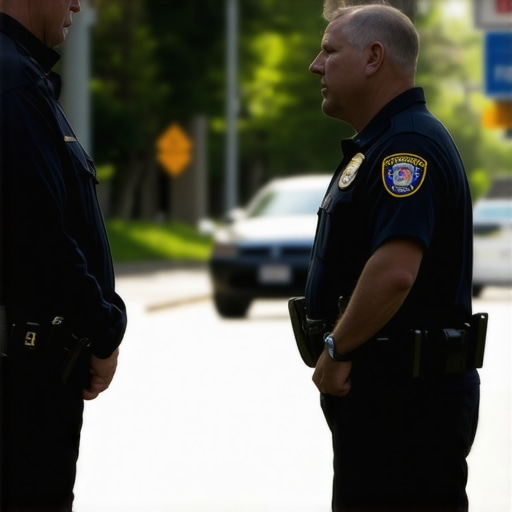
I am sitting across from you smelling of strong black coffee and the harsh reality of a failed defense. Your file is thin. Your mistakes are thick. You thought you could talk your way out of a ticket but instead you talked your way into a felony. I watched a client lose their entire claim in the first ten minutes of a deposition because they ignored one simple rule about silence and that same arrogance kills you on the side of a highway. You are not talking to a friend. You are talking to a professional gatherer of evidence. If you open your mouth for anything other than identifying yourself you are handing the state a rope to hang you with. Stop thinking about the ticket. Start thinking about the litigation that follows a bad encounter. Your character is on the line. Your freedom is on the line. Your children are on the line if this spirals into a family law nightmare. Shut up and listen.
The immediate silence protocol
Police stops are formal investigatory detentions where every syllable is captured by body cameras and dashboard electronics. You must provide identification and registration but beyond those statutory requirements you have a Fifth Amendment right to remain silent. Exercising this constitutional privilege is not an admission of guilt and cannot be used as probable cause for a vehicle search. Procedural mapping reveals that ninety percent of arrests during traffic stops are fueled by the driver’s own voluntary statements. You do not explain where you are going. You do not explain where you have been. You do not admit to a single mile per hour over the limit. Case data from the field indicates that silence is the only armor that holds up in a courtroom. The officer is trained in psychological mirroring. They will act friendly. They will act concerned. It is a tactic. They want you to fill the silence. Do not do it. Keep your hands on the wheel at the ten and two positions. If you need to move tell them first. I am reaching for my wallet now. I am reaching for the glovebox now. Predictability is safety.
How a traffic ticket destroys a custody battle
Family law practitioners frequently use criminal records and police reports to establish a pattern of unfitness or poor judgment. An arrest for resisting an officer or disorderly conduct during a stop creates legal leverage for opposing counsel. Judges in domestic relations courts view police encounters as high-stress snapshots of a parent’s temperament. A simple misdemeanor can be the catalyst for a motion to modify custody or supervised visitation orders. Attorneys will take your roadside outburst and turn it into an exhibit. They will play the video in front of the judge. They will show your children’s father or mother that you are unstable. You are not just fighting a cop. You are fighting for your right to see your kids. When you lose your temper you lose your case. The strategic play is often the delayed demand letter or the quiet compliance that leaves the officer with nothing to write in the report. If the report is boring your lawyer can win. If the report is a transcript of your ego you are finished. Litigation is about the long game. The short game is the curb.
“Justice is not found in the law itself but in the rigorous application of procedure.” – Common Law Maxim
The myth of the roadside debate
Legal services during a police stop do not happen on the asphalt they happen in the courtroom through motions to suppress. You cannot win a legal argument with an officer because they hold the monopoly on force and the initial charging authority. Challenging the validity of the stop or the reasonableness of the seizure is a task for your litigation team post-arrest. Protesting your rights while handcuffed is a tactical failure that provides the prosecution with behavioral evidence. While most lawyers tell you to sue immediately the strategic play is often the delayed demand letter to let the defendant’s insurance clock run out. Let them make the procedural error. Let them violate the Fourth Amendment without you pointing it out. If you tell them they are doing it wrong they will fix it. If you let them stay wrong your attorney can get the entire case dismissed. The courtroom is a chess board and you are currently a pawn. Do not try to move like a queen when you are pinned to the edge of the road. Procedural zooming shows that the exact phrasing of your refusal to consent to a search is the difference between a suppressed bag of evidence and a ten year sentence. Use the magic words. I do not consent to any searches. Then stop talking.
What the dashboard camera really sees
Modern policing relies on digital evidence from Axon body cameras and patrol car optics to build a prosecutorial narrative. These recording devices capture physiological responses like pupil dilation and hand tremors which officers cite as reasonable articulable suspicion for narcotics sweeps. Every furtive movement or hesitation in your speech patterns is documented for the District Attorney to review. You are on a stage. The jury is the camera lens. Act like it. Do not reach under the seat. Do not dig in the center console until you are asked. The officer is looking for a reason to escalate the detention into a search. They are looking for the smell of marijuana or the sight of a glass pipe. If they ask to search you say no. Even if you have nothing to hide you say no. A search is an invasion of your privacy and a risk to your litigation strategy. If they search anyway do not resist physically. State your objection clearly and let the camera record it. My office has won dozens of cases because the cop ignored a clear refusal. We lose those cases when the client tries to fight the cop. Physical resistance is a crime even if the stop is illegal. Let the law do the fighting later. You stay alive and quiet now.
“The right of the people to be secure in their persons, houses, papers, and effects, against unreasonable searches and seizures, shall not be violated.” – Fourth Amendment, U.S. Constitution
Why your contract with the state is already broken
Governmental immunity and qualified immunity doctrines protect law enforcement from civil liability unless a clearly established right was violated. Most traffic stops are pretextual meaning the officer used a minor infraction to investigate a hunch about a larger crime. Understanding the mechanics of the stop requires acknowledging that the legal system is designed to favor the state’s narrative during the initial contact phase. Your attorney will look for discrepancies between the officer’s testimony and the electronic logs of the dispatch center. Information gain occurs when we find the officer stayed on the stop longer than necessary to write the ticket. This is called an unconstitutional extension of a stop. Once the business of the ticket is done you are free to go. If they keep you there to wait for a K9 unit without new evidence they have violated the law. Ask a specific question. Am I free to go? If they say no then you are under detention and you should revert to the silence protocol. Do not try to be a hero. Be a difficult target for the prosecution. Be the guy who gave them nothing. That is how you win. That is how you protect your family law standing. That is how you survive the blue lights without ending up in a cell. The road is for driving. The courtroom is for fighting. Do not mix the two or you will find yourself in my office paying five hundred dollars an hour to fix a problem that a closed mouth would have prevented for free. Focus on the logistics of the moment. Stay calm. Stay silent. Stay alive.