Shattering Radar Credibility with Precision GPS Telemetry
The smell of strong black coffee fills my office before the sun even hits the pavement. I have spent twenty-five years watching people walk into courtrooms with nothing but a hope and a prayer. Most legal services providers will take your money and tell you to plead for mercy. I do not do that. Litigation is a game of technical leverage and procedural dominance. If you think the officer’s radar gun is the final word, you have already lost. The court is not a place for truth. It is a place for evidence. I see the law as a forensic chess match where the most accurate data set wins. While my primary practice often handles high-stakes family law disputes or corporate warfare, the mechanics of a traffic defense are identical. It is about deconstructing the state’s narrative using hard physics and digital footprints.
The failure of human observation
Speeding ticket defense relies on GPS data and litigation strategies to challenge radar calibration. An attorney uses telemetry logs to provide objective evidence that contradicts the officer’s visual estimation or lidar readings. This is the only way to overcome the presumption of accuracy afforded to the police.
I watched a client lose their entire claim in the first ten minutes of a deposition because they ignored one simple rule about silence. They tried to explain their way out of a speed trap by talking about the flow of traffic. The officer nodded, wrote down the admission, and the case was over. If that client had stayed silent and handed me their GPS log, the outcome would have been different. Most defendants are their own worst enemies. They believe that being a good person matters in a courtroom. It does not. Only the calibration of the radar unit and the frequency of your GPS pings matter. In the world of litigation, your voice is a liability. Your data is your shield.
“Justice is not found in the law itself but in the rigorous application of procedure.” – Common Law Maxim
The physics of the Doppler effect
Radar guns operate on the Doppler frequency shift which is often susceptible to interference from external sources or improper cosine angles. A litigation attorney must understand how radio waves bounce off moving objects and why stationary clutter can create false positives in a speeding citation.
When an officer fires a radar beam, they are not measuring your car. They are measuring a return signal that could be influenced by a nearby power line, a large truck in the adjacent lane, or even the cooling fan of their own patrol car. This is where statutory zooming becomes your best friend. We look at the specific model of the radar unit, its last certification date, and the training logs of the operator. If the officer cannot prove they performed a tuning fork test at the start and end of their shift, the evidence is tainted. We do not just ask if they were right. We prove they cannot verify they were right. This is the difference between a settlement mill and a trial lawyer.
Why your phone is the best witness
GPS telemetry provides a log of velocity and spatial coordinates that serves as a rebuttal to lidar evidence. These NMEA sentences contain timestamps and altitude data that an expert witness can use to calculate true ground speed with millimeter precision. This creates reasonable doubt.
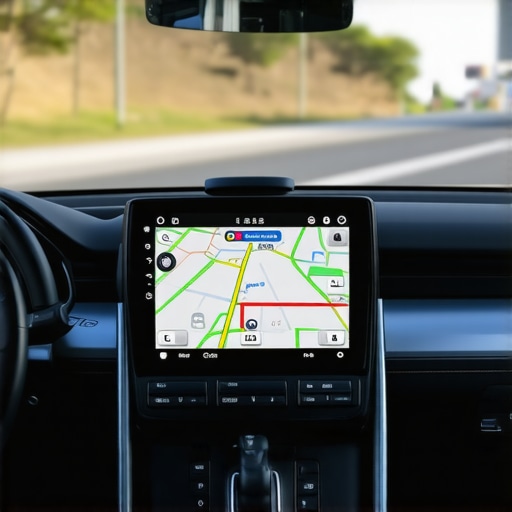
Your smartphone is constantly recording your movement through a constellation of satellites. This data is not an estimate. It is a mathematical certainty based on the time it takes for a signal to travel from space to your device. When we pull the raw data from a dashcam or a navigation app, we are looking for the Hertz frequency. If your device records at ten pings per second, we have a granular view of your speed that is far more reliable than an officer’s hand-held unit. We look at the Dilution of Precision values. If the satellite geometry was strong, your GPS data is the gold standard of evidence. We present this in court as a Daubert-compliant data set that the prosecution is rarely prepared to counter.
“The integrity of the judicial process depends upon the meticulous presentation of verifiable facts over subjective testimony.” – American Bar Association Standards
The deposition of the charging officer
Cross examination of a police officer requires procedural mapping to expose lack of foundation for the speeding charge. An attorney focuses on the calibration logs and the visual estimation distance to undermine the officer’s credibility during litigation proceedings or a bench trial.
Case data from the field indicates that most officers rely on a five-step estimation process. I ask them about the specific weather conditions, the atmospheric pressure, and the last time their lidar unit was serviced by a third-party laboratory. Often, these units are months out of compliance. While most lawyers tell you to sue immediately, the strategic play is often the delayed demand letter to let the defendant’s insurance clock run out or to wait for the officer’s memory of the event to fade. We want them to rely solely on their notes, because their notes are usually incomplete. We zoom in on the exact phrasing of the citation. Did they follow the local statutes for notice? Did they mark the correct location? A single error in the paperwork is a crack in the foundation of the entire case.
Challenging the calibration log
Evidence discovery in traffic litigation must include a formal request for the radar maintenance records and officer certifications. If the prosecution fails to provide calibration history, the attorney can file a motion to suppress the speeding data based on procedural non-compliance.
Every radar and lidar unit must be tested against a known standard. This is not a suggestion. It is a legal requirement. If the officer used a tuning fork, we demand to see the serial number of that fork. We want to know when the fork itself was last calibrated. This is the level of microscopic detail required to win. The legal system is built on the idea that the state is always right until proven otherwise. I enjoy proving them wrong. It is about the ROI of your defense. Is it worth the time? When your license and insurance premiums are on the line, the answer is always yes. We do not accept the state’s version of reality. We build our own using the data you carry in your pocket every day.
The final verdict
The courtroom is a territory, and the data is the high ground. When you combine GPS telemetry with a rigorous deconstruction of police procedure, the state’s case begins to crumble. You do not win by being nice. You win by being accurate. If you have the logs, use them. If you have a lawyer who knows how to read them, keep them. The era of the uncontested speeding ticket is over. The digital age has given us the tools to fight back, provided you have the stomach for the fight and the evidence to back it up.